 Save
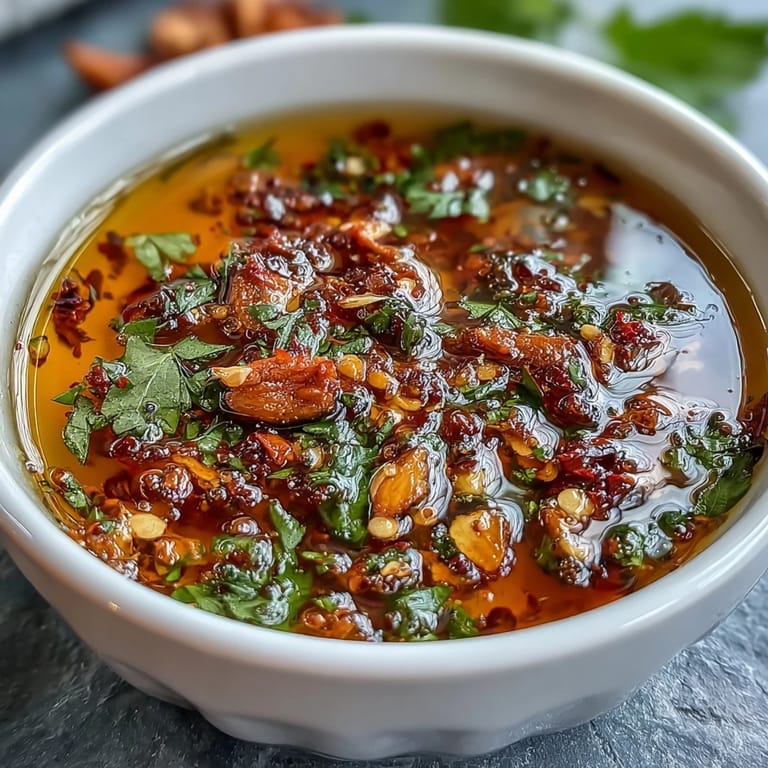
Save My neighbor casually handed me a small jar of homemade chili oil one evening, and it fundamentally changed how I cook. That golden, fragrant elixir transformed everything it touched—suddenly dumplings weren't just good, they were unforgettable. I spent weeks reverse-engineering her recipe, tweaking ratios and temperatures until I understood the alchemy of infusing oil with heat and aromatics. What started as curiosity became an obsession, and now I make a fresh batch whenever I want to elevate something ordinary into something that makes people pause mid-bite.
I made this sauce for the first time at my sister's dinner party, terrified I'd burn the oil or get the heat wrong. The moment I poured that shimmering oil over the garlic and chili, the whole room stopped talking—everyone was drawn to that smell. By the end of the night, people were dipping everything into it, even asking for the jar to take home. That's when I knew this wasn't just a condiment, it was a conversation starter.
Ingredients
- Garlic, finely minced: Six cloves might seem like a lot, but they mellow into something sweet and golden when kissed by hot oil—the mincing matters, as bigger pieces burn before they soften.
- Fresh ginger, finely grated: A microplane is your friend here; it releases the ginger's oils and ensures even distribution throughout the oil.
- Crushed red chili flakes: Start with two tablespoons, but taste as you go—some brands are significantly hotter than others, and you can always add more heat but never take it back.
- Sichuan peppercorns: These are optional but worth seeking out; they add a tingling, almost numbing sensation that feels luxurious on the tongue.
- Fresh cilantro, finely chopped: Chop it just before using so it stays vibrant; it adds a bright, fresh note that prevents the sauce from feeling heavy.
- Neutral oil: Use grapeseed, canola, or peanut oil—something with a high smoke point and neutral flavor that won't compete with the aromatics.
- Soy sauce, rice vinegar, and sesame oil: These three are the umami backbone that makes everything sing together in perfect harmony.
- Sugar and salt: These balance the heat and deepen all the flavors, making the sauce taste more complete.
Tired of Takeout? 🥡
Get 10 meals you can make faster than delivery arrives. Seriously.
One email. No spam. Unsubscribe anytime.
Instructions
- Prepare your aromatics:
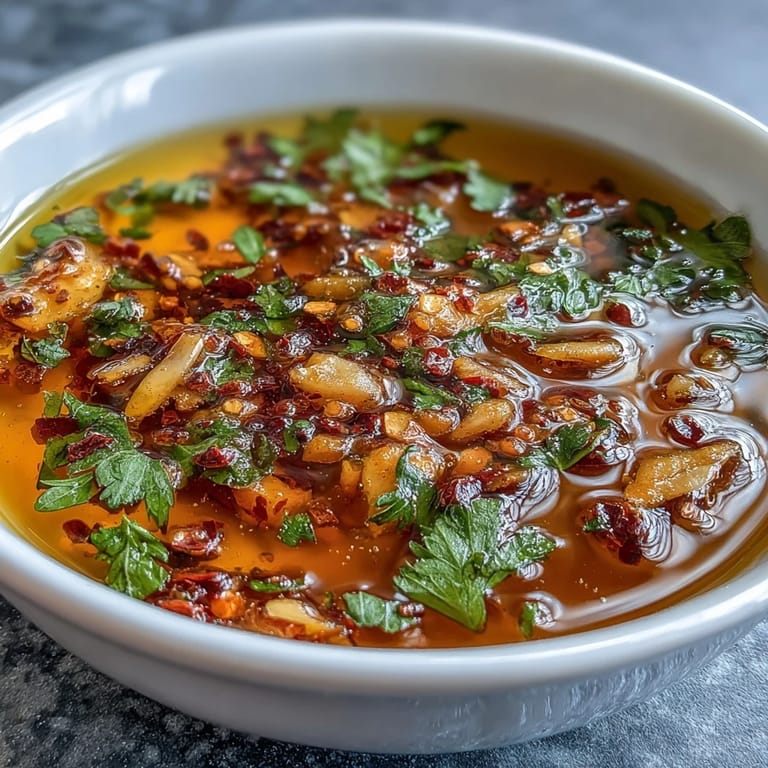
- In a heatproof bowl, combine the minced garlic, grated ginger, chili flakes, Sichuan peppercorns if using, and cilantro. Arrange them so everything is spread out evenly—this matters because the hot oil needs to make contact with all of it at once.
- Heat the oil carefully:
- Pour neutral oil into a small saucepan and set it over medium heat. You're aiming for that shimmer, not a roiling boil; test the temperature by dropping in a single garlic sliver and watching for an immediate, enthusiastic sizzle.
- The moment of truth:
- Slowly pour the hot oil over your aromatics—do this carefully, as it will bubble and hiss like something magical is happening. Let it sit undisturbed for two to three minutes so the heat can coax out all the flavors.
- Season and balance:
- Stir in the soy sauce, rice vinegar, sesame oil, sugar, and salt, mixing until everything is incorporated. Taste it now while it's still warm; the flavors will mellow slightly as it cools.
- Let it rest and develop:
- Allow the sauce to cool completely to room temperature before transferring it to a clean jar. The flavors deepen and marry together over a few hours, so patience here rewards you.
- Serve and enjoy:
- Use it as a dipping sauce for dumplings, drizzle it over noodles or grilled meats, dollop it onto bread, or scatter it over roasted vegetables. This is when the real magic happens.
 Save
Save One winter, I brought jars of this sauce to my food-loving friends as gifts, and it became the thing everyone referenced for months. People told me stories about how they'd used it, what they discovered paired with it, and how it made ordinary takeout taste special. That's when I realized this simple sauce had become a tiny, golden vessel for connection.
The Science of Heat and Flavor
There's something almost meditative about watching oil shimmer just before pouring—you're walking that line between coaxing out flavors and destroying them. The heat opens up the garlic and ginger, releasing volatile compounds that create that intoxicating aroma everyone responds to. Once you understand this balance, you start seeing oil infusions everywhere, and you realize how much flavor is hiding just below the surface of ingredients we take for granted.
Customizing Your Heat Level
Not every kitchen likes the same amount of spice, and that's perfectly fine—this sauce welcomes adjustment. I've made mild versions for friends who prefer subtlety and volcanic versions for those who chase the heat, and both are equally valid. The beauty is that even a conservative amount of chili flake creates warmth and depth; the Sichuan peppercorns add complexity without pure fire, making this sauce feel sophisticated rather than just hot.
Storage and Keeping
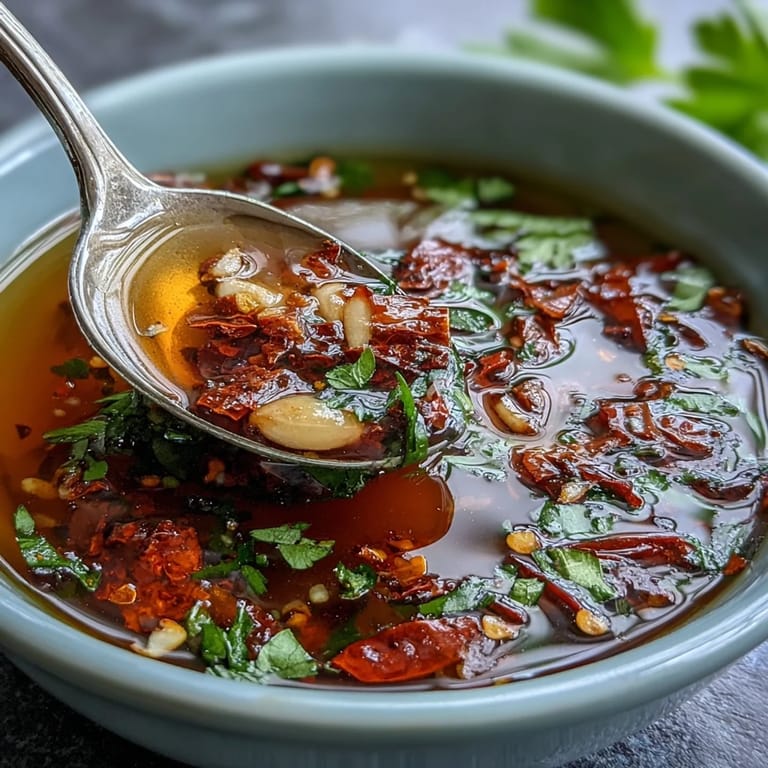
This sauce keeps beautifully in a sealed jar in the refrigerator for up to two weeks, and it's almost more useful after a few days when the flavors have fully merged. You'll notice the oil takes on a deeper golden hue, and the taste becomes rounder, more integrated. Some people swear by it on hot days as a dipping sauce for fresh spring rolls, while others use it on cold winter nights drizzled over noodle soups.
- Keep it in a clean glass jar away from direct sunlight, as light can degrade both the color and the subtle flavor compounds.
- If any separation occurs, simply stir it back together—this is normal and doesn't affect the taste or quality.
- Make a double batch if you love it, because it disappears faster than you'd expect once people discover it.
 Save
Save This sauce has taught me that sometimes the most transformative things in cooking are the simplest—just heat, oil, and paying attention. Keep a jar on hand and watch how it changes everything it touches.
Recipe Questions & Answers
- → What oil works best for this sauce?
Neutral oils like grapeseed, canola, or peanut oil are preferred to let the garlic and chili flavors shine without overpowering the blend.
- → How should the garlic be prepared for best flavor?
Garlic should be finely minced to release maximum aroma and infuse fully when hot oil is poured over it.
- → Can the heat level be adjusted?
Yes, adjust chili flakes quantity or add cayenne pepper for more heat; omit Sichuan peppercorns for a milder tone.
- → How long does this infused oil keep?
Stored in a sealed jar in the refrigerator, it stays fresh for up to two weeks while flavors continue to develop.
- → What dishes complement this garlic chilli oil?
It pairs wonderfully with dumplings, noodles, grilled meats, stir-fries, roasted vegetables, or simply as a bread dip.