 Save
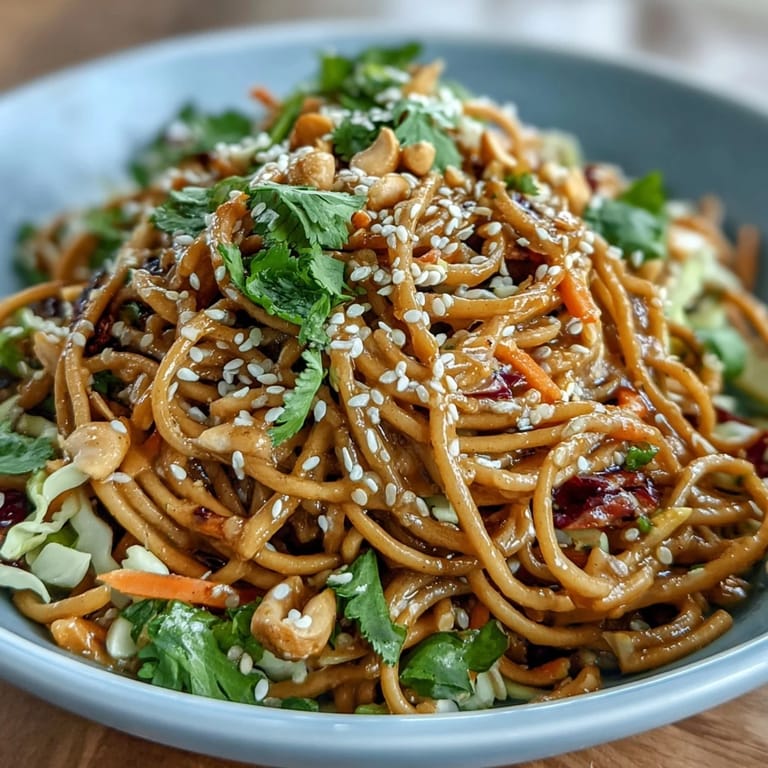
Save There's something almost meditative about assembling this salad on a Tuesday afternoon when the kitchen feels quiet and the light hits just right through the window. I discovered soba noodles by accident at a farmers market, drawn in by their earthy color and the vendor's offhand comment about how they pair beautifully with bold, spicy dressings. That first bowl I made was a revelation—the way the nutty noodles surrendered to the peanut sauce, how the raw vegetables stayed crisp and alive against the warm coating. It became my go-to when I needed something that felt both nourishing and exciting, a dish that somehow tastes more complicated than it actually is.
I made this for a potluck last summer where everyone kept circling back to the salad bowl, and I realized halfway through the evening that I'd barely eaten any myself because I was too busy watching people discover something they didn't expect to love. One friend asked if it was difficult, genuinely surprised when I told her it took less time than ordering takeout. That moment crystallized why I keep coming back to this recipe—it feels generous in a way that has nothing to do with effort.
Ingredients
- Soba noodles, 200 g: These buckwheat-based noodles have a subtle nuttiness that stands up beautifully to bold flavors; rinsing them well under cold water prevents them from clumping and keeps each strand distinct.
- Red cabbage, 1 cup sliced: The jewel-toned leaves add visual drama and contain compounds that stay vibrant even when dressed, plus they have a satisfying crunch that persists.
- Green cabbage, 1 cup sliced: Milder and slightly sweeter than its red counterpart, it balances the sharpness of the other vegetables.
- Carrot, 1 medium julienned: Julienning matters here—it increases surface area so the strands absorb the dressing and contribute sweetness without overpowering.
- Red bell pepper, 1 small sliced: Adds brightness and a slight natural sweetness that complements the spicy-savory peanut sauce.
- Scallions, 3 sliced: Both white and green parts bring a mild onion bite that freshens each bite without demanding attention.
- Fresh cilantro, 1/2 cup chopped: This is the secret weapon—it cuts through richness and adds an herbaceous note that elevates the whole dish.
- Natural peanut butter, 1/3 cup: Use the kind where the oil separates naturally; it creates a smoother dressing than heavily processed varieties and tastes honestly of peanuts.
- Soy sauce, 2 tbsp: Tamari works if you're avoiding gluten, but regular soy sauce adds a depth that's hard to replicate.
- Rice vinegar, 1 tbsp: The gentler acid balance keeps things bright without harsh sharpness.
- Maple syrup, 1 tbsp: A touch of sweetness that rounds out the spice and creates complexity—never tastes cloying.
- Toasted sesame oil, 1 tbsp: Essential for authenticity; the toasting process gives it a warm, nutty character that regular sesame oil lacks.
- Sriracha, 1 to 2 tsp: Start conservative—you can always add more, and different brands vary wildly in heat level.
- Garlic, 2 cloves minced: Mince finely so it distributes evenly and doesn't create harsh pockets of intensity.
- Fresh ginger, 1 tsp grated: Use a microplane if you have one; it releases the oils better than mincing and adds a subtle warmth.
- Warm water, 2 to 3 tbsp: Added gradually, it transforms peanut butter into a silky, pourable dressing without breaking the emulsion.
- Roasted peanuts, 2 tbsp chopped: The garnish adds textural contrast and a double-down on the nutty theme.
- Sesame seeds, 1 tbsp: Toast them lightly yourself if possible—they taste exponentially better and add a subtle crunch.
- Lime wedges: Essential for squeezing over at the table, letting each person control the citrus level.
Tired of Takeout? 🥡
Get 10 meals you can make faster than delivery arrives. Seriously.
One email. No spam. Unsubscribe anytime.
Instructions
- Bring the water to a rolling boil and cook the soba:
- Fill a large pot with water and bring it to a vigorous boil—you want enough water so the noodles have room to move around freely. Add the soba and cook according to package instructions, usually about four to five minutes, stirring occasionally to prevent sticking. The moment they're tender, drain them immediately into a colander and run cold water over them, stirring gently with your fingers to cool them completely and rinse away excess starch.
- Build the slaw with raw intention:
- Slice your red and green cabbage as thinly as you can manage—a mandoline makes this easier but a sharp knife works perfectly fine. Toss the cabbage, julienned carrot, sliced bell pepper, scallions, and cilantro into a large mixing bowl, mixing them gently with your hands so each strand is exposed and ready to absorb flavor.
- Whisk the dressing into silken submission:
- In a separate medium bowl, place your peanut butter and whisk in the soy sauce, rice vinegar, maple syrup, sesame oil, sriracha, minced garlic, and grated ginger. Add the warm water one tablespoon at a time, whisking continuously until the mixture transforms from thick paste to a smooth, pourable consistency—it should coat a spoon but flow from the whisk.
- Marry the noodles and vegetables:
- Transfer your cooled soba noodles to the bowl with the slaw, then pour the dressing over everything. Using tongs or two forks, toss vigorously for a full minute, making sure the dressing reaches every corner and the vegetables begin to soften ever so slightly from the warmth of the noodles.
- Serve and let people taste it their way:
- Divide the salad among bowls and scatter the chopped peanuts and sesame seeds over each serving. Set lime wedges on the side so people can squeeze them over according to their preference, creating their own balance of heat, acid, and richness.
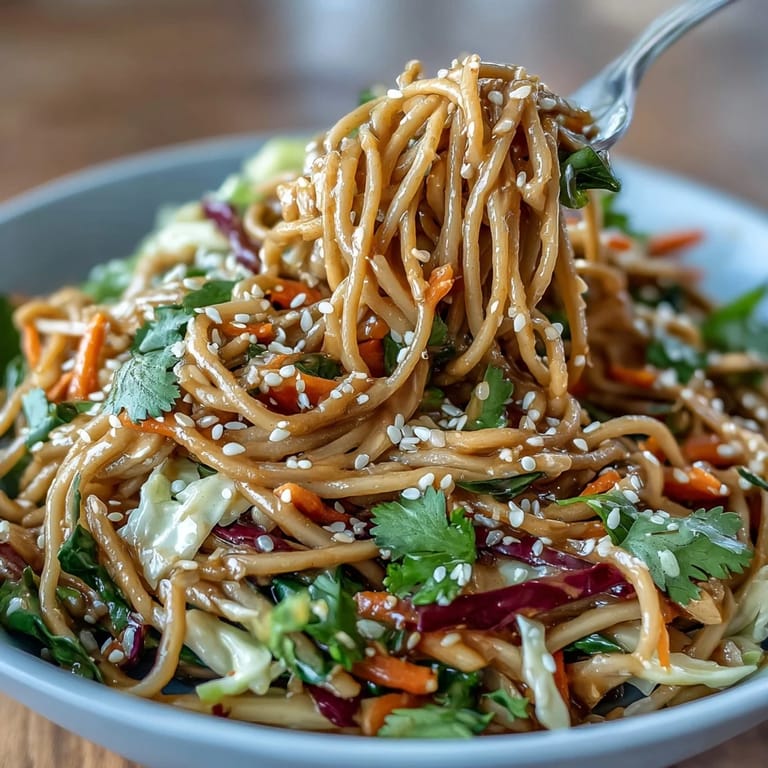 Save
Save My neighbor tasted this for the first time and asked if it was vegan with a skeptical tone, then had three refills and stopped asking questions. That's when I realized the magic of this salad isn't about restriction or substitution—it's just genuinely delicious food that happens to be kind to animals.
The Sauce Is Your Playground
I've learned that this dressing is forgiving in ways most recipes aren't. Too spicy? Add another tablespoon of water and a half teaspoon of maple syrup to round it out. Not spicy enough? A quarter teaspoon more sriracha, or try adding a tiny pinch of cayenne pepper. The beauty is that peanut butter acts as a buffer, absorbing and mellowing whatever adjustments you make without protest. On nights when I'm craving something warmer, I've heated the dressing gently before adding it to room-temperature noodles, and it becomes almost like a warm salad—equally wonderful, just in a different way.
Making It Substantial
This salad walks a delicate line between light and satisfying. By itself it's perfect as a side or a lunch bowl, but when I'm serving it as a main course, I often prepare extras on the side. Baked tofu cubes tossed in a little sesame oil add protein and texture, edamame brings both heartiness and a pop of color, and thinly sliced cucumber contributes coolness. I've also experimented with adding cooked chickpeas, which add earthiness and make the whole thing feel more grounding.
The Timing That Makes Everything Click
The salad tastes differently depending on when you eat it—serve it immediately and the vegetables stay aggressively crisp, the noodles maintain their distinct bite, and everything feels separate and bright. Wait thirty minutes for it to chill in the refrigerator and the flavors meld, the vegetables soften almost imperceptibly, and the whole thing becomes more cohesive and comforting. Neither version is wrong; they're just different meals wearing the same outfit.
- If making ahead, keep the dressing and vegetables separate from the noodles until you're ready to serve, adding the dressing just before tossing.
- The salad keeps beautifully in the refrigerator for up to two days, though the cabbage gradually loses its rigid crunch and the noodles absorb more flavor.
- Taste before serving after refrigeration, as cold temperatures mute spice and salt—you might need a splash more lime juice or a pinch more sriracha.
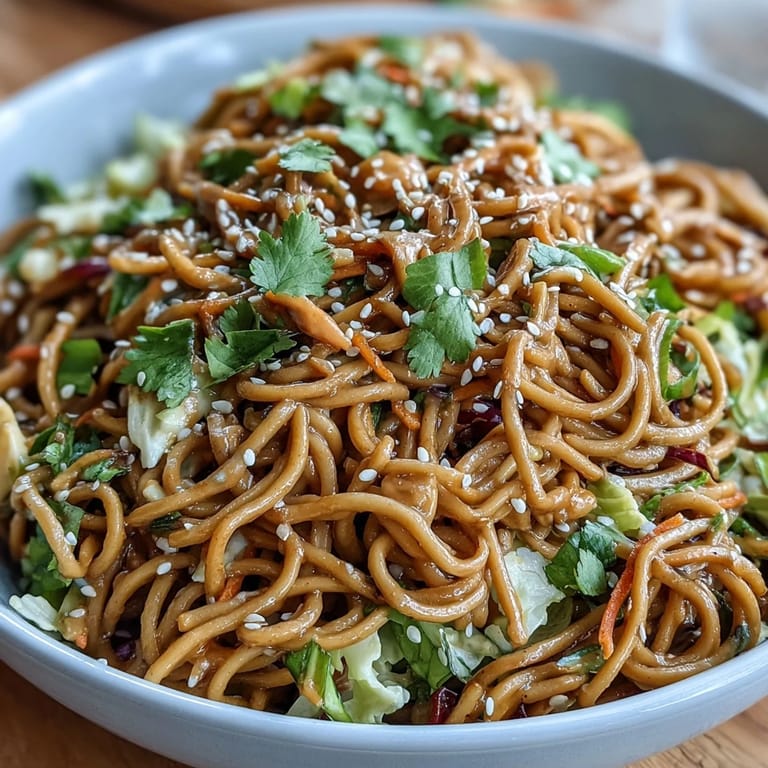 Save
Save This salad has become the recipe I reach for when I want to feel like I've cooked something impressive without the stress, the kind of dish that makes people linger over their bowls and ask for the recipe. It's proof that delicious food doesn't demand drama—just intention and the right balance of flavors.
Recipe Questions & Answers
- → Can I use gluten-free noodles?
Yes, opt for gluten-free soba or another gluten-free noodle variety to keep the dish gluten-free.
- → How can I adjust the spice level?
Modify the amount of sriracha in the dressing to suit your preferred heat intensity.
- → What can I add for extra protein?
Incorporate baked tofu or edamame to increase protein content and keep the dish vegan.
- → How should I store leftovers?
Keep refrigerated in an airtight container for up to 2 days to preserve freshness.
- → Can I prepare the dressing in advance?
Yes, making the dressing ahead allows flavors to meld and saves preparation time.