 Save
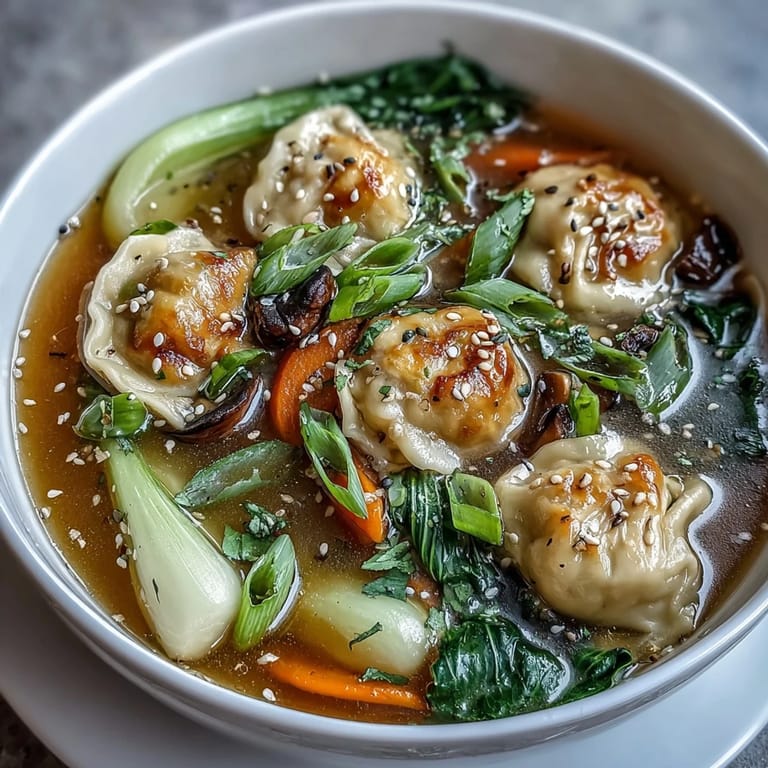
Save There's something about the steam rising from a pot of ginger-infused broth that makes everything feel manageable, even on the most hectic Tuesday nights. My neighbor practically shoved a container of homemade dumplings through my door one winter afternoon, and rather than let them languish in my freezer, I threw together this soup within minutes. The kitchen filled with such a warm, complex aroma that my roommate came home early just to investigate, and we ended up sharing bowls while watching the snow pile up outside. That's when I realized this wasn't just soup—it was a shortcut to feeling like someone had cooked for me all day.
I made this for my friend who was recovering from a cold, and she texted me the next day saying she'd felt human again after that first spoonful. The dumplings gave it substance without heaviness, and somehow the combination of ginger, garlic, and that whisper of sesame oil felt healing in a way I couldn't quite explain. She asked for the recipe immediately, and now whenever her family gets sick, this is what appears on their table.
Ingredients
- Low-sodium chicken or vegetable broth (6 cups): This is your foundation, so choose something you'd actually drink on its own—the quality shows immediately in the finished soup.
- Fresh ginger (1 tablespoon, peeled and thinly sliced): Slice it thin so it releases its warmth into the broth quickly; I learned the hard way that thick chunks stay too assertive and fibrous.
- Garlic (2 cloves, minced): Mincing rather than slicing keeps the garlic distributed throughout instead of lurking in clumps at the bottom.
- Soy sauce (1 tablespoon): This anchors everything with umami depth without needing to cook for hours.
- Sesame oil (1 teaspoon): A little goes a long way—this is about aroma and richness, not domination.
- Rice vinegar (1 teaspoon): Just enough to brighten the broth and keep it from feeling one-note and heavy.
- Green onions (2, sliced, plus extra for garnish): Half goes into the broth to build layers of flavor, and the rest garnishes at the end for freshness.
- Baby bok choy (2 cups, halved or quartered lengthwise): The lengthwise cut helps it cook evenly and makes each bite feel substantial.
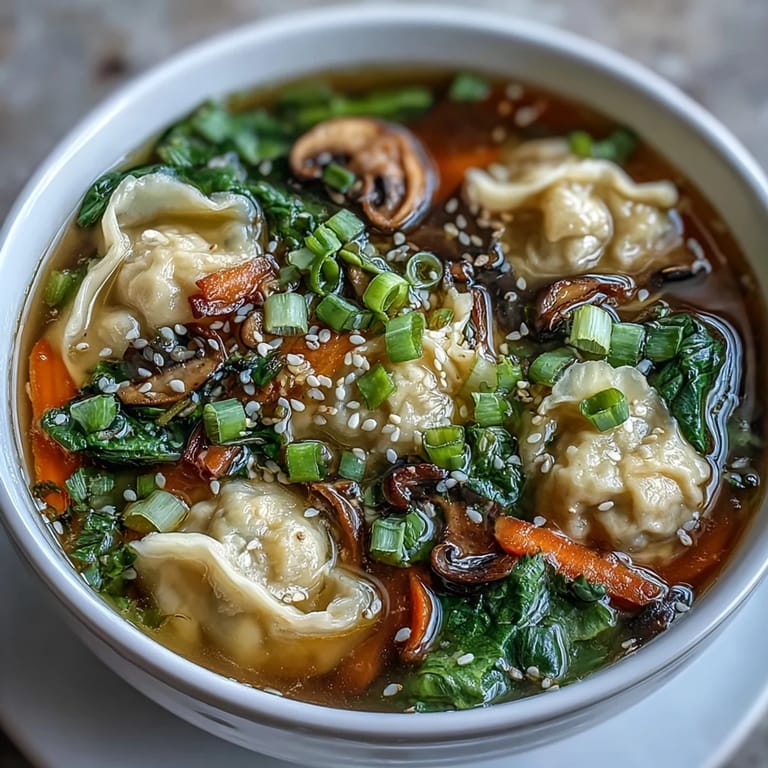
- Carrot (1 medium, julienned or thinly sliced): Thin cuts mean they cook through in minutes without turning mushy.
- Shiitake mushrooms (½ cup, stems removed and sliced): Those earthy notes add real depth to the broth and pair beautifully with ginger.
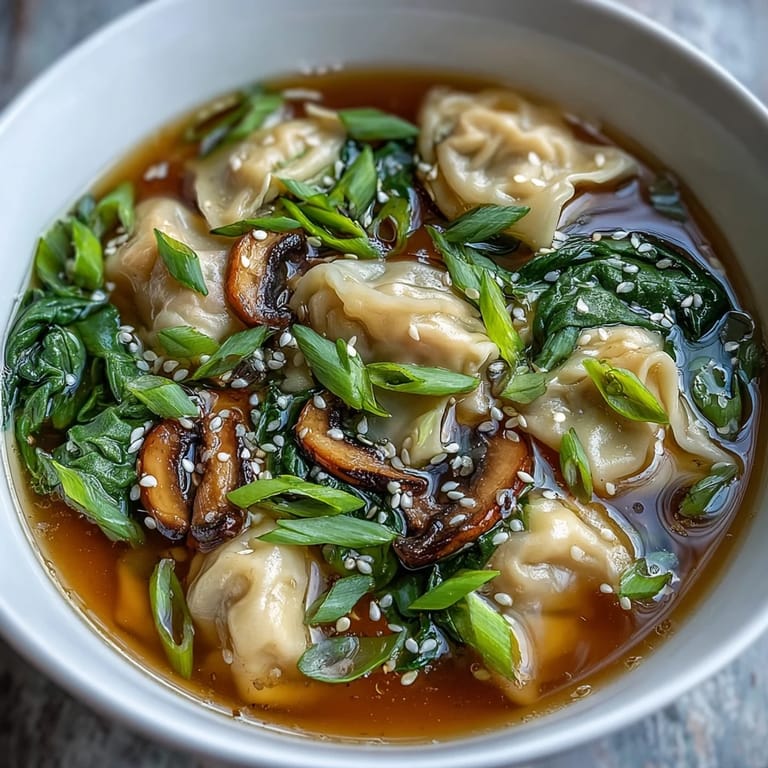
- Frozen or fresh Asian dumplings (16–20): Buy the best ones you can find or make your own—they're honestly the star here.
- Fresh cilantro, chili oil, and sesame seeds (optional garnish): These toppings let everyone customize their own bowl, which feels more generous than it probably is.
Tired of Takeout? 🥡
Get 10 meals you can make faster than delivery arrives. Seriously.
One email. No spam. Unsubscribe anytime.
Instructions
- Build your aromatic base:
- Combine the broth with ginger, garlic, soy sauce, sesame oil, rice vinegar, and green onions in a large pot. Bring everything to a gentle boil over medium-high heat—you want to hear the quiet bubbling that says the flavors are about to marry together.
- Let the broth breathe:
- Drop the heat to medium and let it simmer for 5 minutes untouched. This is when the ginger stops being sharp and becomes warm, when the garlic releases its gentle sweetness into the liquid.
- Add the supporting vegetables:
- Stir in the carrots and mushrooms, then simmer for 3 minutes. You're building texture and flavor without rushing—this short window is exactly enough time for them to start softening but stay distinct.
- Welcome the dumplings:
- Gently lower the dumplings into the simmering broth (don't drop them or they'll stick together). Simmer according to the package instructions, usually 5–7 minutes for frozen or 3–5 for fresh, until they float and feel tender when you break one open.
- Finish with the greens:
- Add the bok choy and cook for 2–3 minutes until it's just tender and still bright—overcooked greens lose their whole purpose here. Taste the broth and add extra soy sauce or vinegar if it needs more personality.
- Serve with intention:
- Ladle into bowls and finish each one with sliced green onions, cilantro, a drizzle of chili oil, and sesame seeds. There's something about customizing the bowl yourself that makes it taste better.
 Save
Save My dad, who normally eats very simply and doesn't get excited about food, asked for seconds and wanted to know what made it taste so balanced. I realized that when a soup is built right, it doesn't announce itself—it just makes you feel better, and somehow that's more satisfying than any dramatic flavors ever could be.
When to Reach for This Soup
This is the soup that appears on your table when you need something warm but not heavy, when the weather turns sharp, or when you want to cook something that feels both simple and sophisticated. It works equally well as a quick lunch—I've made single servings in a small pot—or as the first course before something more substantial. The formula is flexible enough to swap out dumplings for noodles, or to use whatever vegetables are already in your crisper drawer.
Making It Your Own
The beauty of this recipe is that it invites customization without asking for it explicitly. I've added fish sauce when I want more umami intensity, and I once threw in a splash of coconut milk by accident, which created something entirely unexpected but not unwelcome. The broth is forgiving enough to handle a teaspoon of white miso stirred in at the end, or a touch of hot sauce if you want heat that builds instead of attacks.
Storage and Keeping It Fresh
The broth keeps beautifully in the refrigerator for up to 4 days, and honestly, it tastes even better the next day when all those ginger and garlic notes have had time to deepen and settle. I like to store the broth separately from the bok choy and dumplings so everything stays fresh and you can reheat just what you need. When you're ready to serve, gently warm the broth, add fresh dumplings or quickly boil the ones you've stored, and finish with fresh bok choy so it retains that vital brightness.
- Frozen dumplings actually work better here than fresh since they hold their structure after being stored and reheated.
- If you have leftover broth, use it as a base for other soups or as cooking liquid for grains—nothing goes to waste.
- The garnishes are optional but they're actually the difference between a weeknight meal and something you'll want to make again.
 Save
Save This soup taught me that sometimes the most nourishing meals are the ones that come together almost by accident, without fussing or second-guessing. Keep this recipe close for the moments when you need warmth, comfort, and something to show that you care—about your dinner guests or about yourself.
Recipe Questions & Answers
- → How do I cook dumplings in the soup?
Add frozen or fresh dumplings to simmering broth and cook according to package instructions, usually 5–7 minutes for frozen or 3–5 minutes for fresh, until they float and are cooked through.
- → Can I substitute bok choy with another vegetable?
Yes, spinach or baby kale work well as green leafy substitutes and add a similar tender crunch to the soup.
- → What broth is best for this soup?
Low-sodium chicken or vegetable broth provides a light, savory base that complements the ginger and garlic flavors without overpowering the dumplings.
- → How can I make this dish vegetarian?
Use vegetable broth and choose dumplings with vegetarian fillings to keep the dish flavorful and meat-free.
- → What garnishes enhance this dish?
Sliced green onions, fresh cilantro, a drizzle of chili oil, and sesame seeds add fresh, spicy, and nutty notes that lift the overall flavor.
- → Is it possible to add more spice?
Yes, increase chili oil or add fresh sliced chilies to the broth to adjust heat levels to your preference.