 Save
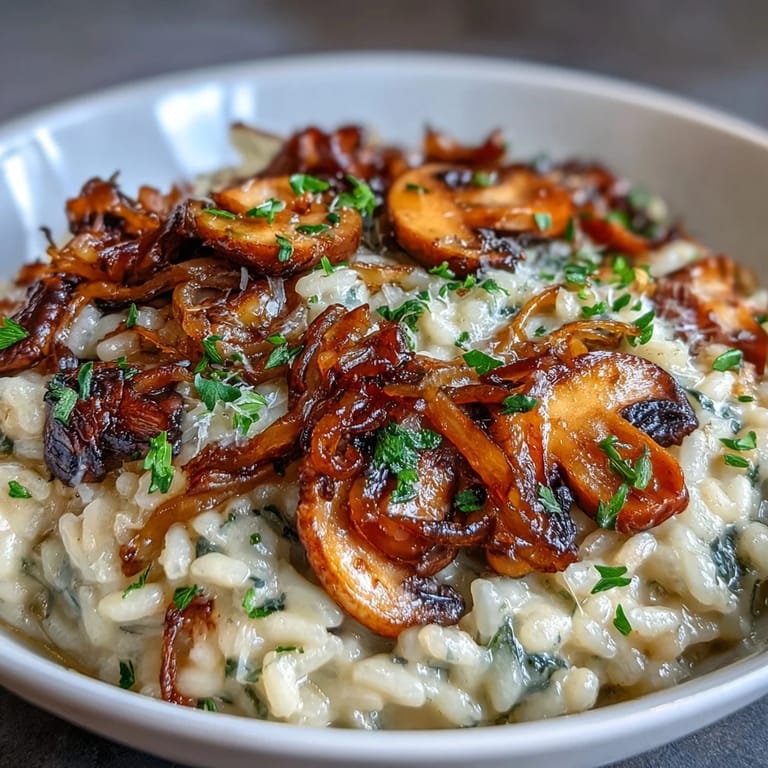
Save There's something about the smell of onions turning golden that makes a kitchen feel like home. I discovered this risotto on a gray November evening when I had nothing but what lingered in my vegetable drawer—two onions, a cluster of mushrooms, and the kind of time that only lazy weekends offer. What started as improvisation became the dish I now make whenever I want to feel like I'm doing something genuinely good in the kitchen, even if it's just dinner for myself.
I remember making this for my neighbor who had just moved in, and she sat at my kitchen counter while I stirred, watching the rice slowly transform from hard grains into something silky and alive. She told me it reminded her of her grandmother's cooking, which might be the nicest thing anyone's said about my food. That's when I realized risotto isn't just about technique—it's about the time you spend with it, the steady attention, the small act of care.
Ingredients
- Yellow onions, thinly sliced (2 large): These are your foundation—the slower you cook them, the sweeter and more complex they become, so don't rush this step or you'll miss the whole point.
- Cremini or button mushrooms, sliced (250 g): Cremini have more flavor than buttons, but either works; the key is letting them brown deeply so they lose their moisture and develop an almost meaty richness.
- Garlic, minced (3 cloves): A brief bloom in the hot pan releases its perfume right into the risotto base without any bitterness.
- Fresh parsley, chopped (2 tbsp, plus more for garnish): Stir it in at the very end so it stays bright and fresh, not cooked into submission.
- Arborio rice (300 g): This short-grain rice releases starch as it cooks, creating that signature creamy texture; don't substitute with long-grain unless you enjoy grainy, separated risotto.
- Grated Parmesan cheese (60 g): Freshly grated makes a real difference in how smoothly it melts into the rice; pre-grated tends to clump.
- Unsalted butter (40 g): The butter at the end (called mantecatura) is what transforms good risotto into silky, restaurant-quality risotto.
- Heavy cream (60 ml, optional): This is my secret when I want extra richness, but skip it if you prefer the risotto to taste more of the mushrooms and onions.
- Low-sodium vegetable broth, kept warm (1 L): Warm broth means the rice absorbs it faster and cooks evenly; cold broth interrupts the cooking process.
- Dry white wine (120 ml): The wine adds acidity and a subtle complexity that balances the sweetness of the onions.
- Olive oil (2 tbsp): Use a good one you'd actually taste, because it matters here.
- Salt and black pepper: Taste as you go; risotto needs more seasoning than you'd think.
Tired of Takeout? 🥡
Get 10 meals you can make faster than delivery arrives. Seriously.
One email. No spam. Unsubscribe anytime.
Instructions
- Caramelize those onions with patience:
- Heat 1 tablespoon of olive oil and 1 tablespoon of butter in your largest, heaviest pan over medium-low heat. Add the sliced onions with a pinch of salt and let them cook undisturbed for a few minutes—this helps them start browning. After that, stir often for 20 to 25 minutes until they're deep golden and sticky, almost jammy. If they start sticking to the bottom, add a splash of water and keep going; this slow cooking is what makes the dish sing.
- Build flavor with the mushrooms:
- In the same pan, add the remaining olive oil and spread the mushroom slices in a single layer. Let them sit for a couple minutes without stirring—this is how they develop color and lose their moisture—then stir and cook for about 7 minutes total until they're browned and no longer releasing liquid. Add the minced garlic and cook for just 1 minute until the kitchen smells incredible.
- Toast the rice to wake it up:
- Stir in the Arborio rice and keep stirring constantly for 2 minutes. You'll hear the rice grains click against the pan as they toast; this small step adds a subtle nutty flavor that people often can't quite name but always notice.
- Let the wine do its work:
- Pour in the dry white wine and stir gently until it's mostly absorbed by the rice. The rice will look a little less dry, and the wine's acidity will brighten everything.
- Add broth one ladleful at a time:
- Pour in about a ladle of warm broth and stir gently, allowing the rice to absorb it before adding more. This isn't lazy cooking—it's how risotto gets its creaminess. Keep stirring, adding broth, and adjusting the heat so the rice is always bubbling gently but never violently boiling. After about 18 to 20 minutes, the rice should be tender but still have a slight bite, and the whole mixture should look creamy and flow slowly on the plate rather than stay in a stiff clump.
- Finish with the caramelized onions and butter:
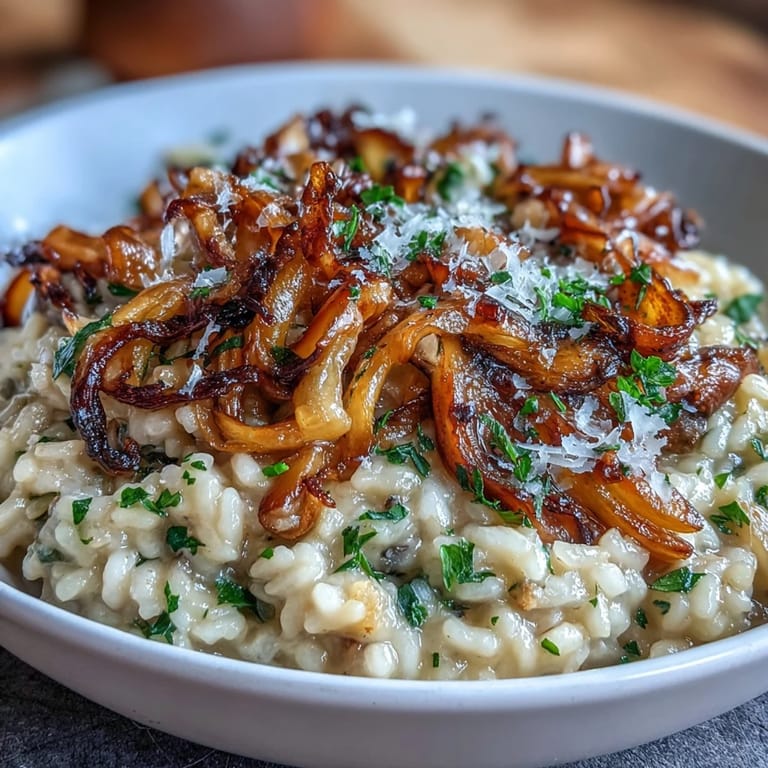
- Turn off the heat and stir in the reserved caramelized onions, the remaining butter, the Parmesan, and the cream if you're using it. Taste and adjust the salt and pepper; risotto needs more seasoning than you'd expect.
- Rest, stir, and serve:
- Let the risotto sit undisturbed for 2 minutes—this helps everything come together. Stir in the fresh parsley right before serving and scoop it into warm bowls, then crown each one with extra Parmesan and parsley.
 Save
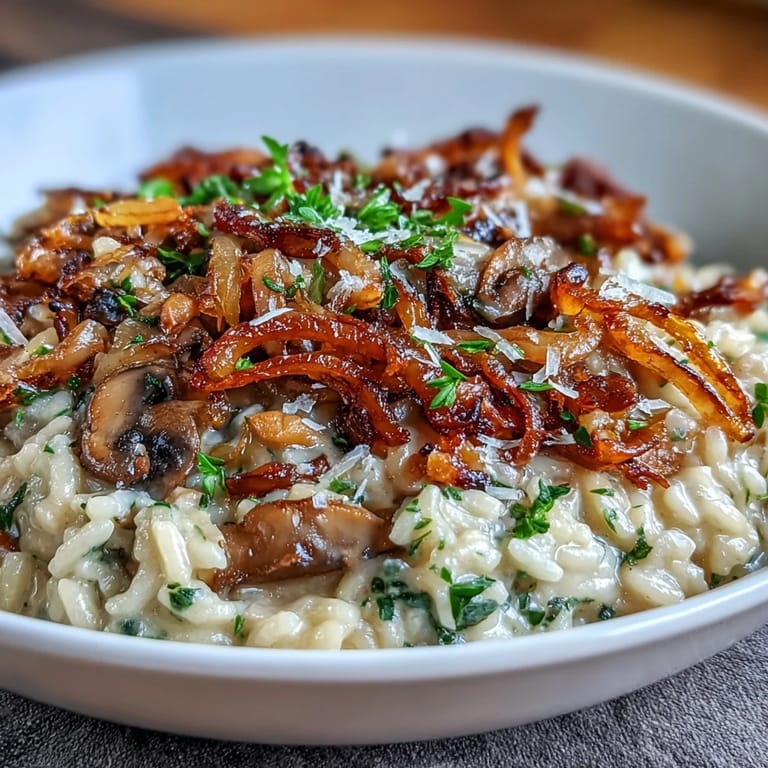
Save One winter night, I served this to friends who were all stressed about their jobs and their lives, and somewhere between the third and fourth spoonful, the whole table went quiet in that peaceful way that only happens when food is truly good. Nobody checked their phone. That's when I understood that risotto is less about impressing people and more about giving them permission to slow down.
Why Risotto Is Worth the Attention
Risotto gets a reputation for being fussy, but it's really just rice that wants your presence while it cooks. The constant stirring isn't punishment—it's actually meditative, a chance to stand at the stove and pay attention to one thing while the world pulls you in a hundred directions. The more you stir, the more starch releases from the rice, and the creamier the final dish becomes without any cream at all (though cream doesn't hurt).
The Magic of Caramelized Onions
Caramelizing onions teaches you something about patience and transformation. You start with sharp, peppery slices and end with something sweet and almost syrupy. The trick is resisting the urge to turn up the heat; slow and steady is the only way. If you've ever wondered why restaurant risottos taste so good, half the answer is often sitting in the pan as sweet, golden onions that add a background note of complexity you can't quite put your finger on.
Variations and Improvisations
This risotto welcomes changes without losing its soul. On nights when I want something lighter, I skip the cream and add an extra splash of broth instead. If fresh thyme is on the counter, I stir in a teaspoon right at the end. Some people add a handful of spinach or peas in the last minute of cooking for color and a hint of freshness. The foundation—those caramelized onions and earthy mushrooms—stays constant, but everything else can bend to what you have and what you're craving.
- A glug of truffle oil stirred in at the end turns this into something restaurant-worthy for special occasions.
- If you're vegan, use plant-based butter and skip the Parmesan, or try a good vegan cheese alternative that melts smoothly.
- Leftover risotto can be refrigerated and turned into crispy risotto cakes the next day by chilling it, shaping it into patties, and pan-frying until golden.
 Save
Save This risotto has become the dish I reach for when I need to remember that good food doesn't require fancy techniques or obscure ingredients—it just requires time, attention, and the willingness to stand at the stove and stir. Make it once and you'll understand why.
Recipe Questions & Answers
- → How do I achieve perfectly caramelized onions?
Cook sliced onions slowly over medium-low heat, stirring often for 20-25 minutes until deeply golden and soft, unlocking their sweetness without burning.
- → Can I use other mushrooms in this dish?
Yes, cremini or button mushrooms work well, but shiitake or porcini can add deeper, earthier notes if preferred.
- → What is the key to creamy risotto texture?
Gradually adding warm broth and stirring allows the starches from Arborio rice to develop a rich, velvety consistency.
- → Is white wine necessary for flavor?
White wine adds acidity and depth, enhancing the overall taste, but it can be replaced with extra broth if desired.
- → How can I make this dish vegan-friendly?
Swap butter with plant-based alternatives and omit or replace Parmesan with a vegan cheese substitute.
- → What herbs pair well with this dish?
Fresh parsley is classic for garnish, adding a fresh, bright finish that complements richness well.