 Save
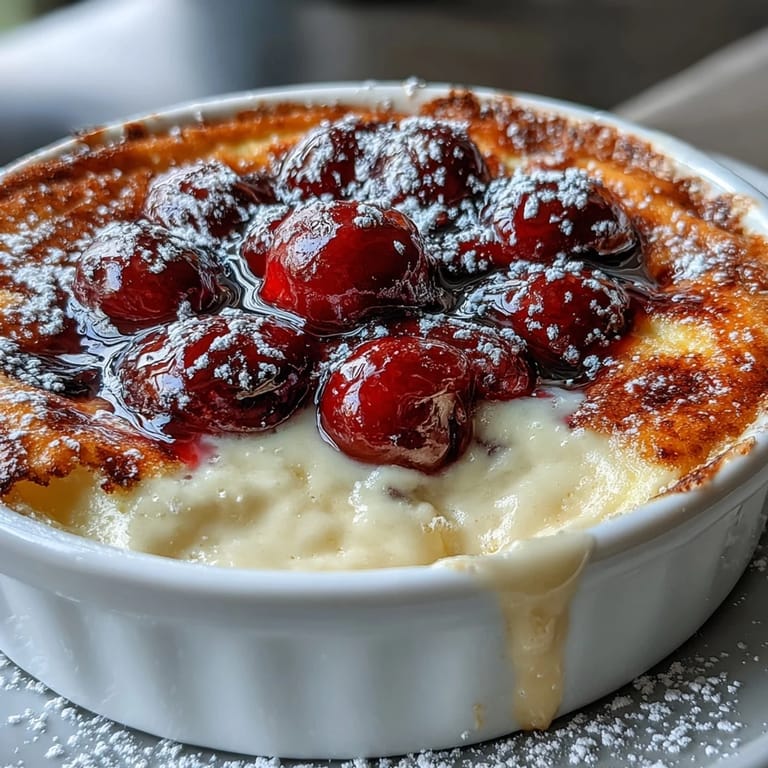
Save Sunlight was streaming through the kitchen window the first time I decided to bake fresh cherry clafoutis. The scent of ripe cherries was so tempting that I couldn’t resist popping a few in my mouth as I pitted them. A symphony of vanilla and fruit filled the air even before the batter hit the oven, and I remember the anticipation growing every minute as the custard puffed up, golden and fragrant. It’s the kind of dessert that feels too easy for how impressive it looks. Every spoonful tasted like the start of summer holidays.
I once brought this clafoutis to a neighbor’s backyard picnic, nervously balancing the warm dish in a towel. Watching everyone gather around and sneak bite after bite before dinner had even started turned it into the surprise highlight of the evening. You could hear cherry stones clink against dessert plates as people debated the merits of leaving them in or not. I’ve never seen a dessert vanish so quickly once word spread. It’s now an unspoken invitation for summer get-togethers.
Ingredients
- Fresh sweet cherries: Choose the ripest, juiciest cherries you can find—they make the whole clafoutis sing. Pitting can be a little messy, but I’ve found using a metal straw or chopstick is a fun shortcut.
- Eggs: Room temperature eggs whisk up fluffier and help the custard set tenderly; don’t rush this step straight from the fridge.
- Granulated sugar: Just enough to highlight the natural cherry sweetness, so start with the recipe’s amount until you taste your fruit.
- Vanilla bean: Nothing matches the aroma and flecks from a real vanilla bean, but in a pinch, pure extract will also work nicely.
- All-purpose flour: A bit of flour gives the custard its structure, and sifting it first wards off lumps (trust me on this one).
- Salt: Even a tiny pinch sharpens the flavors and keeps the custard balanced.
- Whole milk: Whole milk adds lushness and keeps the baked custard from being too heavy.
- Heavy cream: This is where the richness comes in—don’t be tempted to swap it out if you want a silky finish.
- Unsalted butter: Melting and cooling the butter means it blends in smoothly; don't skip greasing the dish for both flavor and an easy release.
- Butter for greasing the dish: Give your dish a thorough coating to avoid sticky situations when serving.
- Powdered sugar: A snowy dusting right before serving makes even the simplest bake look ready for a patisserie window.
Tired of Takeout? 🥡
Get 10 meals you can make faster than delivery arrives. Seriously.
One email. No spam. Unsubscribe anytime.
Instructions
- Prep your dish:
- Heat the oven to 180°C (350°F) and generously butter a 24 cm round baking dish, letting the butter reach all the edges and corners for the golden finish.
- Layer the cherries:
- Scatter the pitted cherries evenly over the bottom, resisting the urge to snack on too many.
- Start the batter:
- In a mixing bowl, whisk eggs and sugar together until they’re pale and slightly thick, hearing the subtle crackle as the sugar dissolves.
- Infuse with vanilla:
- Scrape in the seeds from the vanilla bean and add them to the mix, enjoying the heady fragrance, then whisk in flour and salt until your batter is smooth as silk.
- Add liquid magic:
- In slow streams, whisk in the milk, cream, and cooled melted butter, keeping the mixture lump-free and glossy.
- Assemble and bake:
- Pour the custard batter over the cherries, watching them poke through like jewels, and bake for 35–40 minutes until puffed and lightly golden.
- Final touches:
- Let it cool for about 15 minutes as the custard settles, then sift powdered sugar in a light snowfall over the top just before serving.
- Serve and enjoy:
- Cut generous slices and serve warm or at room temperature—you’ll notice how the flavors deepen as it sits.
 Save
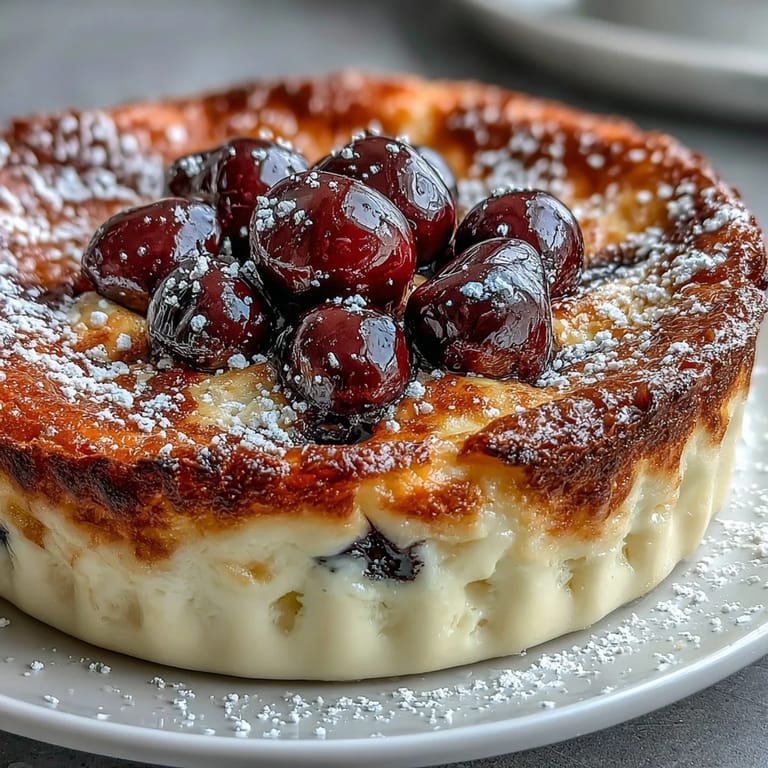
Save The moment this clafoutis became special for me was seeing a friend's child sneak downstairs for an extra slice late at night, leaving a trail of powdered sugar across the countertop. From then on, I realized how quickly this simple dessert can turn into a cherished family staple.
Handling Cherries (and the Sticky Truth)
Pitting cherries is always a slightly sticky adventure—no matter how careful you are, cherry juice will sneak onto your hands, your shirt, or the countertop. I’ve made peace with a little bit of colorful mess, and found that working over a large bowl helps catch runaway pits, saving some time on clean-up.
Baking for the Right Texture
The true magic of clafoutis is in the barely set custard layer that quivers gently when you nudge the pan. If you’re uncertain, just wait for the outer edges to be golden while the center retains a gentle wobble—the custard will firm slightly as it cools.
Swaps, Variations, and Serving Up Summer
I sometimes swap in a mix of juicy plums or apricots when cherries aren’t in season—those weekends are always full of experiments and surprise flavors. Serving clafoutis with a spoonful of crème fraîche or a drizzle of cold cream takes things up a notch, and leftovers make a dreamy breakfast the next day.
- Scatter a few toasted almonds for an extra crunch.
- Let kids dust on the powdered sugar for a fun kitchen task.
- Don’t worry if the clafoutis deflates as it cools—it’s meant to be delightfully rustic.
 Save
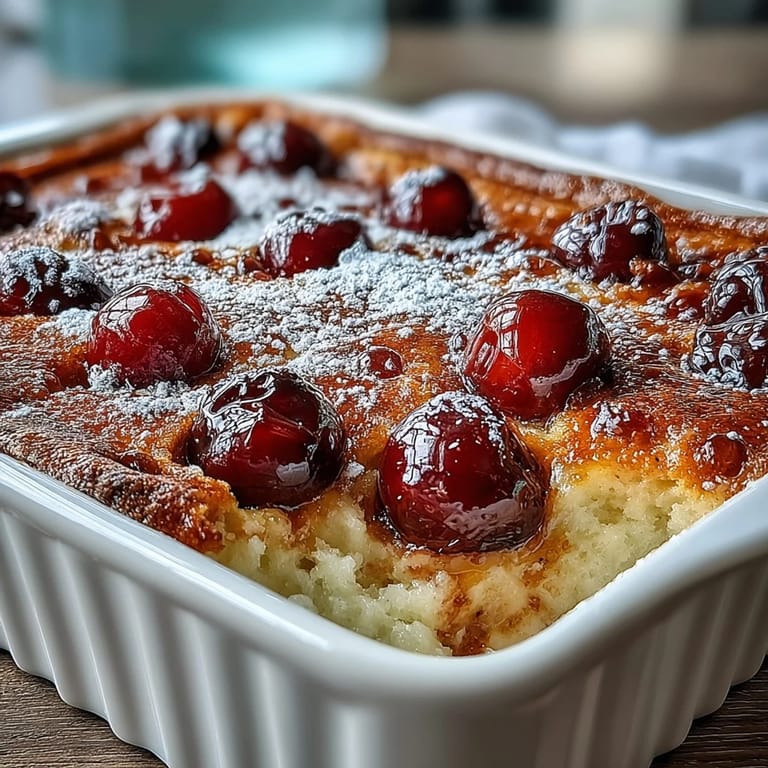
Save I hope you find as much joy in making and sharing this cherry clafoutis as I have. It’s a reliable little showstopper that never needs an occasion to shine.
Recipe Questions & Answers
- → Can I leave the cherry pits in?
Yes — leaving pits is traditional and imparts a subtle almond-like aroma to the dish. If serving to guests or children, you may prefer to pit the cherries for safety and ease of eating.
- → How do I know when the custard is set?
The clafoutis should be puffed and lightly golden with the center only slightly wobbly when gently shaken. It will continue to firm as it cools; avoid overbaking to keep a tender texture.
- → Can I use frozen cherries instead of fresh?
Frozen cherries work well; thaw and drain any excess liquid to prevent a soggy base. Pat them dry before arranging in the dish and expect a slightly shorter baking time if fruit is well drained.
- → Any tips for preventing a soggy bottom?
Ensure the dish and fruit are well buttered and avoid excessive fruit juices by pitting and draining or patting cherries dry. Preheating the oven fully helps the custard set more quickly and reduces sogginess.
- → What can I substitute for cherries?
Stone fruits such as apricots, plums or halved peaches make excellent substitutes. Adjust sweetness if using tarter fruit and slice larger fruits to lie flat in the dish for even baking.
- → How should leftovers be stored and reheated?
Cover and refrigerate leftovers up to 2–3 days. Reheat gently in a low oven (150–160°C / 300–325°F) for 8–12 minutes to revive the texture, or enjoy chilled; avoid microwaving to prevent rubbery custard.