 Save
Save There's something deeply satisfying about geometry on a plate. I discovered this while organizing my kitchen one afternoon, staring at a wedge of Manchego and thinking about how a simple triangle suddenly felt intentional, almost architectural. That's when the idea struck—what if a charcuterie board didn't just taste good, but looked like it belonged in a gallery? The shapes turned out to be more than aesthetic; they made picking and sharing feel like a small ritual, each piece deliberate and considered.
I made this for a dinner party where someone mentioned they'd been feeling uninspired in the kitchen, stuck in a creative rut. Watching their face light up when they saw those precise triangles and rhombuses—how something so simple could spark conversation—reminded me that presentation isn't pretentious, it's a form of care. By the end of the evening, two guests were asking for my knife recommendations so they could try it at home.
Ingredients
- Manchego cheese, 150 g: Firm enough to hold a sharp triangle without crumbling, with a slightly nutty flavor that anchors the board.
- Aged cheddar, 150 g: Choose one that's been aged at least 2 years so it slices cleanly into geometric shapes without shattering.
- Brie, 100 g: Keep it cold before slicing—a warm brie becomes impossible to cut precisely; chill for at least an hour before you start.
- Gruyère, 100 g: Its crystalline texture makes rhombus cuts look almost deliberately rustic.
- Prosciutto, 120 g: Ask your butcher for a thicker slice so you can fold or trim it into clean triangles without tearing.
- Soppressata, 120 g: This Italian salami holds its shape beautifully when sliced thin and trimmed into rhombuses.
- Chorizo, 100 g: The diagonal cut shows off the color contrast and adds a flash of warmth to the board.
- Red and green grapes, 1 small bunch each: They provide gentle curves that contrast with all those angles you've created.
- Dried apricots, 50 g: Trim them diagonally to echo the geometric theme; they add brightness and a tart sweetness.
- Marcona almonds, 50 g: Roasted and salted, they fill gaps and add texture without competing with the other flavors.
- Fig jam, 2 tbsp: Use a deep, concentrated jam—thin, runny ones can pool and ruin your carefully arranged shapes.
- Gluten-free seed crackers, 100 g: Break them along natural lines so they become organic triangles that feel part of the design.
- Fresh rosemary or thyme sprigs: Beyond decoration, they release a gentle herb note that makes the whole board feel intentional.
Tired of Takeout? 🥡
Get 10 meals you can make faster than delivery arrives. Seriously.
One email. No spam. Unsubscribe anytime.
Instructions
- Get your blade sharp and your mind calm:
- A dull knife will crush these cheeses and meats, turning clean cuts into frustration. Take a moment to sharpen your chef's knife—you'll feel the difference immediately. This board is all about precision, and precision starts with the right tool.
- Cut the cheeses first:
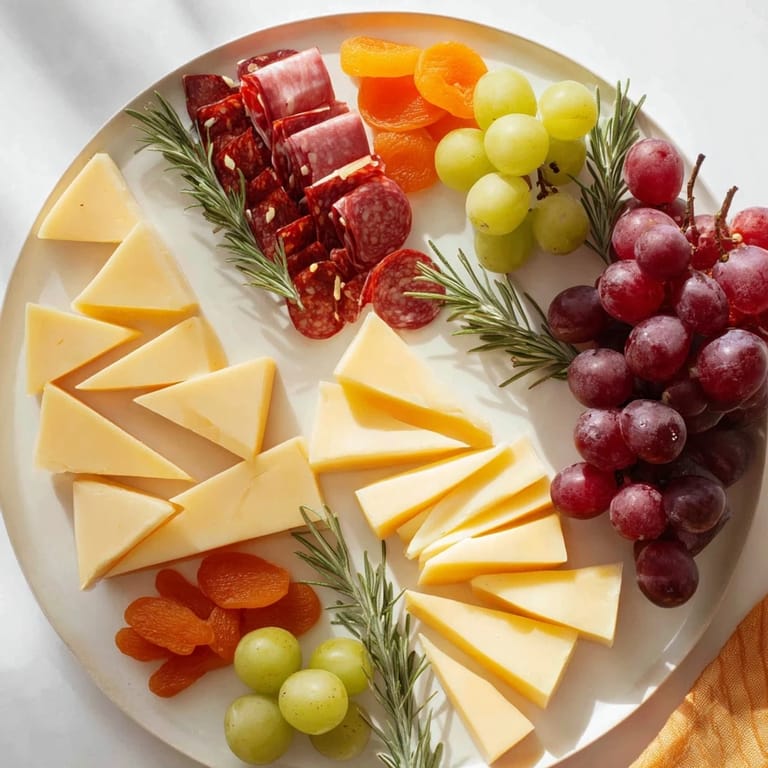
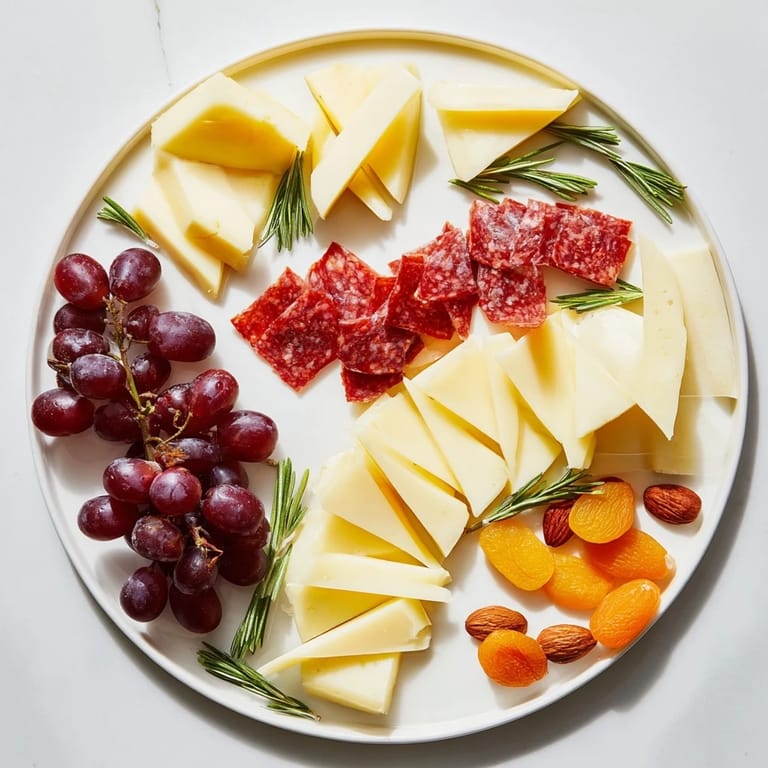
- Manchego and aged cheddar are your anchors; cut them into consistent triangles about the size of your thumb. Chill the Brie for an hour before slicing into firm wedges that read as triangles from above. The Gruyère gets rhombuses—angle your knife so each piece catches the light differently.
- Prepare the cured meats with intention:
- Prosciutto should be folded gently into loose triangles or cut cleanly if your butcher's slice is thick enough. Soppressata and chorizo get sliced thin, then each slice is trimmed into a rhombus shape—this is where the board starts to feel architectural.
- Build from the center outward:
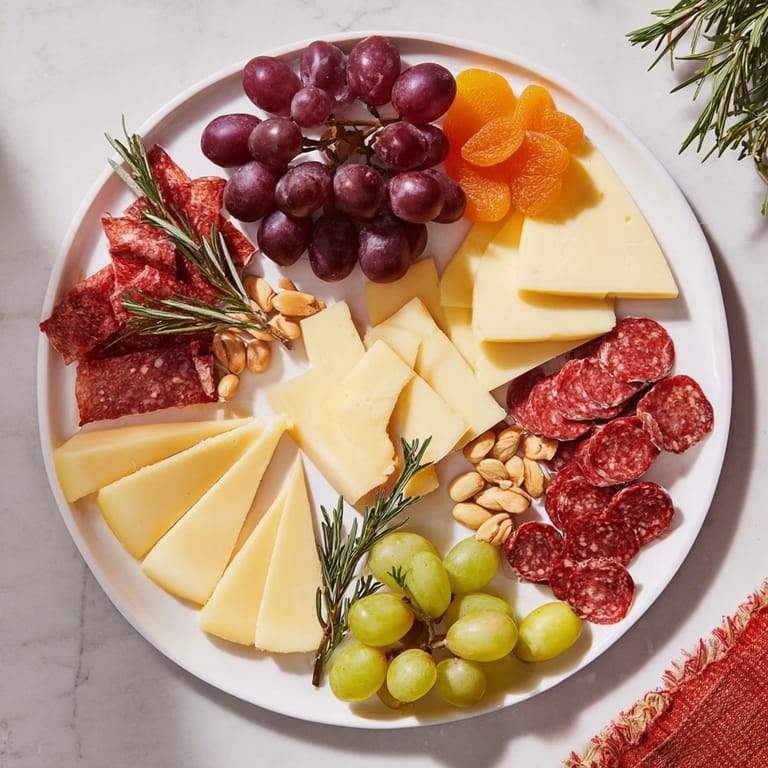
- Place your largest, most visually striking cheeses in the middle of the board. Alternate between shapes and colors as you move outward, creating a rhythm that feels almost musical. Leave intentional gaps for the next elements.
- Scatter the grapes and apricots in clusters:
- Grapes provide a reprieve from geometry; group them in small clusters that feel organic. Dried apricots, if you've trimmed them diagonally, bridge the gap between structure and nature.
- Fill spaces with almonds and intentional dollops:
- Marcona almonds go into the gaps that feel empty. Fig jam gets placed in small bowls or directly on the board in deliberate dollops—just enough to be interesting without looking haphazard.
- Arrange crackers like you're laying bricks:
- Break your gluten-free seed crackers along their natural fault lines so they become rough triangles. Stack them in neat fans or scattered stacks, keeping the geometric theme alive. This is the last structural element.
- Garnish with herbs and step back:
- Tuck fresh rosemary or thyme sprigs between elements like you're planting a small garden. Step back, look at the whole thing, and let it tell you where it needs just a touch more personality.
 Save
Save The real moment came when a friend who usually avoids cheese suddenly found herself reaching for a specific triangle of Gruyère, drawn by its shape more than anything else. That's when I realized this board wasn't just about impressing people—it was about making food feel like a deliberate choice rather than a mindless graze. When we arrange things with care, people eat more slowly and enjoy it more deeply.
The Geometry as a Guide, Not a Rule
Start with the shapes as a framework, but remember that food is forgiving. If a triangle comes out slightly wonky, it adds character. I've found that the most visually striking boards aren't the ones where every cut is mathematically perfect, but the ones where intention is obvious and human hands clearly did the work. The geometry gives you a starting point; your instinct and your knife do the rest.
Knife Skills That Matter
This recipe taught me more about knife control than any formal lesson ever could. The pressure you apply, the angle of your blade, the speed of your stroke—all of it shows on a geometric board where imperfection is visible. I started practicing on less expensive cheeses, getting comfortable with the motion, understanding how different blades behave. By the time I made this for guests, cutting felt almost meditative.
Wine Pairing and Serving Wisdom
A crisp Sauvignon Blanc cuts through the richness of the aged cheddar and prosciutto, while a rosé brings out the sweetness in the fig jam without overwhelming the subtle flavors. I've learned that the wine should feel like a conversation with the food, not a distraction. Serve the board straight from the refrigerator—cold cheese and meat are easier to plate and taste sharper, cleaner, more themselves.
- If you're making this ahead, assemble everything except the grapes and apricots until the last moment to keep things fresh and bright.
- A geometric board looks stunning as a centerpiece for 20 minutes before service; after that, the shapes start to blur as people eat—plan your timing accordingly.
- Your guests will ask where you got your knife; be ready with a recommendation because this recipe makes everyone want to start cutting things into shapes.
 Save
Save There's something about arranging food with intention that changes how people experience it. This board reminds me that cooking, even at its simplest, is an act of generosity. Every triangle is a small promise that someone cared enough to make dinner feel special.
Recipe Questions & Answers
- → What cheeses are best for geometric cuts?
Firm cheeses like Manchego, aged cheddar, and Gruyère hold triangular and rhombus shapes well for clean cuts and presentation.
- → How can I keep the shapes from breaking?
Use a sharp knife and chill cheeses before cutting to maintain firm edges and avoid crumbling.
- → What meats pair well with this board theme?
Cured meats like prosciutto, soppressata, and chorizo sliced into complementary shapes enhance the geometric aesthetic.
- → Can I substitute any ingredients easily?
Yes, you can swap cheeses or meats with firm alternatives that hold their shape when cut into geometric figures.
- → What’s a good beverage pairing?
Bright white wines such as Sauvignon Blanc or a sparkling rosé balance the rich flavors and complement the board.
- → How to arrange the board for best visual impact?
Alternate cheese and meat shapes, cluster fruits and nuts in small groups, and place garnishes strategically to highlight contrasts.