 Save
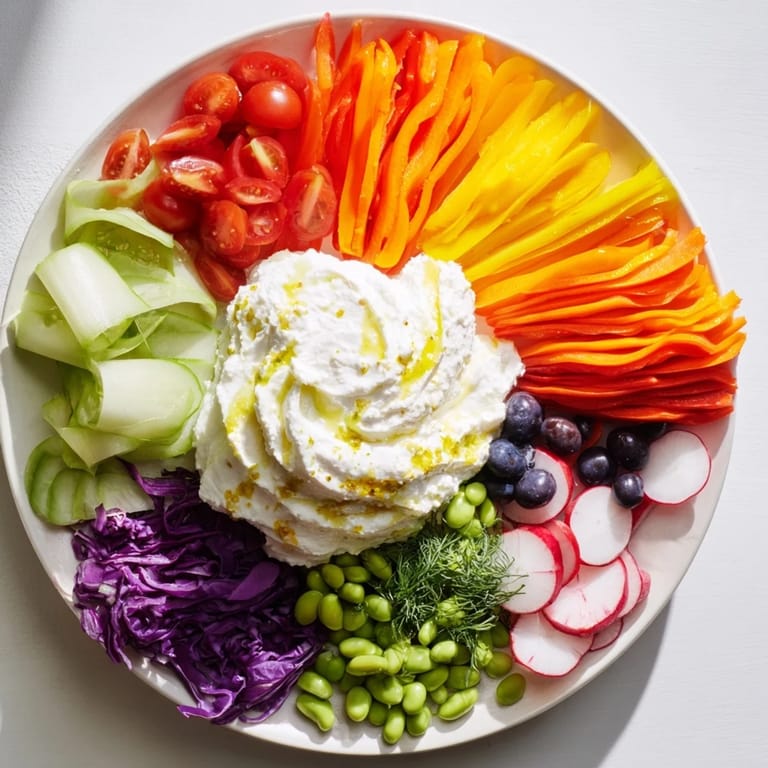
Save I discovered this salad by accident one afternoon when my daughter asked why food had to be boring. We'd just learned about light refraction in her science class, and she wanted dinner to match what she'd drawn on the whiteboard—a perfect rainbow breaking through white. We spent the next hour in the kitchen arranging vegetables like we were painting with produce, and I realized that the most satisfying meals are often the ones that make you pause before you eat them.
The real test came when I made it for my partner's birthday dinner, and they actually gasped when I set it down. That's when I knew this wasn't just a side dish—it was a way of saying something without words. The platter sat in the center of the table like a small ceremony, and everyone slowed down to really look before diving in.
Ingredients
- Ricotta cheese: This creamy white base is your canvas; Greek yogurt works too if you want something lighter and tangier.
- Extra-virgin olive oil: Quality matters here because you taste it directly in both the base and dressing.
- Lemon zest: Brightens everything without making it acidic; a microplane makes this effortless.
- Cherry tomatoes: Halved so they nestle into the arrangement without rolling; the sweetness balances the savory ricotta.
- Bell peppers (red, orange, yellow): Slice them thinly so they fan out gracefully and catch the light.
- Cucumber: Adds cool crispness; slice on a bias for visual drama.
- Blueberries and purple cabbage: The blue layer is trickier than the others, so use both for true color depth.
- Red grapes and radishes: The violet finish; halve the grapes so they stay in place.
- Fresh herbs: Parsley, basil, or mint scattered at the end make it feel intentional, not assembled.
Tired of Takeout? 🥡
Get 10 meals you can make faster than delivery arrives. Seriously.
One email. No spam. Unsubscribe anytime.
Instructions
- Make your white anchor:
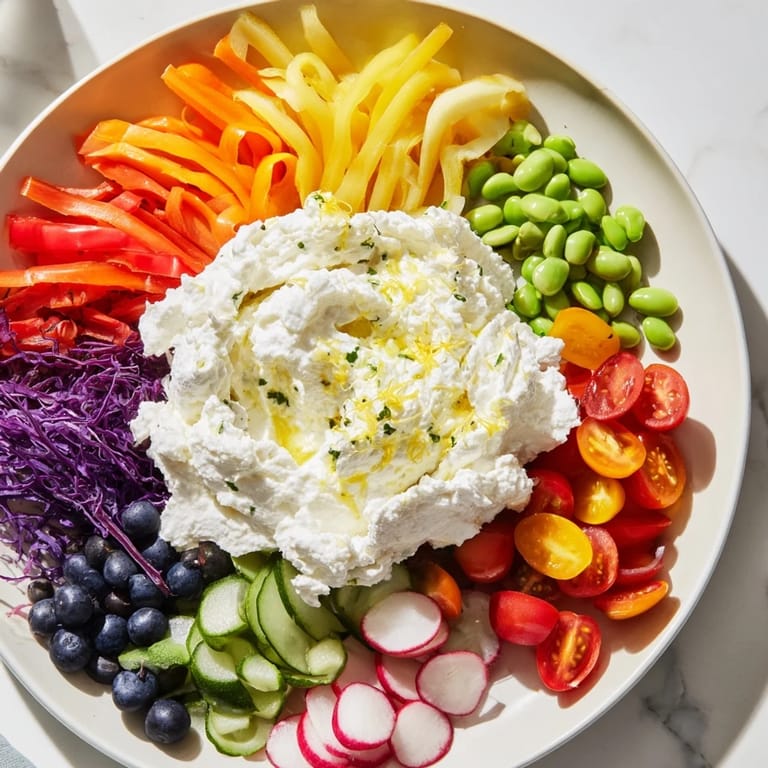
- Mix ricotta with olive oil, lemon zest, salt, and pepper, then spread it into a gentle circle on your platter. This is your center point—everything radiates from here.
- Prep your colors:
- Slice and arrange each vegetable group in its own small bowl before you start assembling. This prevents fumbling and keeps your hands clean while you work.
- Fan out the spectrum:
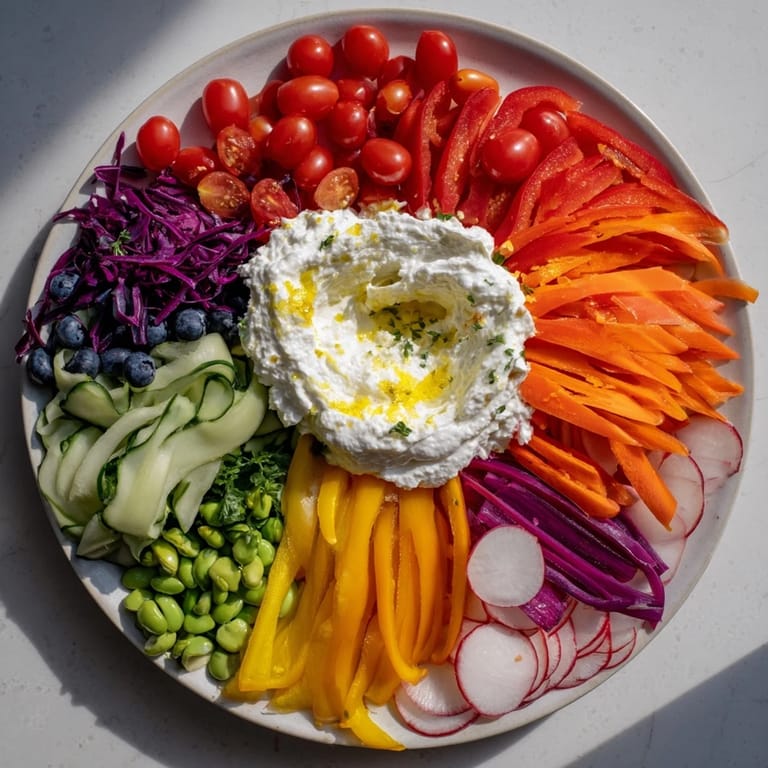
- Starting from the ricotta, arrange red tomatoes and peppers first, then orange, then yellow—imagine each color stripe as a slice of pie radiating outward. Keep them separate and tidy; the geometry is half the beauty.
- Finish with the cool colors:
- Move through green (cucumber and edamame), blue (blueberries and purple cabbage), and finally violet (grapes and radishes), staying conscious of which colors sit next to each other.
- Make the dressing:
- Whisk olive oil, lemon juice, honey, salt, and pepper until emulsified. You can drizzle it over right before serving or let guests dress their own plate.
- Serve with intention:
- Scatter fresh herbs across the top and add a final grind of black pepper. Bring it to the table while the colors are still bright and the vegetables are still crisp.
 Save
Save What struck me most was watching people eat this salad with their eyes first. They'd study the colors for a moment, choosing which stripe to start with, and that pause—that moment of appreciating food before consuming it—turned an ordinary meal into something more meaningful. Food doesn't have to be complicated to be memorable.
Building Your Color Story
The magic of this salad is in the intentionality. Each color serves a purpose beyond aesthetics: the reds bring sweetness and acidity, the oranges add earthiness, the yellows contribute subtle corn sweetness, the greens offer crunch and freshness, and the blues and violets bring unexpected depth. When you arrange them this way, you're not just making a pretty plate—you're creating a balance that tastes as good as it looks. Think of it like composing music where each vegetable is an instrument playing its part.
Variations That Expand the Palette
Once you understand the framework, this salad becomes endlessly adaptable. Swap seasonal vegetables into their color categories—roasted beets for deeper reds, butternut squash ribbons for richer oranges, white beans or chickpeas for textural contrast. You could add toasted pine nuts, crispy seeds, or even edible flowers scattered across the top. The ricotta base is forgiving; I've replaced it with whipped goat cheese, vegan cream, or even a thick hummus when feeding friends with different dietary needs. Each version tells a slightly different story while keeping that gorgeous prism effect intact.
The Art of Assembly
This salad rewards a little patience and precision during the final plating. The difference between something that looks like a beautiful arrangement and something that looks like a gorgeous creation comes down to clean lines and thoughtful placement. I always have a damp towel nearby to wipe my fingers between colors so nothing gets muddied. Stand back occasionally and look at your work from a distance—it helps you catch any gaps in the spectrum before serving.
- Use a sharp knife so vegetable slices stay clean and don't bruise or tear as you arrange them.
- If something feels off, trust your instinct and rearrange; there's no wrong way to build this salad as long as the colors flow naturally.
- Remember that this is meant to be shared and admired, so take pride in the final presentation.
 Save
Save This salad reminds me that cooking is about more than nourishment—it's about creating moments worth remembering. Serve it to people you care about, and watch how food becomes a bridge between you.
Recipe Questions & Answers
- → What ingredients create the central white base?
The central base is a creamy mixture of ricotta cheese (or Greek yogurt), extra-virgin olive oil, lemon zest, salt, and freshly ground black pepper.
- → How are the colorful layers arranged?
Each color group—red, orange, yellow, green, blue, and violet—is fanned out in succession from the central white base to create a vibrant visual display.
- → Can the dressing be adjusted for sweetness?
Yes, the dressing includes honey or agave syrup, which can be modified to your preferred level of sweetness.
- → What alternatives are suggested for dietary preferences?
Use Greek yogurt or a vegan cream cheese alternative for different dietary needs, such as vegetarian or vegan options.
- → Are there suggestions for additional garnishes?
Toasted nuts, seeds, microgreens, or edible flowers can be added for extra texture, color, and flavor.
- → What tools are recommended for assembling this salad?
A large serving platter, mixing bowls, a sharp knife, and a small whisk or fork for the dressing are helpful for preparation.