 Save
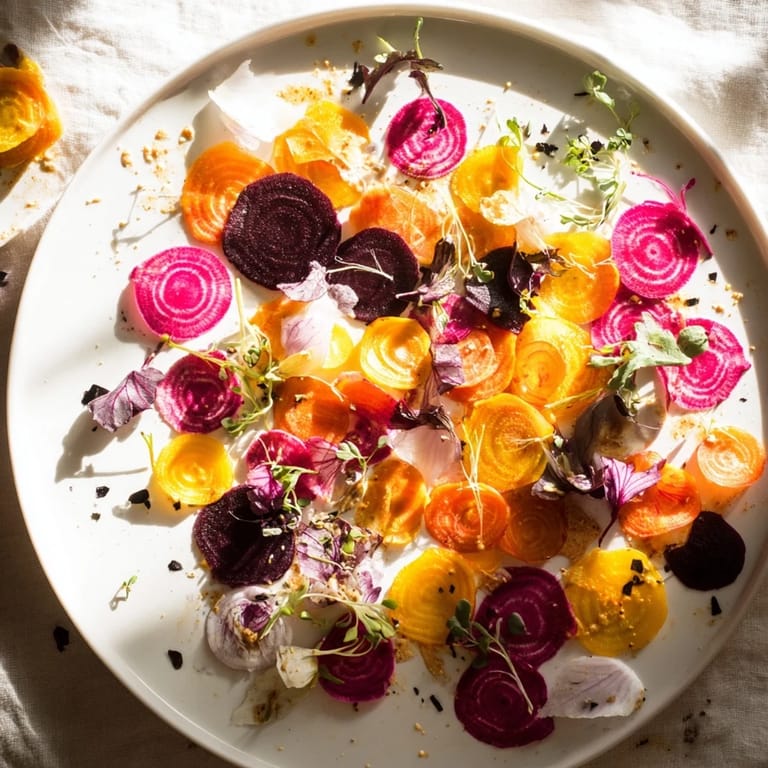
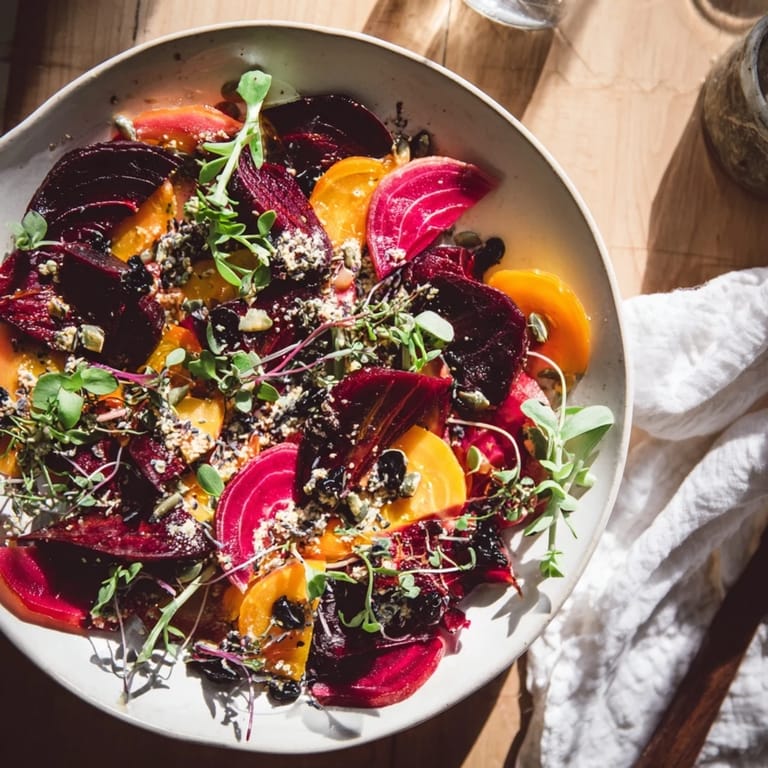
Save I discovered this dish by accident on a late afternoon when I was arranging vegetables on a plate and noticed how the dark beet shadows fell against the golden slices. What started as a plating experiment became an obsession with contrast, with the way colors could tell a story through light and shadow. Now I make it whenever I want to slow down and remember that cooking isn't just about taste, it's about the moment you create on the plate.
I made this for a friend who had been having a rough week, and she actually paused mid-bite to just look at the plate. She said it made her feel like someone had put real thought into her happiness. That's when I realized this dish does something different, it demands attention and respect before the fork even arrives.
Ingredients
- Golden beet: The warm, almost honey-sweet counterpart that needs paper-thin slicing to catch the light properly.
- Red beet: Earthier and deeper, it anchors the color story and adds a slight mineral sweetness.
- Baby arugula: Peppery green life that prevents the plate from feeling too heavy or precious.
- Watermelon radish: Those pale pink and white concentric rings are what make people lean in for a closer look.
- Blackberries: They're your shadow makers, dark and jewel-like, placed where light would naturally pool.
- Black olives: Salty depth that keeps your palate awake and grounds all the sweetness from the beets.
- Black tahini: The artistic flourish that says you meant for this to be dramatic, squid ink optional for color intensity.
- Extra virgin olive oil: Use something good, something with personality, because it's the only dressing these raw vegetables get.
- Lemon juice: Brightness and acidity that wakes up every vegetable without overwhelming them.
- Honey: Just enough to soften the lemon's edge and add a whisper of richness.
- Microgreens: The final confession that you cared enough to do this right, purple radish or basil both add personality.
Tired of Takeout? 🥡
Get 10 meals you can make faster than delivery arrives. Seriously.
One email. No spam. Unsubscribe anytime.
Instructions
- Slice your beets paper-thin:
- Use a mandoline if you have one, but a sharp knife works too if you have patience. The thinner they are, the more light passes through them, and that's where the magic lives.
- Build your base:
- Lay the golden and red beet slices in a semi-overlapping pattern across your plate, alternating colors like you're telling a story. Let some slices catch the light, let others fall into shadow.
- Add the bright layer:
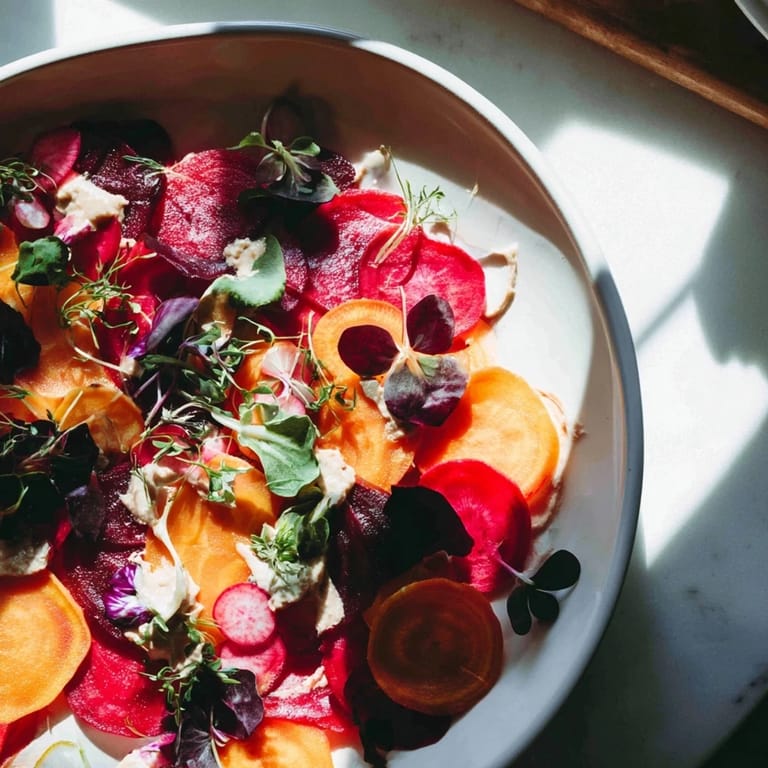
- Fan your watermelon radish slices over the beets, then scatter the arugula with your hands. This is where restraint matters, you want rhythm not chaos.
- Place your shadows:
- Tuck blackberries and black olives into the composition where the light naturally dims, behind bright elements or in the valleys of the plating. This is intuitive, trust your eye.
- Make your dressing:
- Whisk oil, lemon juice, honey, salt, and pepper in a bowl until it feels balanced. Taste it, adjust, taste again.
- Apply the tahini drama:
- Spoon small amounts of black tahini around the plate and smear gently with the back of the spoon, creating abstract shadows that feel intentional but not fussy. This is your signature move.
- Crown with microgreens:
- Just before serving, add microgreens and edible flowers if you have them. These are your final punctuation marks.
- Serve immediately:
- Raw vegetables are best within minutes, when they're still crisp and the plate still feels alive.
 Save
Save The first time someone said this looked too beautiful to eat, I understood that food can be both sustenance and art. Then they ate it anyway and said the simplicity of the flavors made the visuals even better, like nothing was hiding behind complexity. That's the whole point right there.
The Art of Contrast
This dish taught me that contrast isn't just visual in cooking. The sweetness of the beets plays against the mineral notes of the tahini, the peppery arugula argues gently with the blackberry darkness, and the lemon cuts through everything like a clarifying thought. When you taste it, you're experiencing a conversation between elements, not a statement from a single voice.
Vegetable Selection and Timing
The best version of this dish comes together when you choose vegetables that are in season and at their peak. Golden beets in autumn, watermelon radish in winter, fresh arugula whenever it's available. There's a reason farmers markets organize vegetables this way, and respecting that rhythm means your plate will taste like it was meant to exist exactly when you're making it. The beauty of this recipe is that you can swap elements without breaking the concept, as long as you maintain the color story.
Serving and Pairing
I serve this as a starter before something warm and substantial, because it's meant to be a conversation opener, not the main event. A crisp Sauvignon Blanc echoes the lemon in the dressing, while a light Pinot Noir respects the earthiness without competing. If you're cooking vegetarian, this is substantial enough to feel like a full course, not an afterthought.
- For vegan adaptations, agave syrup swaps in for honey without changing the balance at all.
- Black garlic or roasted purple carrots can deepen the shadow elements if you want to add layers.
- Edible flowers aren't just garnish, they're your chance to add one more color note to an already complete composition.
 Save
Save This dish reminds me why I cook, it's in those moments when someone sees what you've made and forgets to be polite about their appreciation. Make it for people who deserve a little ceremony with their vegetables.
Recipe Questions & Answers
- → How can I achieve thin beet slices?
Use a mandoline slicer or a sharp knife to cut the beets thinly and evenly, ensuring delicate layering and contrast.
- → What creates the shadow effect in the dish?
Strategic placement of blackberries, black olives, and black tahini creates dark silhouettes that contrast with the vibrant vegetables.
- → Can I substitute honey in the dressing for a vegan option?
Yes, agave syrup is a great alternative that maintains the dressing's sweetness without animal products.
- → What garnishes enhance the presentation?
Microgreens like purple radish or basil and edible flowers add color contrast and visual depth to the plate.
- → What wines pair well with this dish?
A crisp Sauvignon Blanc or an earthy Pinot Noir complements the fresh and layered flavors beautifully.