 Save
Save There's something about assembling a mezze platter on a warm afternoon that feels less like cooking and more like painting with food. I discovered this truth while hosting a last-minute gathering at my apartment, realizing I had zero time for fussy recipes but plenty of beautiful vegetables in my crisper drawer. My neighbor brought over some creamy feta, someone else contributed olives, and suddenly what started as improvisation became the star of the meal—guests lingered around that board for hours, plucking cucumbers and dipping bread into herbs-flecked yogurt. The magic, I learned, wasn't in technique but in the honest simplicity of arranging fresh ingredients with intention and breathing room.
I remember my mother-in-law's first visit, when I was too nervous to attempt anything complicated and decided to lean into what I do best: simple, honest food arranged thoughtfully. She walked into my kitchen as I was fanning cucumber slices in deliberate arcs, and instead of offering to help, she just pulled up a stool and watched, asking questions about where I found the best feta at the market. By the time we sat down, the platter had become our conversation starter—a permission slip to eat casually, to graze, to linger. That's when I understood that mezze boards aren't just food; they're an invitation to slow down together.
Ingredients
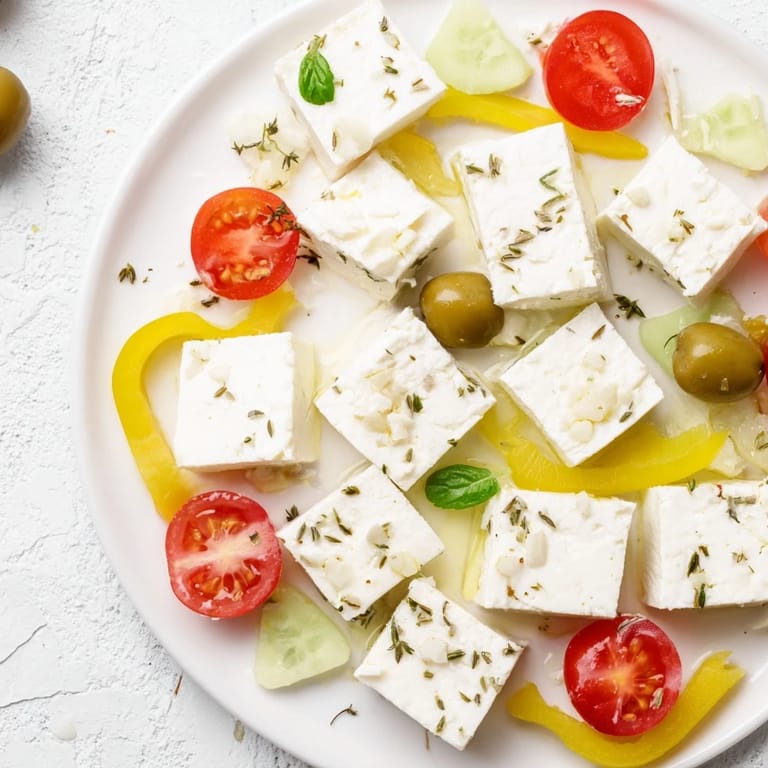
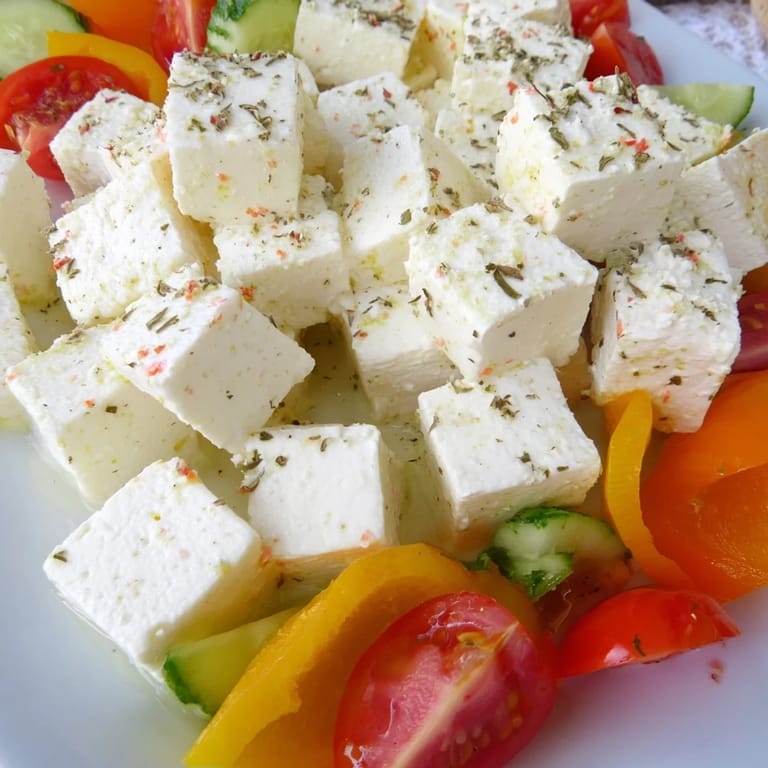
- Feta cheese: Buy it from a proper cheese counter if you can; the crumbly, salty texture makes all the difference, and cubing it by hand feels more intentional than pre-packaged versions.
- Fresh mozzarella balls: These tender spheres need to be drained well or they'll weep liquid across your platter—pat them dry with paper towels just before arranging.
- Cucumber: Slice thick enough to hold toppings but thin enough to feel delicate; room-temperature cucumber has more flavor than cold.
- Cherry tomatoes: Halving them releases their juices and creates little pools of flavor that mingle with the oils.
- Bell pepper: Yellow adds brightness; stick to thin, even strips so they stay crisp and inviting.
- Red onion: The paper-thin slices add bite and visual drama; soak them briefly in ice water if you want to soften their intensity.
- Radishes: Often overlooked, their peppery crunch and rosy color make them essential for visual and textural contrast.
- Kalamata olives: Pit them yourself for the freshest flavor, or buy pre-pitted and save time—both are valid choices.
- Hummus and tzatziki: These creamy anchors give people something to dip into; homemade versions shine, but good store-bought works beautifully too.
- Extra virgin olive oil: This is not the place to skimp; use your best oil, as it's one of only a few ingredients and it deserves to shine.
- Fresh mint and dill: These herbs transform the platter from pretty to fragrant; crush them gently between your fingers as you add them to release their oils.
Tired of Takeout? 🥡
Get 10 meals you can make faster than delivery arrives. Seriously.
One email. No spam. Unsubscribe anytime.
Instructions
- Start with the cheeses:
- Place your feta cubes and mozzarella balls in opposite corners or separate sections of your board, leaving generous white space around each cluster. Think of them as anchor points that frame the composition.
- Create vegetable arcs:
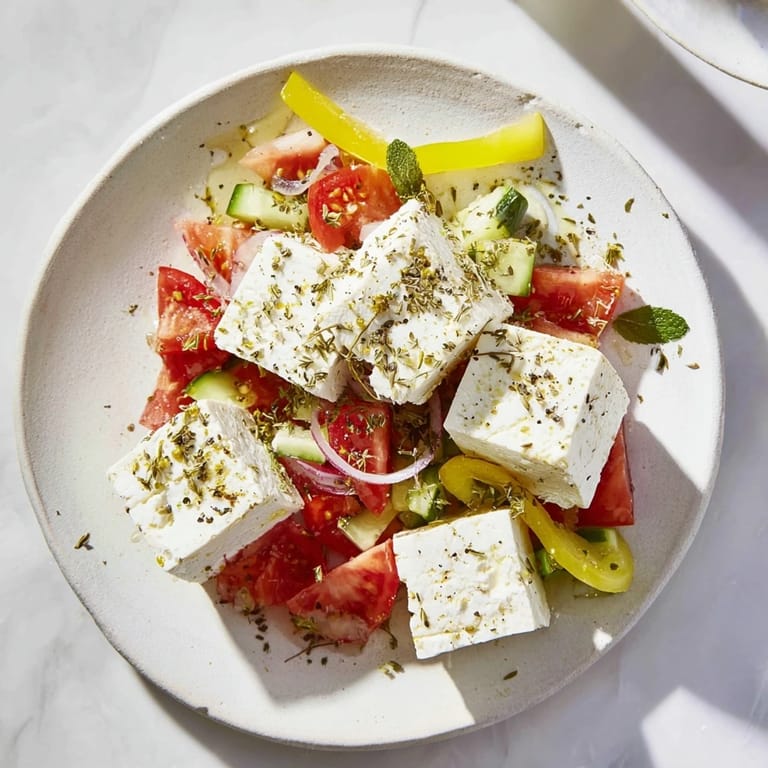
- Fan out cucumber slices in slightly overlapping rows, then cluster cherry tomato halves nearby with cut side up so they catch the light. Arrange bell pepper strips and red onion slices in small groupings, treating each vegetable as its own small composition.
- Add peppery contrast:
- Scatter radish slices throughout the board, placing them where they'll pop against the softer colors of the other vegetables.
- Make room for the dips:
- Set small bowls of hummus and tzatziki on the board itself if space allows, or nestle them into gaps—they should feel part of the arrangement, not an afterthought.
- Finish with oil and salt:
- Drizzle the olive oil over the cheeses and vegetables with a light hand, letting puddles gather in a few intentional spots. Finish with flakes of sea salt and cracks of black pepper, being generous enough that people can taste the seasoning without washing it off.
- Crown with herbs:
- Tuck fresh mint and dill sprigs between the vegetables and over the creamy elements, distributing them so no corner feels bare or forgotten.
- Serve with confidence:
- Bring the board to the table with crispbreads or pita wedges on the side, arranged in a basket or leaning against the edge of the platter. Step back and let people reach in.
 Save
Save The first time someone told me they'd been thinking about that platter I made weeks after the fact, I realized food isn't just about nourishment—it's about creating moments people want to revisit. A mezze board does that without fanfare or complexity, just by honoring each ingredient and giving it room to be itself.
The Art of Arrangement
Plating a mezze board is like arranging flowers—there's a science to creating visual balance, but there's also room for your own instinct and style. I've learned that symmetry feels formal, while gentle asymmetry feels more inviting and natural. Try placing your largest or most colorful items first, then filling around them with smaller elements, letting each ingredient speak without competing for attention. The goal isn't perfection; it's hospitality expressed through thoughtful placement.
Pairing and Serving Suggestions
This board thrives as part of a larger gathering—serve it as the opening act before a main course, or build an entire meal around it with crusty bread and wine. I've discovered that a chilled Sauvignon Blanc or light rosé makes the flavors feel even brighter and fresher, while the acidity of the wine cuts through the richness of the cheese. It's also stunning as a solo lunch, spread across the kitchen counter while you work or read, letting you graze throughout the afternoon without ceremony or cleanup drama.
Customization and Creativity
The beauty of a mezze board lies in its flexibility—treat this recipe as a template rather than law, swapping in what you find at the market or what your guests prefer. I've added roasted chickpeas for crunch, swapped labneh for tzatziki, included pomegranate seeds for sweetness, and used whatever herbs I had on hand. The principle remains the same: balance textures, colors, and flavors, then step back and let the arrangement breathe. Here are three ideas to keep in your back pocket:
- Swap goat cheese for feta, add roasted red peppers, and sprinkle with sumac for a deeper, more sophisticated flavor profile.
- Include preserved lemons, marinated artichoke hearts, or even fresh figs to introduce unexpected flavor dimensions.
- For vegan versions, use cashew-based cheeses, add marinated tofu, and let the vegetables and herbs be your stars.
 Save
Save A sun-drenched patio with a mezze board at its center is less about feeding people and more about creating an atmosphere where everyone feels welcome to linger. That's the whole story.
Recipe Questions & Answers
- → What cheeses are featured in this mezze?
Feta cheese cut into cubes and small fresh mozzarella balls (bocconcini) provide creamy, tangy elements to the platter.
- → Which vegetables complement the cheeses here?
Sliced cucumber, cherry tomatoes, yellow bell pepper strips, red onion, and radishes offer fresh, crisp textures and vibrant colors.
- → How are the dips incorporated into the platter?
Hummus and tzatziki are served in separate small bowls placed on the board, offering creamy, savory flavors to balance the fresh ingredients.
- → What garnishes enhance the flavor and presentation?
Fresh mint and dill sprigs add aromatic notes and a sun-kissed, vibrant look to the arrangement.
- → Can this dish accommodate dietary restrictions?
Yes, using gluten-free crispbreads makes it suitable for gluten-free diets, and substituting plant-based cheeses can adapt it for vegan preferences.
- → Is any cooking involved in preparing this dish?
No cooking is needed; ingredients are assembled fresh, making it a quick and easy option for a light appetizer.