 Save
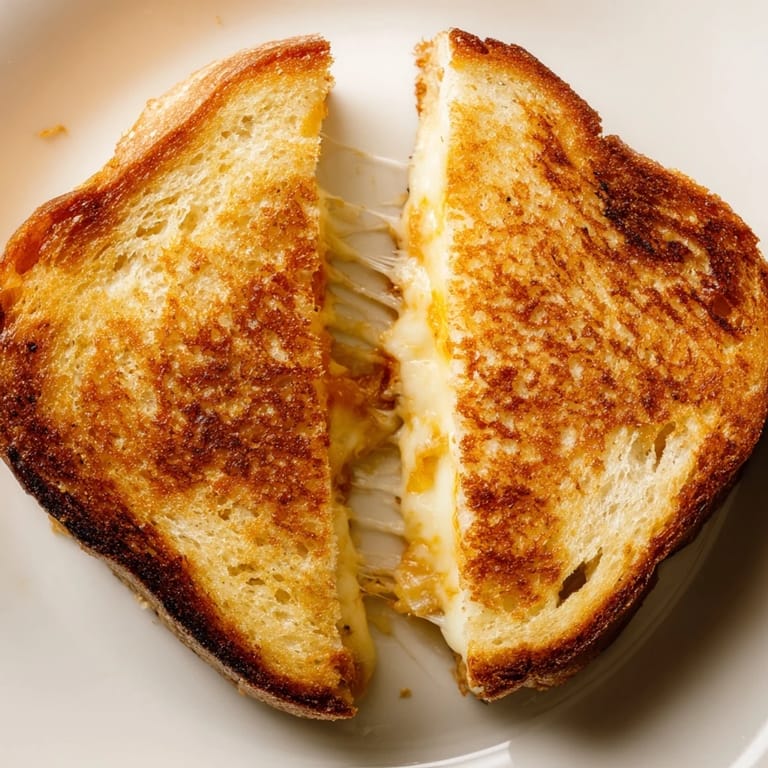
Save My neighbor knocked on my door one rainy Tuesday with a block of cheddar, some mozzarella, and a confession: she'd never made a proper grilled cheese. We stood at my stove together, buttering bread and talking about her childhood cafeteria sandwiches. When that first bite pulled apart in long, golden strings, she actually gasped. It wasn't fancy, but it was exactly what both of us needed that afternoon.
I started making these on Sunday nights when my kids were younger and too tired for anything complicated. They'd sit at the counter, watching the cheese bubble at the edges of the bread, arguing over who got the first sandwich. Now they're older and make their own, but they still call me when the cheese won't melt right. Some recipes just stick around because they work, and because they remind you of the small, good moments that fill up a life.
Ingredients
- Country-style or sourdough bread: The slight tang and sturdy texture hold up to all that melted cheese without getting soggy, and the crust crisps up beautifully in the butter.
- Mozzarella cheese: This is your melt champion, giving you those Instagram-worthy cheese pulls and a mild, creamy base that lets the other flavors shine.
- Sharp cheddar cheese: It brings the punch and the depth, cutting through the richness with a little bite that makes every mouthful more interesting.
- Provolone cheese: Smooth and slightly smoky, it bridges the mozzarella and cheddar, adding a mellow complexity that rounds everything out.
- Unsalted butter: Softened butter spreads easily and evenly, creating that golden, crispy shell that makes or breaks a grilled cheese.
- Dijon mustard: Just a whisper of it adds a grown-up sharpness that surprises your taste buds in the best way.
- Black pepper: A tiny pinch wakes up the cheese and adds a subtle warmth without overwhelming anything.
Tired of Takeout? 🥡
Get 10 meals you can make faster than delivery arrives. Seriously.
One email. No spam. Unsubscribe anytime.
Instructions
- Prep your bread:
- Lay out all four slices on your counter and, if you're feeling adventurous, spread a thin layer of Dijon mustard on two of them. This little step adds a tangy surprise that really elevates the whole sandwich.
- Mix the cheeses:
- Toss the mozzarella, cheddar, and provolone together in a small bowl until they're well combined. Mixing them first ensures every bite has a little bit of each cheese instead of random pockets of one or the other.
- Assemble the sandwiches:
- Divide the cheese mixture evenly between two bread slices, then sprinkle with black pepper if you like. Top with the remaining slices to form two sandwiches.
- Butter the outside:
- Spread a thin, even layer of softened butter on the outside of each sandwich, covering both top and bottom. Don't skip the edges or you'll end up with pale, sad corners.
- Heat your skillet:
- Set a large nonstick skillet or griddle over medium-low heat and let it warm up slowly. Patience here prevents burning and gives the cheese time to melt all the way through.
- Cook the sandwiches:
- Place the sandwiches in the skillet and cook for 3 to 4 minutes per side, pressing gently with a spatula to encourage contact and even browning. You'll know they're ready when they're golden brown and you can see the cheese starting to ooze at the edges.
- Rest and serve:
- Take them off the heat and let them rest for a minute so the cheese sets just slightly and doesn't burn your mouth. Slice and serve immediately while they're still warm and stretchy.
 Save
Save One winter evening, I made a batch of these for my book club, served with tomato soup in mismatched mugs. We ended up talking less about the novel and more about our favorite childhood lunches, laughing about the strange things our parents packed. That night, this simple sandwich became the reason we all felt a little closer, a little more honest. Food has a way of doing that when you let it.
Choosing Your Bread
I've tried this sandwich on everything from white sandwich bread to thick-cut sourdough, and the bread really does make a difference. Sourdough gives you that tangy contrast and a sturdy structure that holds up under all the cheese, while country-style bread offers a softer crumb with a still-crispy crust. Avoid anything too thin or airy, it'll get soggy fast and won't give you the texture contrast you're after. If you can, pick a bread with a little personality, it's half the experience.
Getting the Perfect Melt
The secret to that gooey, stretchy center is low and slow heat, giving the cheese time to soften all the way through before the bread burns. I learned this the hard way after ruining more than a few sandwiches with impatient, high heat that left me with charred bread and cold cheese in the middle. Pressing gently with the spatula helps, but don't smash it flat or you'll squeeze out all that melted goodness. A lid over the pan for the first minute or two can also help trap heat and speed up the melt without cranking up the burner.
Ways to Mix It Up
Once you've nailed the basic version, this sandwich becomes a canvas for whatever you're craving or have lingering in the fridge. I've tucked in thin slices of tomato, caramelized onions, crispy bacon, and even leftover roasted red peppers, each one adding a new layer without overwhelming the cheese. A smear of pesto or a few fresh basil leaves can turn it into something almost fancy, while a sprinkle of garlic powder in the butter makes it taste like garlic bread and grilled cheese had a baby.
- Try mayo on the outside instead of butter for an extra-crispy, golden crust with a subtle tang.
- Add a handful of baby spinach or arugula for a pop of color and a peppery bite.
- Serve alongside tomato soup, pickles, or a simple green salad to round out the meal.
 Save
Save This sandwich has carried me through lazy Sundays, quick dinners, and moments when I just needed something warm and familiar. I hope it does the same for you, with plenty of cheese pulls and happy bites along the way.
Recipe Questions & Answers
- → What type of bread works best for this sandwich?
Country-style or sourdough bread provides the ideal texture for a crispy exterior and sturdy structure. Both have enough substance to hold the melted cheese without becoming soggy.
- → Can I substitute the cheese varieties?
Yes, you can adjust the cheese selection based on preference. Use cheeses with similar melting properties. Swiss, gruyere, or fontina are excellent alternatives for mozzarella or provolone.
- → Why press the sandwich gently while cooking?
Gentle pressure helps distribute the cheese evenly and promotes better contact between the bread and skillet, ensuring even melting and a more uniform golden crust.
- → What's the best way to prevent the outside from burning?
Cook over medium-low heat rather than high heat. This allows the cheese to melt completely while the butter browns gradually to a golden color without charring.
- → Can I add other ingredients to this sandwich?
Absolutely. Sliced tomatoes, caramelized onions, crispy bacon, or fresh herbs complement the cheese beautifully. Add them between the cheese layers before cooking.
- → Is there a recommended pairing to serve with this sandwich?
Tomato soup is a classic pairing that complements the rich, creamy cheese. A simple green salad or pickle slices also balance the richness nicely.