 Save
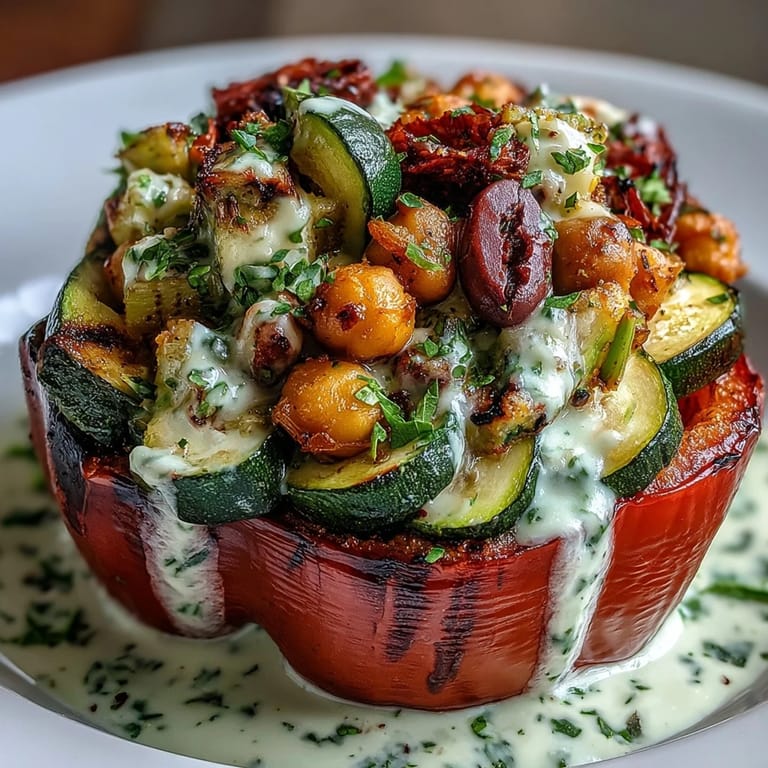
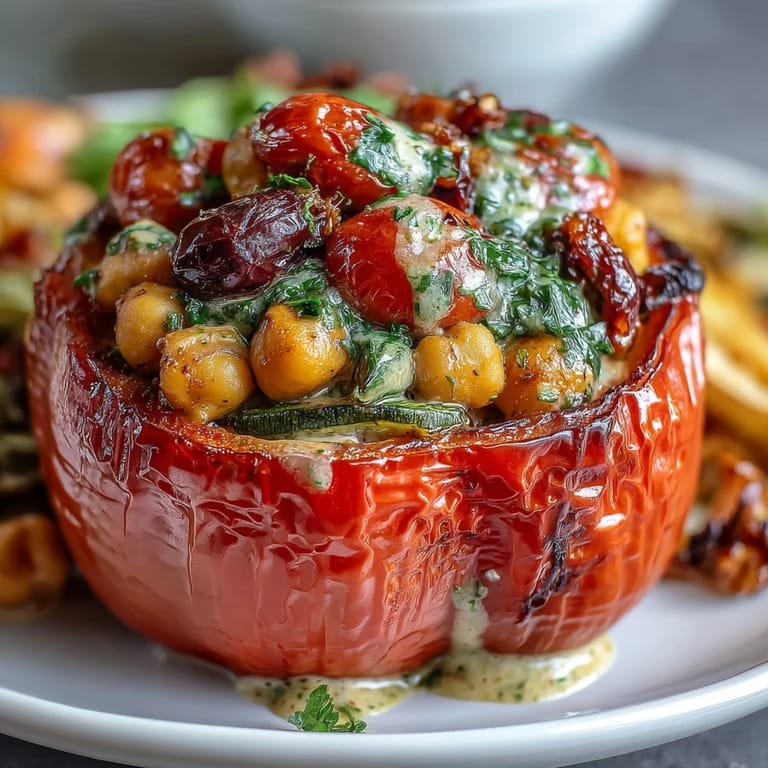
Save There's something about the way a stuffed pepper catches the light when it comes out of the oven that makes you forget you're eating vegan. My partner walked into the kitchen mid-bake and the aroma stopped her mid-sentence, and honestly that's when I knew this recipe was onto something special. The filling comes together so quickly, but the results taste like you've been simmering flavors all day. These peppers are the kind of dish that surprises people, in the best way.
I made this for a dinner party last fall when everyone was tired of the same heavy pasta dishes, and one guest asked for the recipe before dessert even arrived. That moment when someone realizes vegan food doesn't mean deprivation, just different flavors hitting harder, never gets old. The table went quiet except for the sound of forks against plates, and that's how you know you've done something right.
Ingredients
- Large bell peppers (4, any color mix): Use the largest ones you can find so they don't tip over while baking, and pick colors that make you happy because you'll be looking at them.
- Olive oil (1 tablespoon): Good quality matters here since it's not cooked to death, just enough to soften the base vegetables.
- Red onion and garlic: These two are the backbone of flavor, so don't skip them or go light.
- Zucchini (1 small): Dice it small so it softens completely in the filling and disappears into every bite.
- Cherry tomatoes (1 cup): Quarter them and they'll release their juice into the filling, adding brightness without making it wet.
- Cooked chickpeas (1½ cups): Canned and drained works perfectly, or cook dried ones if you have time.
- Cooked quinoa or rice (½ cup): This is the texture you need to balance the vegetables, so don't skip it thinking the filling will hold together fine.
- Kalamata olives (¼ cup, pitted): Buy them pitted to save yourself a moment of frustration, and their saltiness is part of the seasoning so don't drain them completely.
- Sun-dried tomatoes (2 tablespoons, chopped): These concentrate the tomato flavor and add a slight chew that makes the filling feel substantial.
- Oregano, cumin, smoked paprika (½ teaspoon, ½ teaspoon, ¼ teaspoon): Smoked paprika especially is what gives this that depth beyond basic herb seasoning.
- Fresh parsley and mint: Mint is optional but it brightens everything at the end, so I always include it.
- Tahini (¼ cup): The sauce is the star, so use good tahini that tastes nutty, not bitter or stale.
- Fresh lemon juice: Squeeze it yourself, always, because it makes a difference you can actually taste.
Tired of Takeout? 🥡
Get 10 meals you can make faster than delivery arrives. Seriously.
One email. No spam. Unsubscribe anytime.
Instructions
- Get your oven and dish ready:
- Preheat to 375°F and lightly oil a baking dish that fits your peppers upright without crowding them. If they're leaning, they'll cook unevenly and tip over, so choose your vessel accordingly.
- Build the base of the filling:
- Heat olive oil and sauté the red onion until it softens and just begins to turn golden at the edges. Add garlic and let it release its aroma, about one minute of being careful not to burn it.
- Add the vegetables:
- Zucchini goes in next and needs about four minutes to lose its raw bite but stay slightly firm. Add cherry tomatoes after and they'll soften and release their juice, mixing with the olive oil to create a light sauce in the pan.
- Bring it together:
- Stir in chickpeas, quinoa, olives, sun-dried tomatoes, and all your spices, cooking until everything is warm and the flavors start holding hands, about three to four minutes. You'll notice the smell change as the oregano and cumin wake up from the heat.
- Finish the filling with fresh herbs:
- Remove from heat and stir in parsley and mint, squeeze in lemon juice, taste it, and be honest about seasoning. Add more salt or pepper if it needs it, because this is your moment to adjust before it goes into the peppers.
- Stuff the peppers:
- Spoon filling into each pepper cavity, packing it gently so it stays in place but not so hard that you're crushing the peppers. They should be generously filled, almost overflowing slightly at the top.
- Bake covered and then uncover:
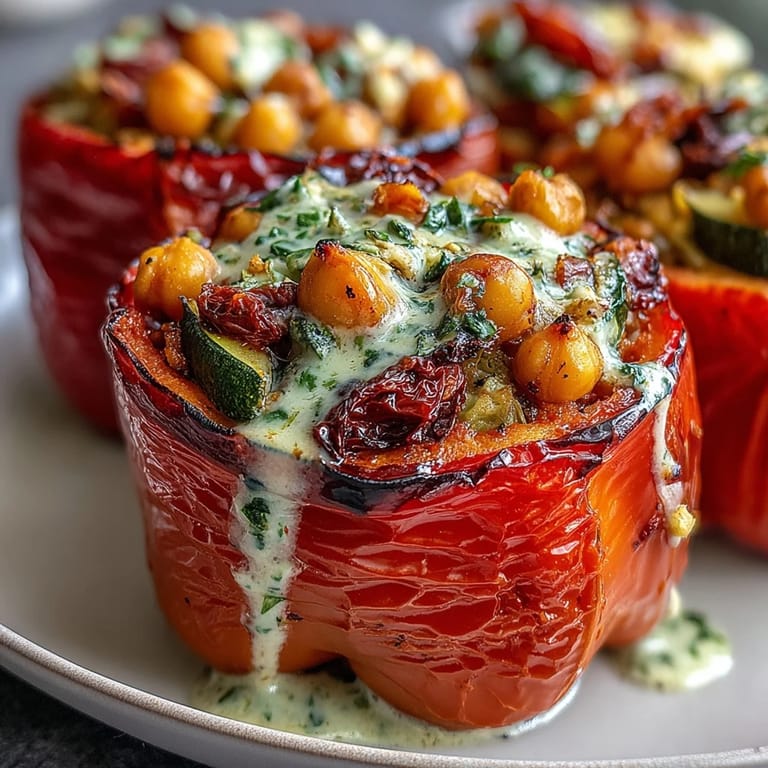
- Cover with foil and bake for twenty-five minutes until the peppers begin to soften but still hold their shape. Remove foil and bake another ten minutes so the tops get slightly caramelized and the peppers are tender enough to cut through easily.
- Make the lemon tahini sauce:
- While peppers bake, whisk tahini with lemon juice in a bowl and watch it transform from thick paste to creamy sauce as you add water gradually. It should drizzle off a spoon like silk, not sit like cement, so keep tasting and adjusting the water.
- Serve warm and generous:
- Place peppers on plates and drizzle the sauce over them until it pools underneath. The sauce is the coup de grâce, so don't be shy with it.
 Save
Save My mom tasted this dish and said it tasted like summer in the Mediterranean, even though we were eating it in November on a gray afternoon. That's when I realized this recipe does what food is supposed to do: it takes you somewhere, even if it's just to a better mood. The vibrant colors alone lift the table, and then the flavors arrive to back up the promise.
Making It Your Own
The beauty of this recipe is how it accepts variations without losing its identity. I've swapped the rice for farro when I had it on hand, added a pinch of chili flakes when I wanted heat, and once used toasted pine nuts instead of olives when someone mentioned a pine nut allergy. The structure stays solid while everything else can shift, which is the hallmark of a recipe that actually works in real kitchens.
Why the Sauce Matters
The lemon tahini sauce is what separates this from a decent stuffed pepper and makes it one you'll think about days later. Tahini on its own is thick and slightly bitter, but lemon juice and water transform it into something silky and bright that pulls all the Mediterranean flavors into focus. It's worth using good tahini because you taste every bit of it, and it's worth squeezing actual lemons because the juice matters more than you think.
What to Pair It With and How to Store It
Serve these with crusty bread to soak up the sauce, or a simple green salad with more lemon dressing to keep the brightness going. Leftovers last three days in the fridge and reheat beautifully, though the sauce is best drizzled on fresh rather than baked again. Consider doubling the recipe because they disappear faster than you'd expect, and cold leftovers make an excellent next-day lunch box.
- A crisp white wine like Sauvignon Blanc pairs beautifully if you're opening a bottle.
- Fresh herbs or toasted pine nuts sprinkled on top right before serving add textural surprise.
- Make the sauce ahead and refrigerate it, then thin with water again before serving since it thickens as it cools.
 Save
Save This is the kind of recipe that lives in the rotation and gets better every time you make it because you learn where to season more, how full to stuff, and exactly how you like your peppers cooked. Make it once and it becomes yours.
Recipe Questions & Answers
- → Can I substitute quinoa with other grains?
Yes, you can use cooked rice, farro, bulgur, or couscous as alternatives, keeping in mind some options may not be gluten-free.
- → How should I prepare the bell peppers before stuffing?
Cut off the tops and remove the seeds carefully to create a hollow space suitable for filling and baking.
- → Is the lemon tahini sauce adjustable in consistency?
Yes, add water gradually to reach a smooth drizzling consistency that complements the stuffed peppers.
- → What spices enhance the chickpea filling?
Oregano, cumin, smoked paprika, salt, and freshly ground black pepper provide a warm, herby flavor profile.
- → Can this dish be made ahead of time?
The filling can be prepared in advance, then stuffed and baked just before serving for fresh taste and texture.