 Save
Save There's something about the interplay of sweet and savory that stops a conversation mid-sentence. I discovered this particular combination almost by accident one evening, rummaging through my cupboard while half-listening to a friend recount their week, and I found myself layering dark pâté with jam in a shallow dish. Within minutes, the depth of flavor had everyone leaning in closer, forks hovering, suddenly curious. That's when I knew this needed to become something intentional, something I could recreate with confidence.
I served this at a dinner party last winter when the mood felt too formal and I needed something to ease the tension. One guest, who usually picked at appetizers, came back for thirds and asked for the recipe before dessert even arrived. Watching people genuinely pause mid-conversation to savor something I'd assembled without fanfare reminded me that hospitality isn't about complexity, it's about intention.
Ingredients
- Smooth duck or chicken liver pâté (200 g): The foundation here matters more than the flourishes, so choose one you genuinely enjoy eating on its own—store-bought works beautifully if it's good quality.
- Fig jam (4 tbsp): Fig brings an understated sweetness that doesn't shout; it whispers alongside the earthiness of the pâté.
- Blackcurrant jam (2 tbsp): The tartness cuts through richness and adds a subtle color complexity that keeps things from feeling one-dimensional.
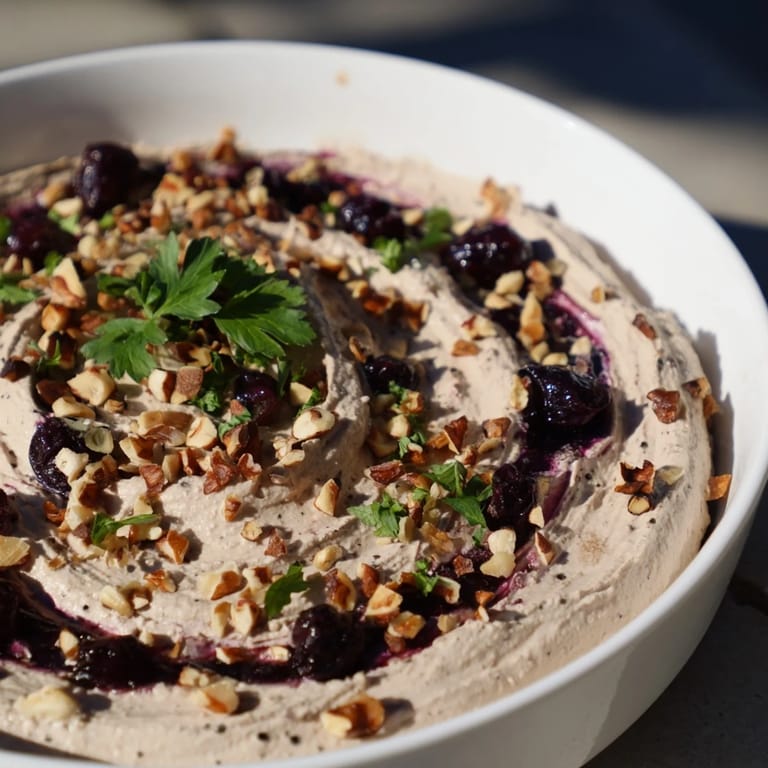
- Roasted hazelnuts, roughly chopped (50 g): Roasting matters—it deepens their flavor and adds that crunch that makes people pause and listen.
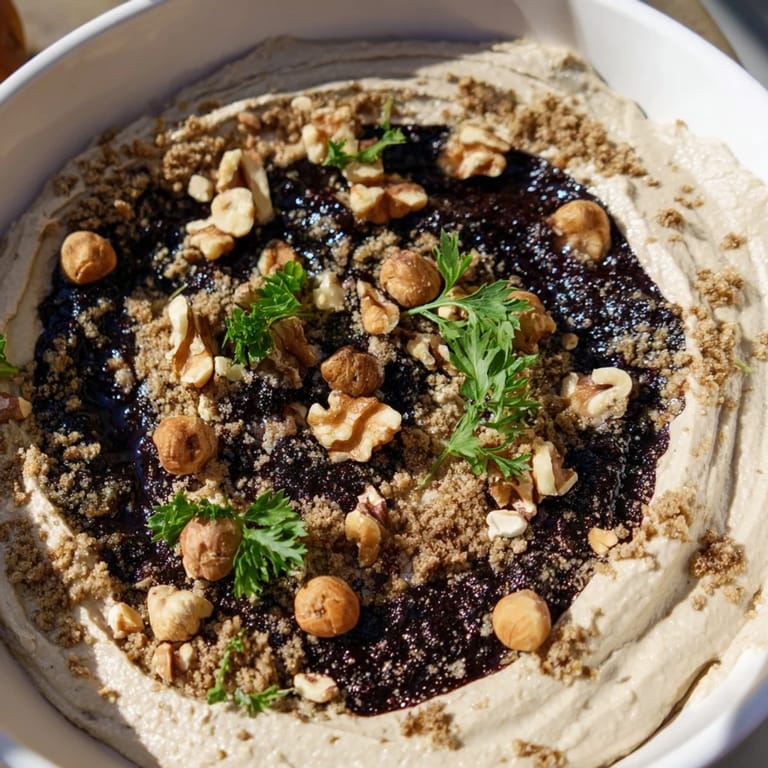
- Toasted walnuts, broken into pieces (30 g): Walnuts bring a slight bitterness that grounds the sweetness and adds another layer of texture.
- Toasted baguette slices (1 small baguette, thinly sliced): The vehicle for everything else, toasted until it has enough structure to hold weight without becoming tough.
- Fresh herbs like chives or parsley, finely chopped: A garnish that adds color and a whisper of freshness that prevents the whole thing from feeling too heavy.
Tired of Takeout? 🥡
Get 10 meals you can make faster than delivery arrives. Seriously.
One email. No spam. Unsubscribe anytime.
Instructions
- Spread the foundation:
- Spread half your pâté across the base of a shallow serving dish or individual ramekins, creating an even layer with the back of a spatula. Take your time here—this base is where everything else lives.
- Add the jam swirl:
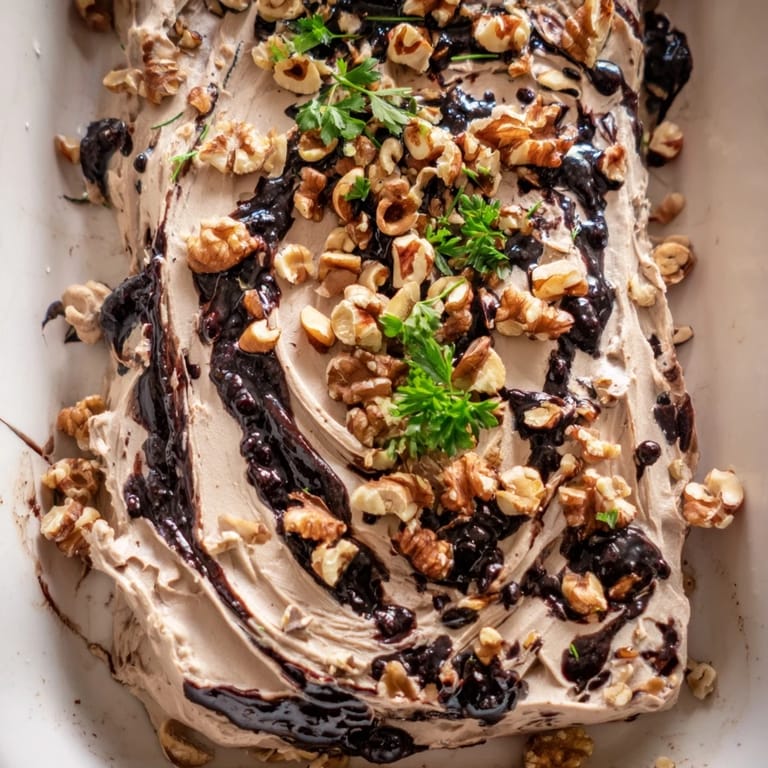
- Dot half your fig and blackcurrant jam across the pâté surface, then drag your spatula lightly through it in loose figure-eights to create that marbled effect without overdoing it. The goal is organized chaos, not complete mixing.
- Bury the first layer of nuts:
- Sprinkle half your hazelnuts and walnuts across the jam, pressing them gently so they nestle into the layers rather than sitting on top. Listen for the soft crunch as they settle.
- Build the second layer:
- Repeat with remaining pâté, jam, and nuts, ensuring some pieces disappear completely into the depths while others peek through at the edges. This hidden architecture is what makes people ask how you made this.
- Finish with intention:
- Smooth the top gently with a clean spatula, then crown it with a few more chopped nuts and your fresh herbs scattered across. The garnish is the promise of what's below.
- Serve right away:
- Bring everything to the table with your toasted baguette or crackers, letting people discover the layers as they eat rather than describing them in advance.
 Save
Save I watched my grandmother's face light up when she understood that the crunch she heard with her next bite was intentional, not a mistake. She ate slowly after that, listening, discovering.
Why This Works
The architecture here is quiet but essential. Richness on its own becomes cloying, but pâté tempered by bright jam and punctuated by nuts creates a conversation between textures and flavors rather than a monologue. The sweet offsets the savory, the soft embraces the hard, and nothing overstays its welcome.
Variations Worth Trying
Jam is forgiving—cherry and raspberry work equally well if fig and blackcurrant aren't calling to you. Pistachio instead of hazelnut shifts the entire mood toward something brighter. If nuts aren't welcome at your table, toasted pumpkin seeds bring a similar satisfying crunch without the allergen concern. The base is what matters; everything else is permission to play.
Plating and Pairing
This appetizer exists in that sweet spot between casual and elegant, equally comfortable at a dinner party or a quiet evening at home. Pour something with enough body to stand up to the richness—a Sauternes if you're leaning sweet, a Pinot Noir if you want something more grounded. The combination feels almost theatrical when done simply.
- Serve slightly cooler than room temperature so the pâté is firm enough to layer cleanly but still soft enough to spread easily.
- If making ahead, assemble everything except the final herb garnish up to two hours in advance, adding the fresh herbs just before serving.
- Individual ramekins feel more composed; a shared dish encourages people to linger longer over conversation.
 Save
Save This is the kind of dish that makes you seem more prepared than you actually are, which is perhaps its greatest gift. Fifteen minutes becomes a small act of generosity.
Recipe Questions & Answers
- → What type of pâté works best for this appetizer?
Use smooth duck or chicken liver pâté, either store-bought or homemade, for a rich and creamy texture that complements the sweet jams.
- → Can I substitute the nuts used in the layering?
Yes, roasted hazelnuts and toasted walnuts provide crunch, but you can also use seeds like pumpkin or sunflower for a nut-free alternative.
- → Are there recommended accompaniments to serve this with?
Serve with thinly sliced toasted baguette, gluten-free crackers, or crisp vegetable sticks to add contrasting textures and ease of sharing.
- → How can I add more flavor depth to this dish?
Try mixing in additional sweet and tart jams such as cherry or raspberry to enhance the layered sweetness and complexity.
- → Is this suitable for gluten-free diets?
Absolutely, serve with gluten-free crackers or vegetable sticks instead of baguette to keep it gluten-free.