 Save
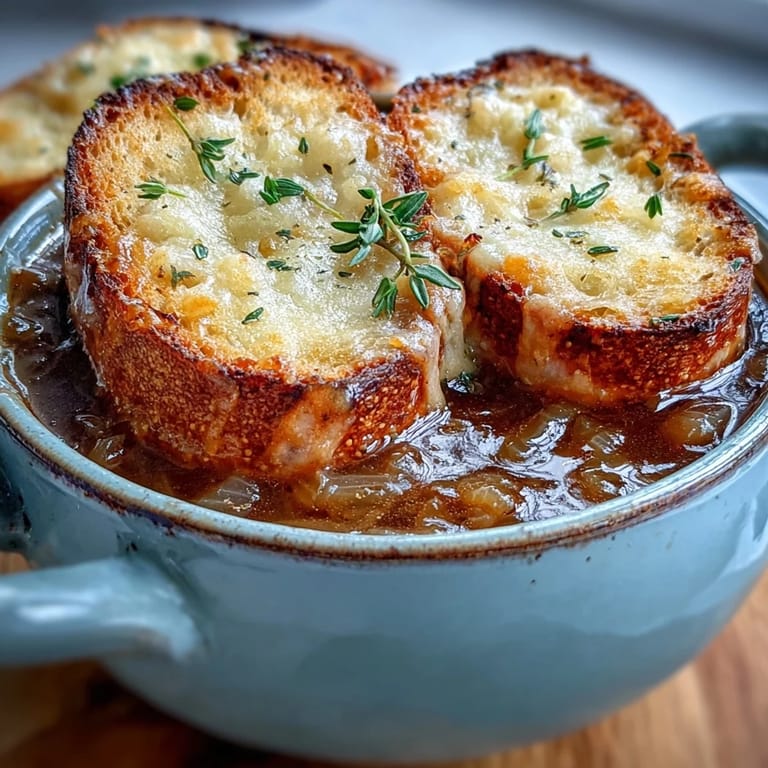
Save Rainy Sundays were made for this soup. I stumbled through my first attempt wondering why anyone would spend an hour crying over onions, but then that first spoonful happened. The cheese pulled in those impossible strings across my bowl, and suddenly I understood why French families have perfected this for generations. Now my apartment fills with that unmistakable caramelized aroma every time the weather turns gray.
Last winter, my neighbor smelled this cooking through our shared wall and knocked on my door with two wine glasses. We ended up spending the entire evening dipping torn bread into bubbling bowls, discovering that French onion soup is really just an excuse to linger at the table longer than you planned.
Ingredients
- 5 large yellow onions: Thinly slice them yourself. Pre-cut onions never caramelize quite right, and I learned this lesson the disappointing way.
- 3 tablespoons unsalted butter: Butter adds richness you cannot fake, though half butter half olive oil prevents burning during the long cook.
- 2 tablespoons olive oil: Keeps the butter from scorching while onions do their slow transformation.
- 2 garlic cloves: Add these late so they sweeten without turning bitter.
- 1 teaspoon sugar: Helps onions along when you are in a hurry, though patient onions need none.
- 8 cups beef broth: Go for the good stuff here. Your soup is only as deep as your broth.
- 1/2 cup dry white wine: Something drinkable, anything cheap will taste exactly like what it is.
- 2 teaspoons fresh thyme leaves: Fresh thyme makes all the difference here, woody and fragrant.
- 2 bay leaves: Do not forget to fish these out before serving.
- 1 tablespoon Worcestershire sauce: The secret umami bomb that nobody guesses is there.
- 1 baguette: Day-old actually works better for toasting, fresh can get too soft too fast.
- 2 cups Gruyère cheese: Worth every penny, nothing melts quite like it.
- 1/2 cup Parmesan cheese: Optional but adds that salty punch I cannot resist.
Tired of Takeout? 🥡
Get 10 meals you can make faster than delivery arrives. Seriously.
One email. No spam. Unsubscribe anytime.
Instructions
- Melt butter with olive oil in your Dutch oven over medium heat:
- Add sliced onions and sugar. Cook, stirring frequently, until onions are very soft and caramelized, about 40 to 45 minutes. They should turn deep brown and smell impossibly sweet.
- Add minced garlic:
- Cook for just 1 minute until fragrant. Do not let it brown or it will turn bitter on you.
- Pour in the wine:
- Scrape up any browned bits from the bottom with your wooden spoon. Simmer for 2 to 3 minutes until slightly reduced.
- Add broth, thyme, bay leaves, and Worcestershire sauce:
- Bring to a simmer, reduce heat, and cook uncovered for 20 to 30 minutes. Season with salt and pepper to taste. Remove bay leaves before serving.
- Toast the baguette slices:
- While soup simmers, preheat oven broiler. Arrange baguette slices on a baking sheet and toast under broiler until golden, about 1 to 2 minutes per side.
- Assemble and broil:
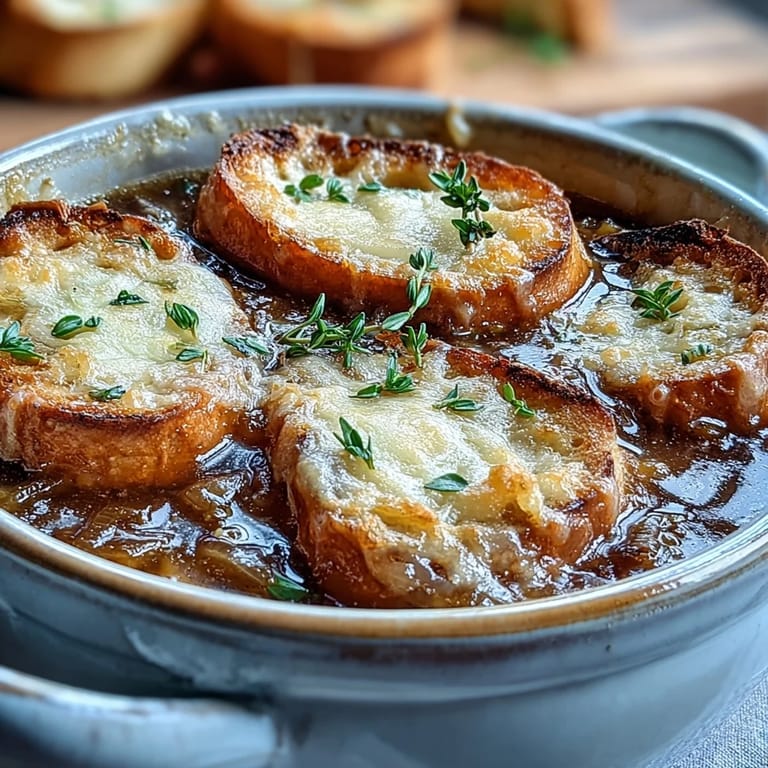
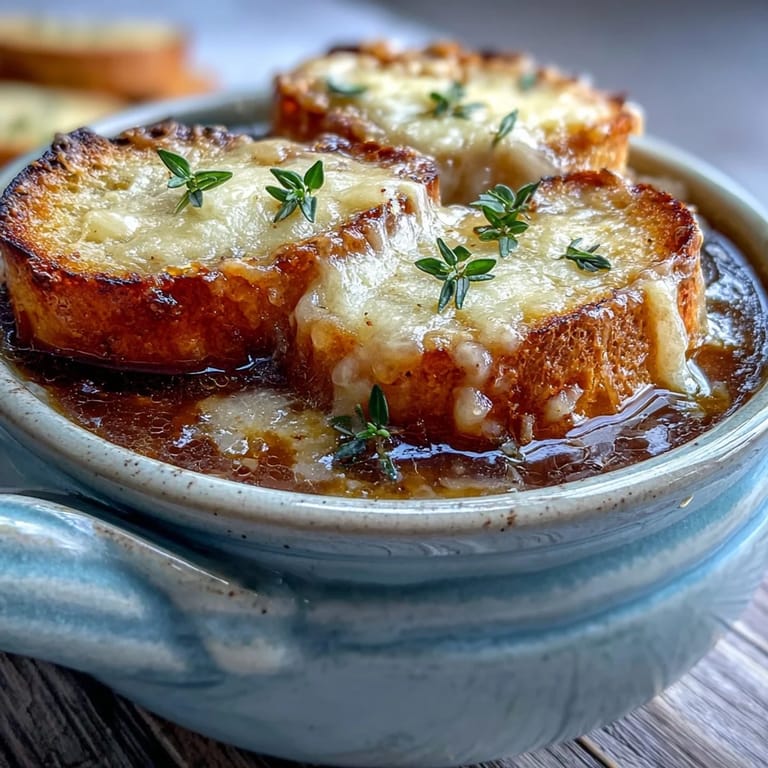
- Ladle soup into oven-safe bowls. Top each with toasted baguette slice and generous handful of Gruyère cheese. Place bowls on baking sheet and broil until cheese is melted and bubbling, 2 to 4 minutes.
 Save
Save  Save
Save My sister threatened to move in permanently after I served this for a casual Tuesday dinner. Something about bubbling cheese and savory broth turns ordinary weeknights into occasions worth remembering.
Making It Vegetarian
Swap beef broth for a rich vegetable broth and skip the Worcestershire or find a vegetarian version. I keep a few vegetable bouillon paste jars in the pantry specifically for this soup when my vegetarian friends visit. The result is still deeply satisfying.
Cheese Alternatives
Gruyère is traditional for its melting properties, but Swiss works in a pinch. Emmental adds that lovely nutty note too. Just avoid pre-shredded cheese which has anti-caking agents that prevent proper melting.
Serving Suggestions
A crisp green salad cuts through all that richness perfectly. I like something acidic with vinaigrette to balance the deep savory notes. A glass of white Burgundy is traditional but honestly any dry white wine you are cooking with works beautifully.
- Set out extra thyme for guests who love that herbal finish
- Keep the bread basket handy for dipping
- This soup waits for no one, serve it while still bubbling
 Save
Save 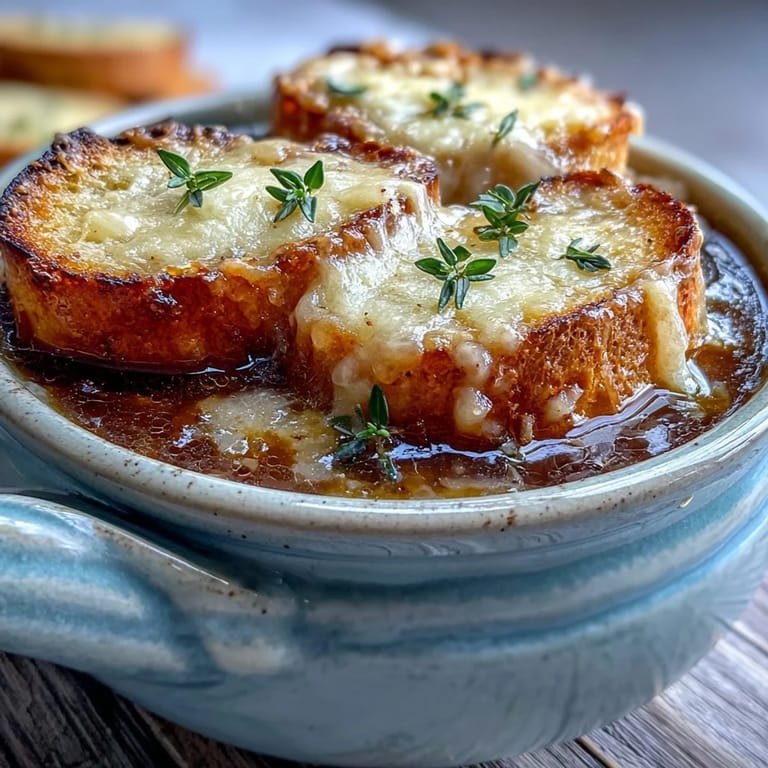 Save
Save There is something profoundly satisfying about turning five onions and a hunk of bread into something this extraordinary. Watch someone take that first bite through the cheese crust and you will understand why this recipe lives in the forever section of my recipe box.
Recipe Questions & Answers
- → Why does caramelizing onions take so long?
Caramelizing onions requires 40-45 minutes of slow cooking to break down their natural sugars and develop that deep, golden color and sweet flavor. Rushing this step over high heat will burn rather than caramelize the onions, resulting in bitter notes.
- → Can I make this ahead of time?
Absolutely. The soup actually improves after sitting overnight as flavors meld together. Store the broth and onions separately from the bread and cheese. Reheat gently, then add the toppings and broil just before serving for the best texture.
- → What's the best cheese for topping?
Gruyère is traditional because it melts beautifully with a rich, nutty flavor that complements the sweet onions. Swiss, Emmental, or Comté work well as substitutes. Adding Parmesan creates a nice salty contrast and helps achieve that golden-brown crust under the broiler.
- → Why use a Dutch oven?
Dutch ovens excel at slow-cooking onions evenly due to their heavy construction and heat retention. The tight-fitting lid also helps when you need to simmer the broth. Plus, many Dutch ovens go from stovetop to oven, making them versatile for the broiling step if you prefer.
- → How do I get the cheese perfectly melted and golden?
Use oven-safe bowls and place them on a baking sheet to catch any drips. Set your oven to broil and watch closely—gruyère goes from perfectly golden to burnt quickly. The cheese should be bubbling and lightly browned in 2-4 minutes.
- → Can I freeze this soup?
Yes, freeze the soup without the bread and cheese topping for up to 3 months. Thaw overnight in the refrigerator, reheat gently on the stovetop, and add fresh toppings when ready to serve. The texture remains excellent after freezing.