 Save
Save My neighbor brought over a small package of hojicha tea one autumn afternoon, insisting I try it brewed with cream. That roasted, almost nutty whisper in the cup made me think immediately of cake—something that could hold that delicate flavor without drowning it out. By evening, I'd sketched out this recipe, combining that toasted tea with a cloud-soft sponge and dark chocolate that catches the light like lacquer. It became the cake I make when I want to impress someone without sounding like I'm trying too hard.
I made this cake for my book club, and watching people close their eyes on the first bite still makes me smile. One guest, who'd spent time in Japan, said it reminded her of a small teashop in Kyoto. That's when I realized this cake bridges something—it's not trying to be authentically Japanese, but it honors the ingredient in a way that feels genuine and warm.
Ingredients
- Cake flour: Sifting it beforehand prevents dense pockets and gives you that tender crumb that hojicha deserves to rest on.
- Eggs at room temperature: They whip into a more voluminous foam, which is your entire structure here—don't skip this step or rush it.
- Granulated sugar: Beating it with eggs for a solid 5–7 minutes creates tiny air pockets that keep the cake light and pillowy.
- Hojicha loose leaf tea: Loose leaf is worth seeking out because it steeps more evenly than bags and gives you that full, roasted flavor without any papery taste.
- Unsalted butter, room temperature: Cold butter won't cream properly with the sugar, leaving you with a buttercream that tastes separated and grainy.
- Dark chocolate, 60–70% cocoa: This range gives you enough cocoa intensity to balance the subtle hojicha without becoming aggressive or bitter.
- Heavy cream: Whole cream works too, but the higher fat content in heavy cream makes a ganache that sets with a silkier texture.
Tired of Takeout? 🥡
Get 10 meals you can make faster than delivery arrives. Seriously.
One email. No spam. Unsubscribe anytime.
Instructions
- Prepare your stage:
- Preheat the oven to 175°C and line those cake pans with parchment paper cut to fit snugly on the bottom. This small act of care prevents sticking drama later.
- Build your foam:
- Crack eggs into a very clean, grease-free bowl—even a speck of yolk will sabotage your volume. Beat eggs and sugar together hard for 5–7 minutes until the mixture looks pale, thick, and ribbony; you're essentially creating a mousse that holds air.
- Fold with intention:
- Sifted cake flour goes in thirds, folded gently with a spatula so you preserve those air bubbles. Rough folding deflates your whole effort.
- Temper and combine:
- Warm milk, melted butter, and vanilla mixed together would shock the cold batter and cause the eggs to scramble slightly. Instead, steal a few spoonfuls of batter, mix them into the warm liquid to bring it closer in temperature, then fold that back into the main batch smoothly.
- Bake with confidence:
- Divide evenly between pans and bake 20–22 minutes until a skewer comes out clean. A few moist crumbs are okay; wet batter is not.
- Cool properly:
- Let cakes rest in the pans for 10 minutes so they set just enough to handle, then flip onto a wire rack. Patience here prevents a collapsed cake.
- Infuse your cream:
- Heat milk until it steams, pour over hojicha, and let it sit for 10 minutes—this is where the magic happens, where that roasted flavor blooms. Strain through a fine sieve and cool to room temperature or it'll melt your butter.
- Whip the buttercream:
- Beat softened butter with powdered sugar and a pinch of salt for 3–4 minutes until it lightens in color and texture. Gradually add the cooled hojicha milk, beating as you go, until you have something silky and spreadable.
- Create the ganache:
- Heat cream until it just steams, pour over chopped chocolate, and resist the urge to stir immediately. Wait 2 minutes so the heat gently melts the chocolate, then one smooth stir creates glossy perfection.
- Assemble with care:
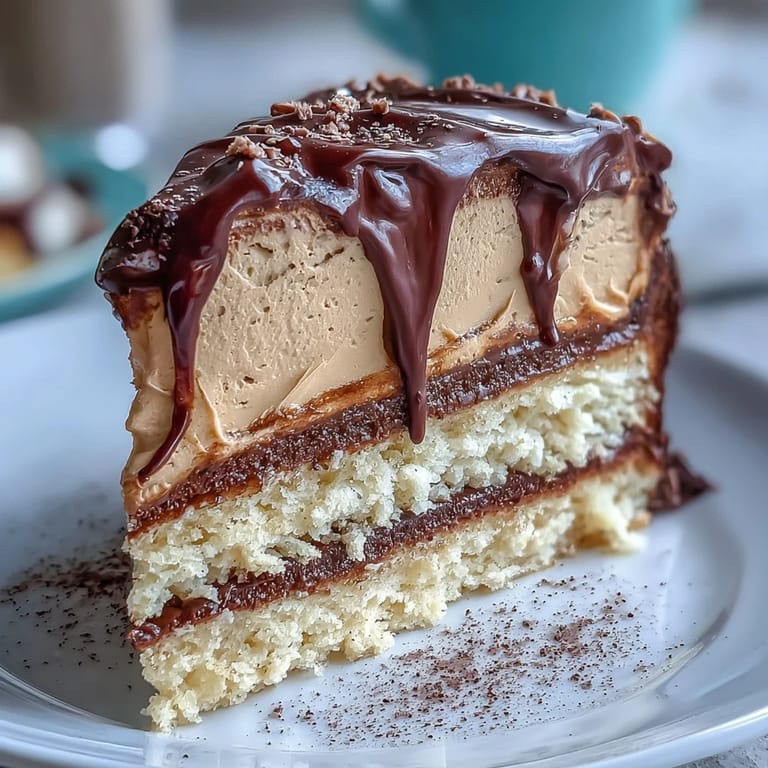
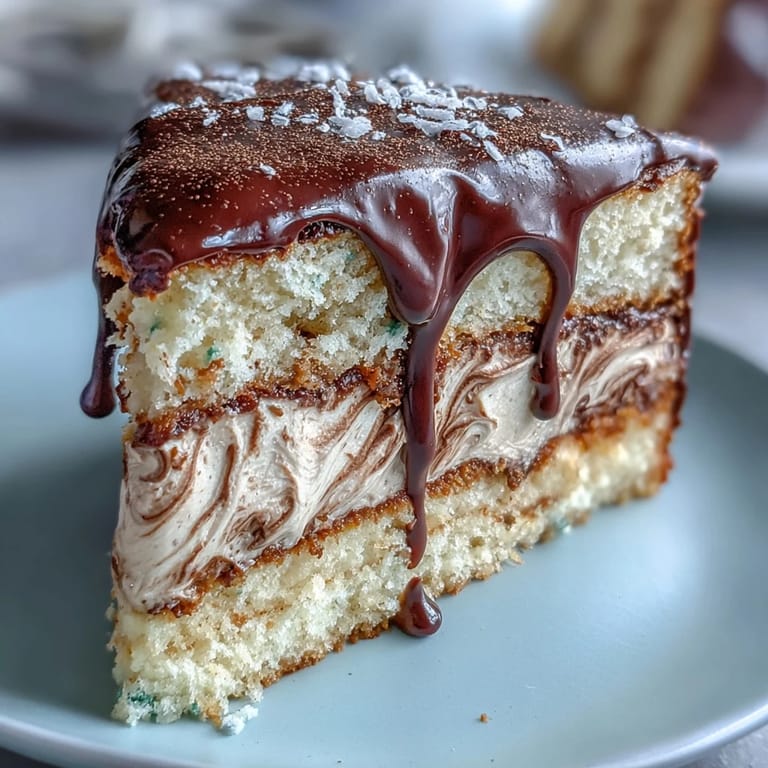
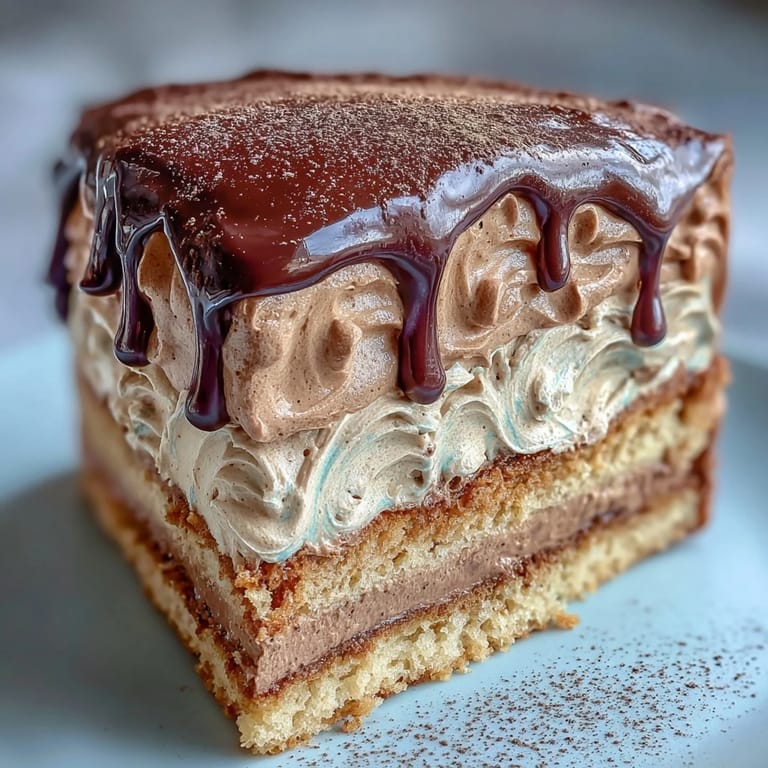
- Place one cake layer down, spread half the hojicha buttercream over it like you're frosting a canvas. Top with the second layer, then coat the top and sides with remaining buttercream, creating an even base for the ganache.
- The final touch:
- Pour cooled ganache onto the center and let gravity do its work, creating those elegant drips down the sides. Chill for 30 minutes so everything sets and the flavors marry together.
 Save
Save There's a moment when you pour that dark ganache over the assembled cake and watch it catch the light, thick and luxurious, that makes the whole process feel intentional and special. That's when it stops being a task and becomes something you made with your own hands for people you care about.
The Ritual of Hojicha
Hojicha is Japan's answer to slow comfort—tea leaves roasted until they lose their grassy edge and gain this warm, almost chocolatey depth. Using it in a cake transforms it from a beverage ritual into something you can hold in your hands and share. The flavor doesn't shout; it whispers, which is exactly why it pairs so beautifully with a delicate sponge and glossy chocolate.
Flavor Balancing Act
This cake works because none of the flavors compete—the hojicha is subtle and roasted, the buttercream creamy and slightly sweet, and the dark chocolate adds sophistication without bitterness. Each layer has its moment. If you wanted to strengthen the hojicha presence, you could infuse the milk for 12–15 minutes instead of 10, or add an extra tablespoon of loose leaf, but start subtle and adjust to your preference next time.
Storage and Serving Wisdom
This cake actually improves after a day in the refrigerator, as the flavors settle and become more integrated—make it a day ahead if your schedule allows. Slice with a hot, damp knife for clean edges, and serve chilled or at room temperature with Japanese green tea, light oolong, or even a small cup of hojicha itself.
- Leftover hojicha buttercream keeps refrigerated for up to 5 days and works beautifully piped onto cookies or stirred into hot milk on cold mornings.
- Chocolate shavings made with a vegetable peeler add visual elegance and a final textural moment when you dust them over the top just before serving.
- If you make this cake in advance, wrap it loosely in plastic wrap in the refrigerator rather than airtight, so condensation doesn't make the ganache sticky.
 Save
Save This cake has become my quiet way of saying I'm thinking of someone, that I spent time in the kitchen doing something that required presence and care. Make it once, and you'll understand why hojicha deserves to be more than just tea.
Recipe Questions & Answers
- → What makes hojicha special in baking?
Hojicha is roasted Japanese green tea with lower caffeine and distinct earthy, nutty notes. When infused into buttercream, it creates a subtle, aromatic flavor that pairs beautifully with chocolate and complements the lightness of sponge cake without overwhelming the palate.
- → Can I make the components ahead of time?
Yes. The sponge layers can be baked and frozen for up to 2 weeks. The hojicha buttercream keeps refrigerated for 3-4 days, and ganache can be stored in the refrigerator for up to 1 week. Bring both to room temperature before assembling for easiest spreading.
- → What if I cannot find hojicha tea?
You can substitute with other roasted teas like Chinese roasted oolong or even a strongly brewed regular green tea, though the flavor profile will differ. For a non-tea alternative, try adding roasted coffee powder or matcha for different flavor dimensions.
- → How do I prevent the ganache from sliding off?
Ensure your buttercream layer is chilled for at least 15-20 minutes before pouring the ganache. The ganache should also be cooled to room temperature but still pourable. If it is too warm, it will slide; if too cool, it will not coat smoothly.
- → Can this be made as a single-layer cake?
Absolutely. You can bake the batter in one larger pan or simply use one layer with all the buttercream and ganache. Adjust baking time to 25-30 minutes for a single larger cake, and consider doubling the filling components for a taller dessert.