 Save
Save I discovered hojicha on a quiet afternoon in a tiny tea shop tucked between two larger storefronts, where the owner casually mentioned that roasted green tea was nothing like its fresh counterpart—earthier, almost nutty, with a warmth that felt like comfort in powder form. Years later, I found myself staring at that same hojicha tin in my pantry, wondering if it could work in a cake, and the answer surprised me so completely that I've made this roll at least a dozen times since. The first attempt was cautious, almost apologetic, but the moment that fragrant cream hit the warm sponge, I knew I was onto something special.
I remember rolling this for my friend's birthday last spring when she mentioned, almost in passing, that she'd never had hojicha before and wasn't sure what to expect. Watching her close her eyes after the first bite, then immediately ask for the recipe, felt like the highest compliment I could receive. She still makes it now, and sometimes she texts me photos of her attempts, each one a little more confident than the last.
Ingredients
- Eggs, separated (4 large): Room temperature eggs whip beautifully, but here's what I learned: if you're in a hurry, separate them straight from the fridge and they'll still work perfectly because the yolks need to be rich and heavy while the whites need to be whippable.
- Granulated sugar (80 g total, divided): Split into two batches—40 g for the yolks where it dissolves easily, and 40 g for the whites where it creates that glossy meringue that holds everything up.
- Whole milk (60 ml): It adds tenderness to the sponge in a way that water simply cannot, and the fat content helps keep every slice moist even days later.
- Vegetable oil (50 ml): This is your secret to keeping the cake tender and preventing the dryness that butter-based sponges sometimes develop when rolled.
- Cake flour, sifted (70 g): Sifting matters more here than you might think because hojicha powder can clump, and breaking those up before folding prevents dense pockets in your finished cake.
- Cornstarch (10 g): A little bit of cornstarch keeps the crumb impossibly delicate—it's the difference between a cake you can roll without cracking and one that fights you every step of the way.
- Hojicha powder (1 tbsp for cake, 2 tsp for cream): Hunt for the finest quality you can find because the flavor really matters here; cheap hojicha can taste slightly bitter and metallic, while good hojicha tastes like toasted comfort.
- Salt (1/4 tsp): Just enough to sharpen the hojicha flavor without anyone being able to taste the salt itself.
- Heavy cream, chilled (200 ml): Cold is absolutely non-negotiable; warm cream will simply refuse to whip, no matter how determined you are.
- Powdered sugar (2 tbsp): This dissolves instantly into the cream, unlike granulated sugar which can sometimes feel gritty on the tongue.
- Mango, ripe (1): A perfectly ripe mango has a slight give when you squeeze it gently, and the color should be blushed gold rather than bright yellow or green.
Tired of Takeout? 🥡
Get 10 meals you can make faster than delivery arrives. Seriously.
One email. No spam. Unsubscribe anytime.
Instructions
- Prepare your workspace:
- Preheat your oven to 170°C and line your baking tray with parchment paper, smoothing out any wrinkles so the finished cake has an even bottom. This is one of those steps that feels small until you're trying to peel off a rumpled paper and accidentally tear your warm sponge.
- Build the yolk base:
- Whisk your egg yolks with 40 g sugar until the mixture turns pale and ribbony—it should look almost mousse-like. Add your milk and oil slowly, whisking gently so everything emulsifies into a smooth, shiny batter.
- Fold in the dry ingredients:
- Sift your cake flour, cornstarch, hojicha powder, and salt together, then fold everything into the yolk mixture using a rubber spatula and gentle hand movements. Stop as soon as you can't see any white streaks; overmixing at this point is what creates dense, tough cakes.
- Create your meringue:
- In a completely clean bowl, whip your egg whites until they turn foamy and opaque, then add your remaining 40 g sugar gradually while continuing to beat. Keep going until you have stiff, glossy peaks that stand straight up when you lift the beaters.
- Combine with care:
- Add one-third of the meringue to the yolk mixture and fold it in gently to lighten the batter, then fold in the remaining meringue in two more additions, being almost reverent about how gently you move the spatula. This is where patience pays off—rough handling means deflated cake.
- Bake to perfection:
- Pour your batter into the prepared tray and tap it gently on the counter a few times to help air bubbles escape, then smooth the top lightly. Bake for 13 to 15 minutes until the cake springs back when you press it gently with your finger and the edges are just beginning to pull away from the sides.
- Cool and flip:
- While the cake is still warm, carefully turn it out onto a fresh piece of parchment paper and peel away the original baking sheet. Loosely cover it with a clean kitchen towel and let it cool completely—the towel keeps it from drying out while preventing condensation from making it soggy.
- Whip the hojicha cream:
- Pour your chilled heavy cream into a bowl and whip it while gradually adding powdered sugar and hojicha powder, beating until you reach medium-stiff peaks. You want the cream to hold its shape but still be spreadable and slightly yielding—stiff peaks will make rolling difficult.
- Assemble the roll:
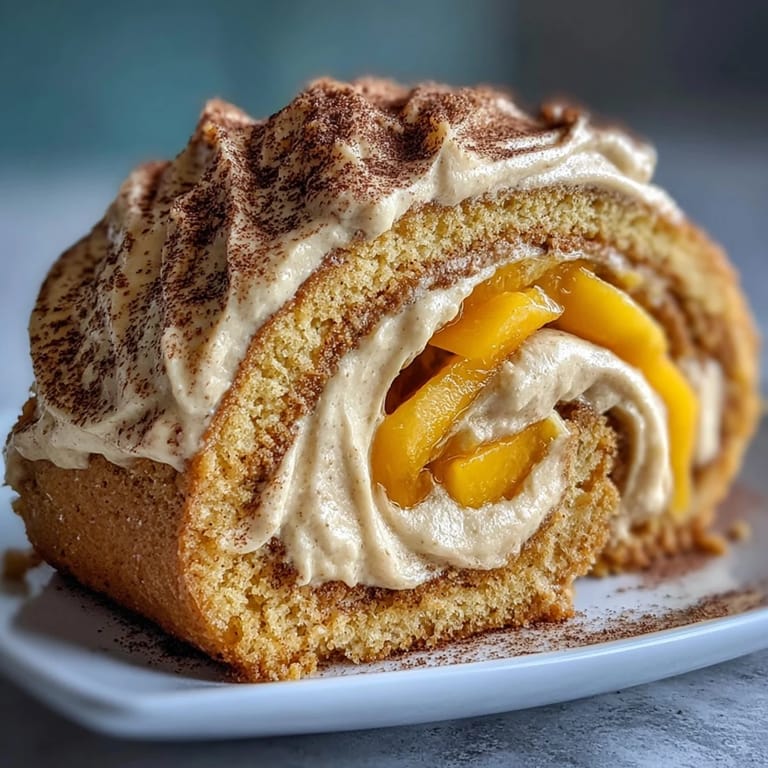
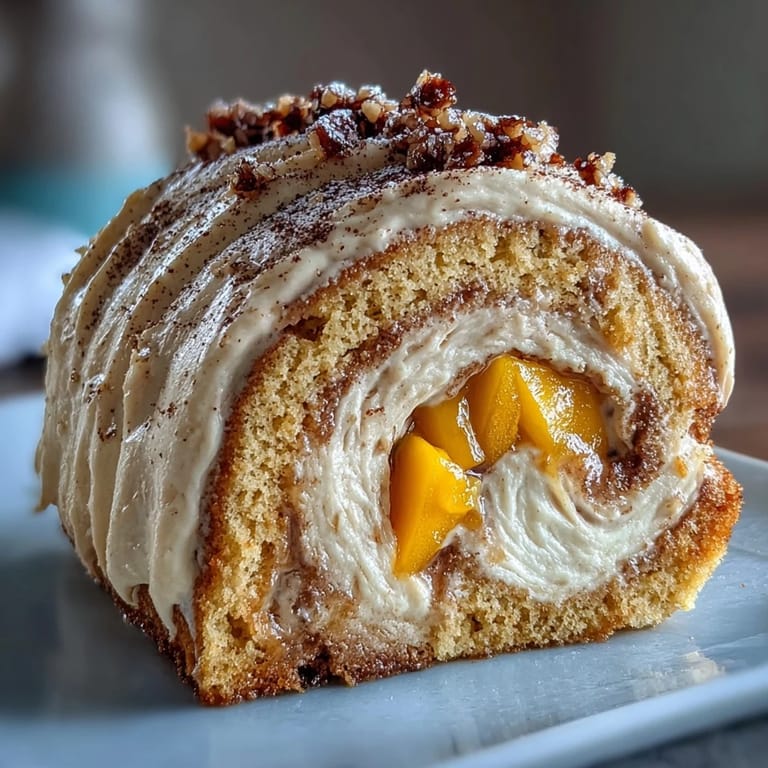
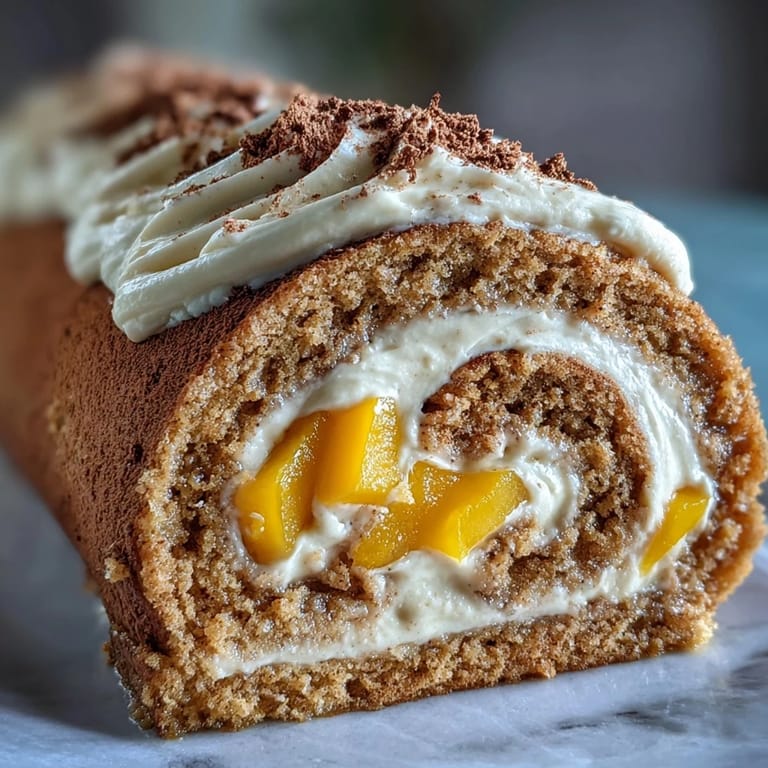
- Spread your hojicha cream evenly across the cooled sponge, then arrange your mango slices in a neat line along one of the short edges. Using the parchment paper to guide you, gently roll the cake away from the mango edge, keeping the roll as tight as you can without tearing the delicate sponge.
- Set and serve:
- Wrap the finished roll in parchment paper and refrigerate for at least 30 minutes so the cream sets and the whole thing becomes easier to slice cleanly. When you're ready to serve, trim the ends neatly and slice with a sharp knife, wiping the blade between cuts for pristine-looking slices.
 Save
Save There was an evening when a friend who usually avoids desserts sat down and ate three slices in quiet succession, then asked if hojicha was something she could start drinking regularly. That question shifted something in me about this recipe—it stopped being just about technique and became about introducing people to flavors that make them curious about the world. Now whenever someone tries this cake, I watch their face change, and that's become the whole point.
The Art of Rolling Without Cracking
The biggest moment of panic with any roll cake happens right when you're about to roll it, staring at this delicate sponge and wondering if it's going to shatter. I've found that having the parchment under the cake helps tremendously because it gives you something to hold onto, and rolling slowly with steady pressure keeps tears from forming. The warm sponge is actually more forgiving than cool sponge, which is counterintuitive but absolutely true—warm cake has elasticity that cold cake has lost.
Why Mango Works Here
I chose mango partly because I had one ripening on my counter and partly because I wondered if something bright could balance hojicha's deeper, earthier notes. The tartness of mango against the rich cream and the toasted tea flavor creates this conversation between different parts of your mouth, and suddenly nothing feels heavy or one-dimensional. If mango isn't available, strawberries work beautifully, as do thin slices of peach, but something fresh and slightly acidic seems essential to the whole equation.
Storage and Make-Ahead Magic
This cake actually improves overnight because the flavors meld and the cream firms up just enough to make slicing easier and more elegant. You can make the sponge a day ahead and store it wrapped in a kitchen towel, then assemble it the next day if you're short on time, which is something I discovered when I was overcautious about baking a cake while having houseguests. It also keeps beautifully in the refrigerator for up to three days, and I've even frozen the plain sponge for up to two weeks if I wanted to assemble it fresh without the full time commitment.
- The rolled cake tastes best when served chilled straight from the refrigerator, when the cream is firm and the flavors are at their sharpest.
- If you're making this for a party, assemble it in the morning and chill it all day—the extra time helps it hold its shape perfectly when sliced.
- Leftover plain sponge can be crumbled and layered with extra whipped cream for an impromptu dessert the next day.
 Save
Save Making this cake has become a meditation of sorts, something I return to when I want to spend time creating something beautiful and share something that tastes like both tradition and invention. It's a reminder that the best recipes are the ones that make people pause and ask questions.
Recipe Questions & Answers
- → What is hojicha?
Hojicha is roasted Japanese green tea with a deep, earthy flavor and reddish-brown color. Unlike other green teas, it's roasted over charcoal at high temperatures, giving it a nutty, caramel-like taste that's less bitter and lower in caffeine.
- → Can I make this ahead of time?
Yes, this roll cake actually improves after chilling. You can make it up to 24 hours in advance and store it wrapped in the refrigerator. The flavors meld together beautifully, and the texture becomes more stable for clean slicing.
- → Why did my sponge crack when rolling?
Cracking usually happens when the sponge cools completely before rolling or is overbaked. Roll while still warm, and don't overbake—the cake should spring back when touched. Using parchment paper helps guide the roll smoothly.
- → Can I substitute the mango?
Absolutely. Strawberries, peaches, or even roasted sweet pairs work wonderfully with hojicha. You can also skip the fruit entirely and let the roasted green tea cream shine on its own.
- → What's the trick to getting stiff peaks?
Ensure your bowl and beaters are completely clean and grease-free. Room temperature egg whites whip faster than cold ones. Add sugar gradually once foamy, and whip until glossy peaks stand straight when you lift the beaters.
- → Is hojicha powder the same as matcha?
No, they're different. Hojicha is roasted green tea with a brownish hue and nutty flavor, while matcha is shade-grown, steamed, and ground into bright green powder. They have distinct taste profiles and can't be substituted 1:1.