 Save
Save The first time I bit into mango sticky rice, I was sitting on a plastic stool outside a Bangkok street stall at dusk, my fingers sticky with juice. The vendor had just finished arranging the sliced mango beside a warm mound of rice that glistened under the string lights—creamy, fragrant, almost glowing. I didn't know a dessert could be so simple and yet so perfect, the way the warm rice absorbed the coconut milk while the cool, sweet mango played against it. That night taught me that sometimes the best dishes aren't complicated; they're just built on respect for good ingredients and a touch of patience.
I made this for a friend who said she didn't have a sweet tooth, and watching her face when she tasted it—the way her eyes widened slightly—I knew I'd created something she'd ask for again. There's something about the combination that disarms even skeptics: it's not aggressively sweet, just perfectly balanced. She's asked for the recipe at least five times since, always at moments when she needs a little escape.
Ingredients
- Glutinous (sweet) rice, 1 cup: This is the whole game—regular rice won't work because you need that sticky, almost-creamy texture that clings to itself and absorbs the coconut milk like a sponge.
- Coconut milk (full fat), 1 cup: Don't use light coconut milk; it'll taste thin and watery instead of luxurious and rich.
- Granulated sugar, 1/4 cup: This sweetens the coconut milk, creating the sauce that transforms the rice into something silky.
- Salt, 1/4 tsp: Just a pinch to make the sweetness sing and balance the richness of the coconut.
- Ripe mangoes, 2 large: Choose ones that yield slightly to pressure and smell sweet at the stem; they're the star and deserve to be perfect.
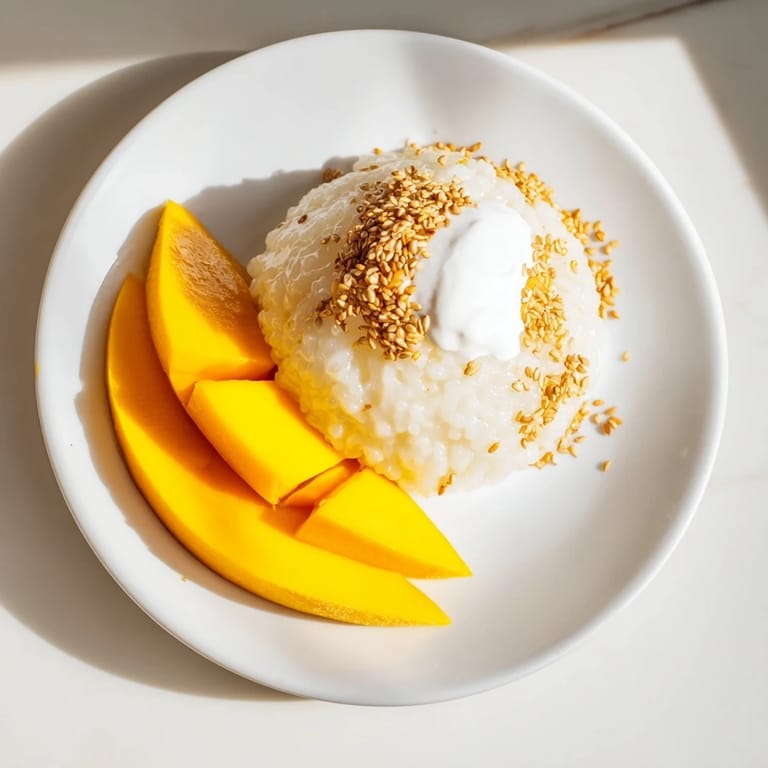
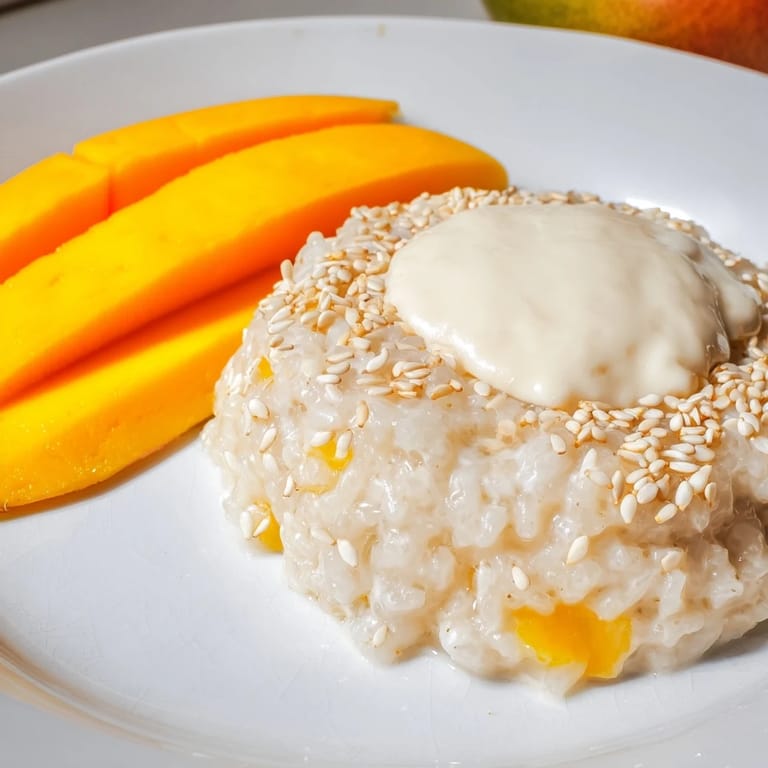
- Coconut cream and toasted sesame seeds or mung beans (optional): These are the finishing touches that add texture and visual warmth, though the dish is complete without them.
Tired of Takeout? 🥡
Get 10 meals you can make faster than delivery arrives. Seriously.
One email. No spam. Unsubscribe anytime.
Instructions
- Prepare the rice:
- Rinse the glutinous rice under cold water, stirring gently with your fingers until the water runs almost clear—this removes excess starch that would make the rice gluey instead of sticky. Soak it in fresh water for at least 4 hours or overnight; I usually start this in the morning so it's ready by evening.
- Steam it gently:
- Drain the soaked rice and spread it in a cheesecloth-lined steamer basket, then steam for 25 to 30 minutes until the grains are translucent and tender. You'll know it's done when a grain pressed between your fingers feels soft and slightly yielding.
- Warm the coconut sauce:
- While the rice steams, pour coconut milk, sugar, and salt into a saucepan and heat it gently over medium heat, stirring occasionally until the sugar dissolves completely. Never let it boil or bubble hard; you want it warm and silky, not separated or broken.
- Marry rice and coconut:
- Transfer the hot rice to a bowl and pour in about three-quarters of the warm coconut sauce, then stir gently with a spatula or wooden spoon until every grain is coated evenly. Cover the bowl and let it sit for 10 to 15 minutes so the rice can drink in all that coconut flavor.
- Slice the mangoes:
- While the rice absorbs the sauce, peel and slice your mangoes into thin, elegant pieces; a sharp knife and a steady hand make this feel less like work and more like respect for the fruit.
- Compose the plate:
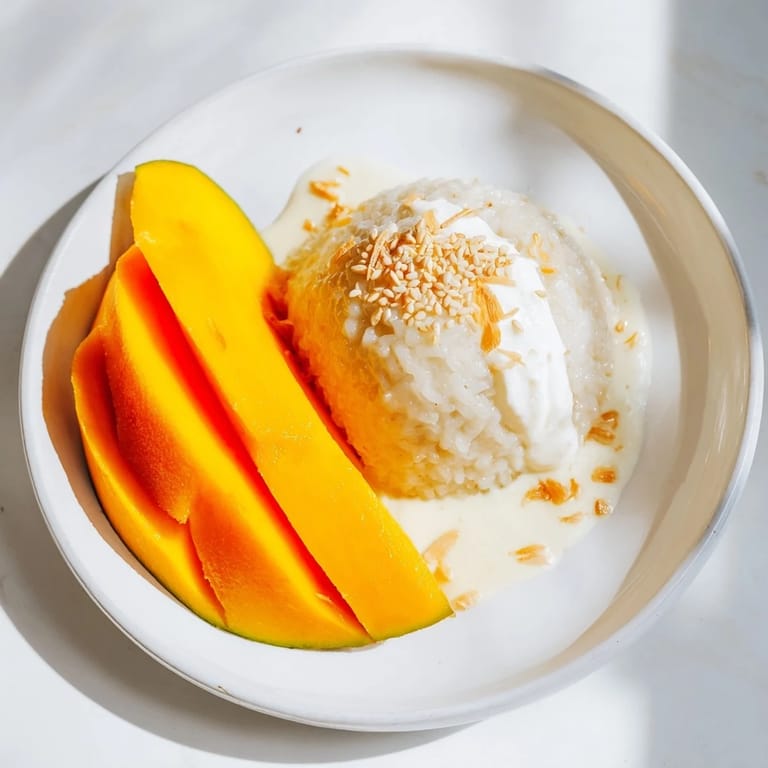
- Mound warm sticky rice slightly off-center on each plate, arrange the mango slices in a gentle curve alongside, then drizzle the remaining coconut sauce around everything. If you're using it, add a small dollop of coconut cream and a sprinkle of sesame seeds or mung beans on top.
 Save
Save I realized recently that this dessert stopped being just food the moment someone brought it to a potluck and three people immediately asked for the recipe. There's something about feeding people something unfamiliar that tastes like comfort—like you've handed them a small gift.
Why Mango Matters Here
The mango isn't decoration in this dish; it's half the story. A ripe mango is sweet, slightly floral, and has just enough acidity to keep the dessert from feeling heavy. When you buy them, look for ones that feel slightly soft when you press gently near the stem and smell faintly sweet—that's your sign they're at their peak. In Thailand, people take mango selection seriously, and once you've had a truly ripe mango, you'll understand why.
Coconut as Character Builder
Full-fat coconut milk is the invisible hero here—it adds a subtle richness and helps the rice develop that almost creamy, almost pudding-like texture that makes the dish feel special. If you've only ever used light coconut milk, you're missing the point. The difference between full-fat and light is like the difference between silk and cotton; one feels luxurious and the other just feels thin. Once the sugar and salt get involved, the coconut milk becomes this silky, glossy sauce that the rice drinks in eagerly.
Small Touches That Matter
The optional garnishes might seem like an afterthought, but they change the whole experience. A drizzle of coconut cream adds visual richness and another layer of coconut flavor, while toasted sesame seeds or mung beans bring a gentle crunch that plays beautifully against the soft rice and mango. If you want to elevate this further, try adding a pinch of toasted sesame seeds that you've lightly crushed so they stick to the coconut cream.
- For extra fragrance, add a pandan leaf or two to the steaming water—it infuses the rice with a subtle vanilla-like floral note that feels a little luxurious.
- If you can find palm sugar instead of granulated sugar, use it; the deeper, slightly molasses-like sweetness changes the whole character of the sauce.
- Always taste the coconut sauce before serving—if it feels too sweet, you can thin it slightly with a splash of warm water.
 Save
Save This dessert is proof that you don't need complicated techniques or a long ingredient list to make something that tastes like it came from a restaurant. Make it once and you'll find yourself wanting to make it again, especially when someone you care about is coming over.
Recipe Questions & Answers
- → What type of rice is best for this dish?
Glutinous or sweet rice is ideal as it becomes sticky when cooked, creating the perfect texture.
- → How long should the rice be soaked before cooking?
Soaking the rice for at least 4 hours or overnight ensures it absorbs enough water for even steaming.
- → Is coconut milk used in the sauce sweetened or plain?
Full-fat coconut milk is combined with sugar and salt to create a subtly sweet and creamy sauce.
- → Can I use other toppings besides sesame seeds?
Yes, toasted mung beans or a drizzle of coconut cream add texture and richness to the dish.
- → How should the dish be served for best flavor?
Serve the sticky rice warm with fresh mango slices on the side and drizzle the remaining coconut sauce over before garnishing.