 Save
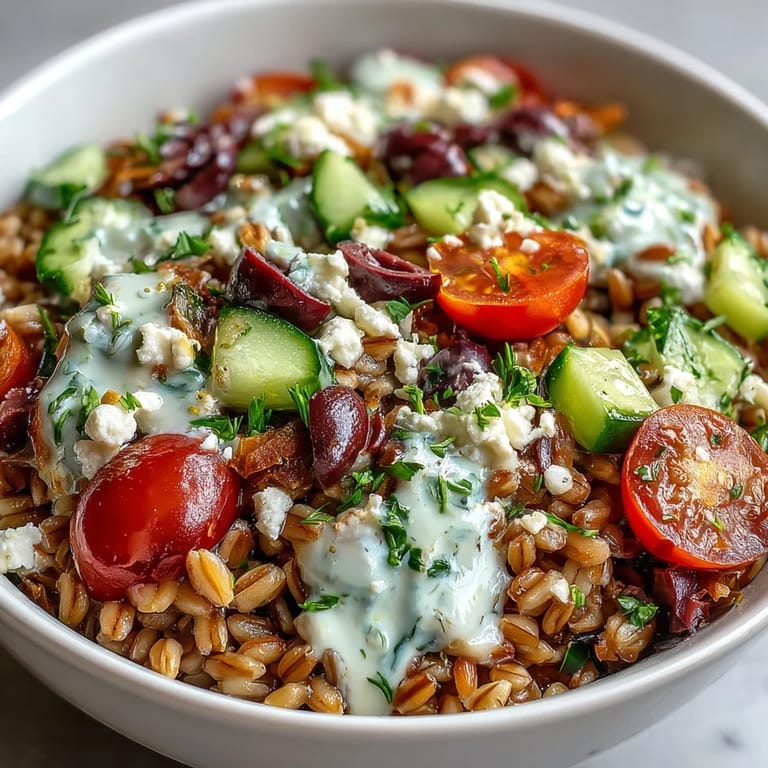
Save There's something about the way farro absorbs broth that reminds me of a kitchen afternoon when my neighbor knocked with a bag of vegetables from her garden—no plan, just abundance. I threw them into a bowl with some grains I had, drizzled tahini over everything, and suddenly we were eating something that tasted like it had taken hours. That's when I realized this bowl wasn't about technique or timing; it was about letting good ingredients speak for themselves.
I made this for my sister's first week in her new apartment when she had zero groceries and a borrowed cutting board. We sat on her kitchen floor eating warm farro while she told me about her new job, and somehow that simple bowl felt like the right way to celebrate something new. She's requested it every time I visit since.
Ingredients
- Farro: This nutty grain holds its texture beautifully when simmered in broth, giving you something substantial that won't turn mushy by day two.
- Vegetable broth: Use the good stuff—it's the foundation of the whole bowl's flavor, so don't skimp here.
- Cherry tomatoes: Halving them means they burst slightly when you toss everything together, releasing all their juice into the dressing.
- Cucumber and bell pepper: The crunch stays crisp for days, which is why this bowl survives the refrigerator better than most grain dishes.
- Kalamata olives: Slice them yourself if you can—they release more briny flavor than pre-sliced versions.
- Red onion: Slice it thin and let it sit with the tomatoes for five minutes; it'll soften slightly and lose that sharp bite.
- Baby spinach: The warm farro wilts it just enough without needing extra cooking, keeping things raw and alive.
- Chickpeas: If using canned, rinse them well under cold water—it makes a real difference in texture and taste.
- Tahini: Stir your jar well before measuring; separated oil changes the consistency of your dressing.
- Lemon juice: Fresh lemon only—bottled won't give you that bright, sharp finish the bowl needs.
- Garlic: One small clove minced fine; it should whisper in the dressing, not shout.
- Cumin: This spice bridges all the Mediterranean flavors together in a way that feels essential once you taste it.
- Feta cheese: Crumble it coarse—those bigger pieces give you pockets of salty brightness in each bite.
- Fresh parsley: Chop it just before serving so it stays vibrant green and doesn't turn dark.
Tired of Takeout? 🥡
Get 10 meals you can make faster than delivery arrives. Seriously.
One email. No spam. Unsubscribe anytime.
Instructions
- Simmer the farro in broth:
- Pour your rinsed farro into a medium saucepan with the vegetable broth and bring it to a boil over medium-high heat. Once it bubbles, reduce the heat to low, cover with a lid, and let it do its quiet work for 25 to 30 minutes—you'll hear it gently simmering beneath the cover. The farro should be tender but still have a slight chew to it, like perfectly cooked risotto.
- Prep while the grain cooks:
- While the farro is working, cut everything into a rough dice or slice—this is the moment to get your knife work done so assembly feels easy. Keep your vegetables in separate piles on the cutting board; organization now means less stress later.
- Whisk the tahini dressing:
- In a small bowl, combine the tahini, fresh lemon juice, olive oil, and water, whisking constantly until the mixture turns creamy and pale. Add the minced garlic and cumin, then taste and adjust the salt and pepper—the dressing should taste bright and garlicky, not flat.
- Combine everything in a large bowl:
- Once your farro has cooled for a minute or two, add it to a large mixing bowl along with all your prepared vegetables, spinach, and protein. The warmth of the grain will gently wilt the spinach without cooking it to nothing.
- Dress and toss gently:
- Pour the tahini dressing over everything and toss with your hands or two forks, making sure the dressing coats every grain and vegetable. Be gentle—you want the ingredients to meld together, not get crushed.
- Finish and serve:
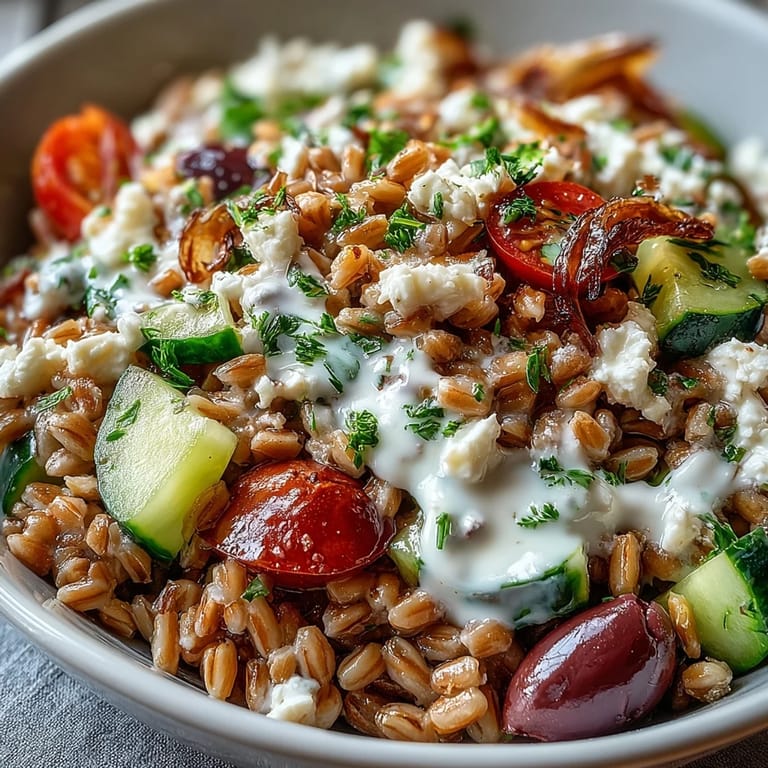
- Divide the bowl among four serving dishes, top each with crumbled feta and a scatter of fresh parsley, and serve right away while the farro still carries some warmth. Or refrigerate covered for up to two days and eat it cold straight from the fridge.
 Save
Save My favorite moment with this bowl happened when my roommate came home after a brutal day at work, saw the covered container in the fridge, and just sat down and ate it straight from the bowl without saying anything. By the time she was halfway through, I could see the tension in her shoulders ease. Sometimes food is medicine just by existing.
Why Farro Is the Grain That Changes Everything
Most grain bowls fade by day two—the grains dry out, vegetables wilt into nothing, and you're left with something that tastes sad. Farro is different because it actually absorbs more flavor over time, especially from the dressing. I learned this by accident when I made a huge batch and forgot about a container in the back of the fridge for three days. When I finally found it, the farro had turned into something almost creamy, with that tahini-cumin flavor running through every bite.
The Secret to a Dressing That Actually Coats Everything
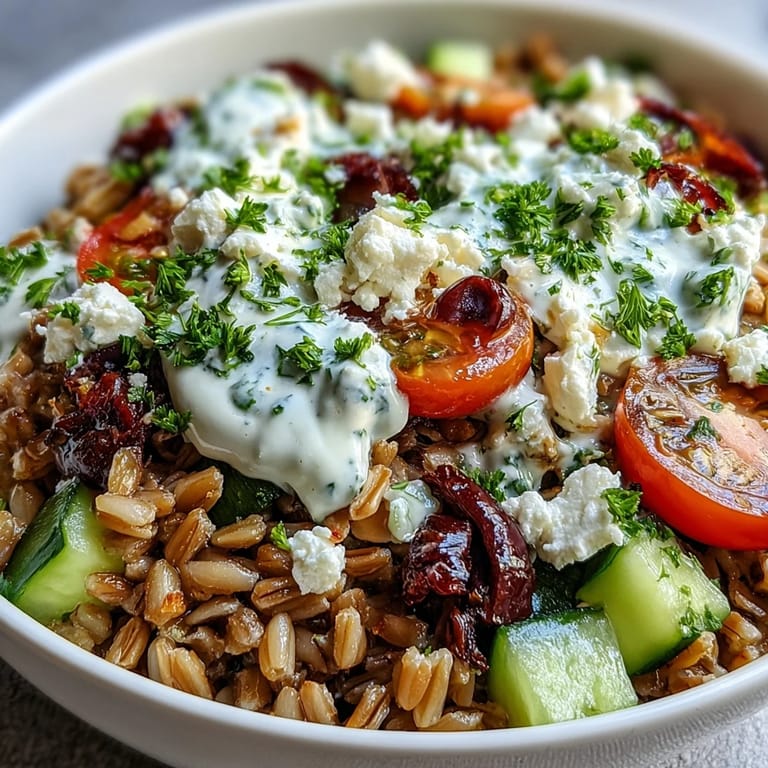
Most people make their tahini dressing too thin, chasing that pourable consistency that looks right but slides right off the grain. The trick is to keep it thick—almost paste-like—so it clings to every ingredient instead of pooling at the bottom of the bowl. You want it to feel luxurious and substantial, like it's dressing something precious rather than just soaking into it.
Building Bowls That Work as Leftovers
The biggest lesson I've learned is that successful bowl building is really about texture contrast—keeping some things raw, some things warm, and some things pickled or tangy. The raw spinach and cucumber stay crisp for days because they're not cooked; the olives and red onion provide that briny punch that only gets more interesting as they marinate; and the farro grounds everything with warmth and substance.
- Keep your vegetables cut into uniform pieces so they feel intentional when you eat them, not like you just threw things together.
- If you're meal-prepping, keep the dressing separate and dress individual portions as you eat them for the crispest results.
- This bowl tastes just as good cold straight from the fridge, so don't feel like you need to reheat it.
 Save
Save This bowl has become one of those recipes I make when I want to feel grounded, or when I need to feed people without fussing. It's honest food that tastes like you care.
Recipe Questions & Answers
- → Can I make this ahead of time?
Absolutely. This bowl keeps well for up to 2 days in the refrigerator. Store the dressing separately and toss just before serving to maintain freshness.
- → Is farro gluten-free?
Traditional farro contains gluten as it's a wheat product. For a gluten-free version, substitute quinoa or brown rice, adjusting cooking time accordingly.
- → What other proteins work well?
Beyond chickpeas, try grilled chicken, shrimp, baked tofu, or even roasted salmon. Lentils also make an excellent plant-based protein option.
- → Can I use a different grain?
Yes. Wheat berries, barley, orzo, and pearl couscous all work wonderfully. Cook times may vary, so follow package instructions for your chosen grain.
- → How do I store leftovers?
Store components in airtight containers in the refrigerator for up to 2 days. Keep dressing separate. The farro may absorb some dressing, so add a splash of lemon juice before serving.
- → Can I serve this warm or cold?
Both ways are delicious. Serve slightly warm for a comforting meal, or chilled for a refreshing lunch option during warmer months.