 Save
Save The first time I made tteokbokki was on a cold Seoul evening in someone's tiny kitchen, watching them stir that fiery red sauce with the confidence of someone who'd made it a hundred times. I was terrified of the heat level, kept asking if it would be too spicy, and they just smiled and handed me a wooden spoon. That moment of learning to trust the balance of gochujang and sweetness, of watching those chewy rice cakes soften into something almost silky—it changed how I cook comfort food. Now whenever I make a pot, I think of that kitchen and the permission I was given to not be precious about it.
I made this for friends who were skeptical about Korean street food, and by the third bite they were fighting over the last rice cakes like we hadn't fed them in weeks. There's something about tteokbokki that breaks down walls—maybe it's the warmth of the broth, maybe it's the shared spoon that gets passed around, but it became the dish I always return to when I want people to feel at home in my kitchen.
Ingredients
- Korean cylindrical rice cakes (tteok), 500 g: These aren't like sticky rice—they're chewy and slightly springy, designed to absorb sauce while keeping their texture, so don't skip the water soaking step if they've been in the fridge.
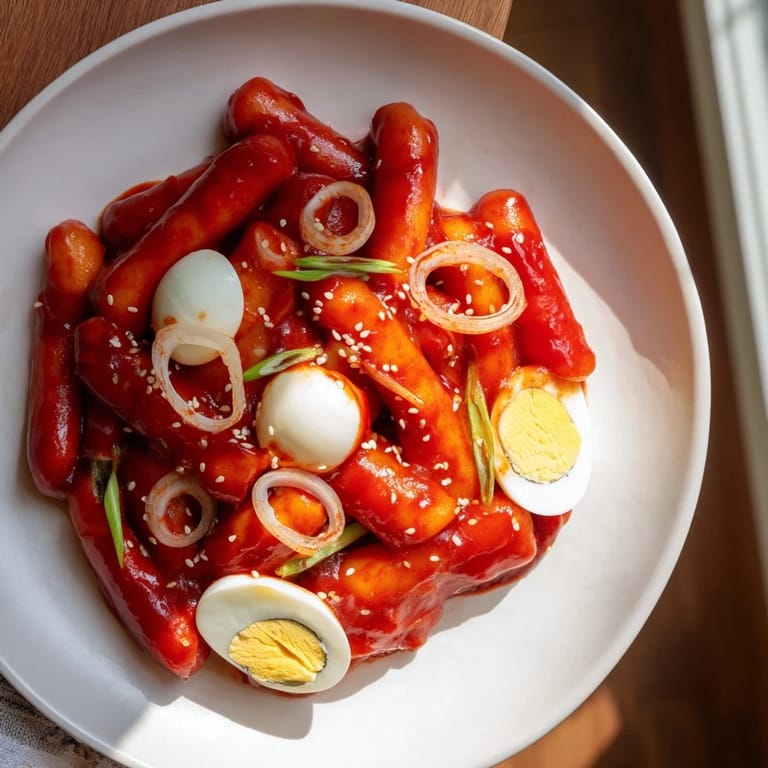
- Large eggs, 4: The boiled eggs aren't just protein; they're little pockets of richness that soften the heat and make the dish feel more substantial.
- Gochujang (Korean chili paste), 3 tablespoons: This fermented backbone brings umami and a mellow spice that's completely different from hot sauce—it builds flavor rather than just burning.
- Gochugaru (Korean chili flakes), 2 tablespoons: These add texture and a fresher heat that cuts through the sweetness, so taste as you go and adjust to your comfort level.
- Soy sauce, 2 tablespoons: This deepens the whole sauce and keeps it from becoming one-note spicy.
- Sugar and honey, 1 tablespoon each: The honey dissolves faster and adds a subtle complexity that plain sugar can't quite capture.
- Garlic, 2 cloves minced: Fresh garlic brightens the sauce and keeps it from tasting flat or stale.
- Toasted sesame oil, 1 teaspoon: A small amount here does enormous work, adding a nutty warmth that makes people ask what makes it taste so good.
- Water, 3 cups: This becomes your broth base, so using filtered water if you have it makes a subtle but real difference.
- Dried kelp (kombu), 1 piece (10x10 cm): Along with anchovies, this creates a clean, umami-rich broth that tastes like it came from somewhere with depth.
- Dried anchovies, 8 (heads and guts removed, optional): These should be small and crispy; they infuse the broth with a savory backbone that vegetarians can skip without losing the dish's soul.
- Onion, 1 small sliced: The onion softens during cooking and almost dissolves into the sauce, adding sweetness that balances the heat.
- Green onion, 1 sliced: Save this for the very end so it stays fresh and bright against all that heat.
- Fish cake, 1 sheet sliced (optional): This adds a tender chewiness if you want it, though the dish works beautifully without it.
- Toasted sesame seeds, 1 tablespoon: These are the final flourish that adds crunch and makes everything look intentional.
Tired of Takeout? 🥡
Get 10 meals you can make faster than delivery arrives. Seriously.
One email. No spam. Unsubscribe anytime.
Instructions
- Soak the rice cakes in warmth:
- Pour warm (not boiling) water over the tteok and let them sit for 10 minutes if they came from the fridge—they'll soften just enough to cook evenly without falling apart. This step feels small but it's the difference between rice cakes that stay together and ones that turn to mush.
- Build your broth with care:
- Add water, kombu, and anchovies to a medium saucepan and bring to a gentle boil—gentle matters here because you want the broth to taste clean, not cloudy. After 10 minutes, fish out the kombu and anchovies, and what you're left with is a quiet, umami-rich base that tastes like someone who knows what they're doing made it.
- Boil and cool the eggs:
- Set a timer for 8–9 minutes (8 for slightly creamy yolks, 9 for fully set), then immediately drop them into cold water so they stop cooking. This moment of temperature shock makes them easier to peel and gives you that satisfying moment when the shell cracks clean.
- Wake up your broth with spice and depth:
- Pour the gochujang, gochugaru, soy sauce, sugar, honey, garlic, and sesame oil into your broth and stir like you mean it—the paste can be stubborn, so take your time until everything dissolves into a deep red that's both appetizing and a little bit intimidating. Taste it now; this is your moment to adjust heat or sweetness before the rice cakes go in.
- Marry the cakes with sauce and simmer:
- Add the drained rice cakes, sliced onion, and fish cake (if using) to the sauce and stir gently so everything gets coated. Watch them over medium heat for 10–12 minutes, stirring occasionally—you'll see the sauce thicken and the rice cakes shift from slightly firm to tender and chewy, and you'll smell something that makes you understand why this is a favorite street food.
- Invite the eggs to finish:
- Add the peeled eggs and let everything simmer together for another 2–3 minutes, just long enough for the eggs to warm through and absorb some of that flavor.
- Finish with brightness and texture:
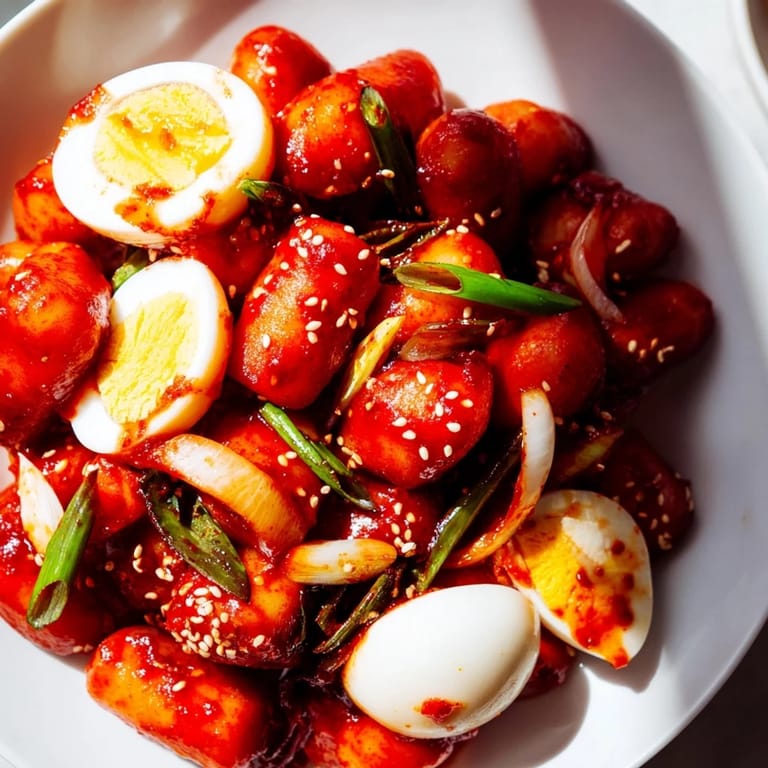
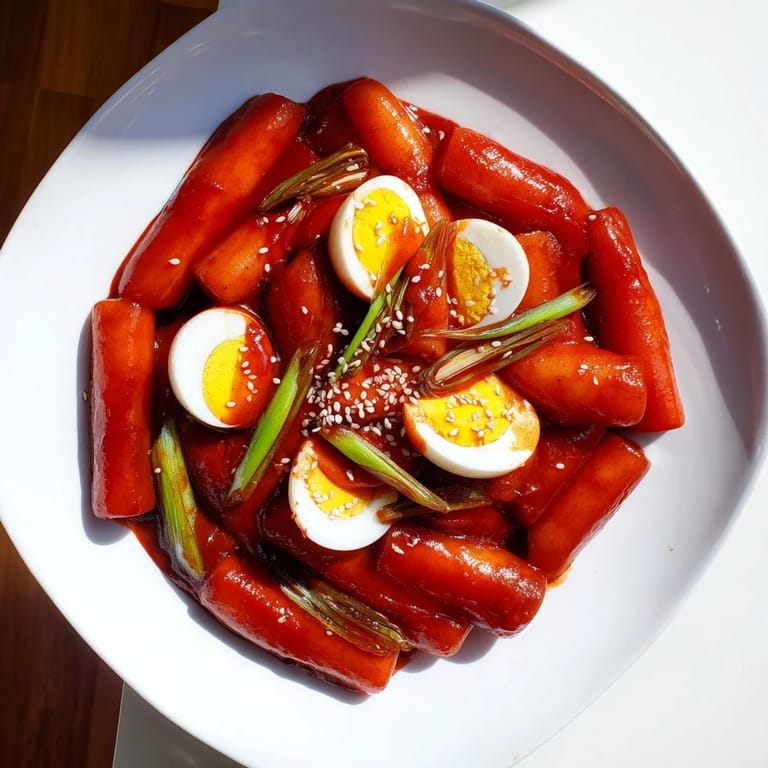
- Turn off the heat, scatter green onions and sesame seeds over the top, and serve immediately while everything's still steaming and the sauce is glossy and thick.
 Save
Save There's a moment while tteokbokki simmers when the whole kitchen fills with that rich, slightly spicy-sweet steam, and you suddenly feel less alone in whatever you're doing that day. It's food that doesn't need an occasion, doesn't need to be perfect, just needs to be warm and shared.
The Art of Rice Cake Texture
The entire appeal of tteokbokki lives or dies on rice cake texture, and I've learned this the hard way. Fresh rice cakes from a Korean market need barely any soaking, while frozen or refrigerated ones need that full 10 minutes or they'll resist the sauce like they don't want to be there. The moment you add them to the simmering sauce, you're looking for them to go from slightly resistant to yielding but still holding their shape—it happens faster than you'd think, so don't walk away. Taste one around the 8-minute mark to see where you are; different brands vary in density and absorb sauce at different speeds.
Spice, Sweetness, and Personal Preference
One of the beautiful things about making tteokbokki at home is that you're not locked into anyone else's heat tolerance. I've learned that gochujang and gochugaru are two different kinds of spice—the paste brings fermented depth and stays in your mouth, while the flakes add a fresher, sharper heat that fades faster. If you're nervous, start with half the gochugaru and add it gradually; you can always make it spicier but you can't walk back a pot that's too hot. The honey matters more than you'd think for balancing everything; it rounds out the edges and keeps the spice from feeling aggressive.
Variations That Work
The beauty of tteokbokki is that it's forgiving and flexible—I've made it with cabbage, with carrots that soften into the sauce, with ramen noodles stirred in at the last moment for extra substance. Some nights I leave out the anchovies entirely and use a vegetable broth or just water with more soy sauce, and it's still unmistakably tteokbokki. Each version teaches you something about how the flavors balance, and none of them are wrong.
- Add tender greens like spinach or bok choy in the last minute if you want something fresher alongside the richness.
- A splash of rice vinegar at the very end can wake everything up if it feels too heavy or sweet after an hour of sitting.
- Leftover tteokbokki reheats gently on the stove with a little water to loosen the sauce, though it's honestly just as good straight from the fridge if you're someone who eats cold leftover sauce at midnight.
 Save
Save Tteokbokki isn't fancy or complicated, but it's taught me that some of the best meals are the ones that bring people close around a warm pot and a spoon that gets passed around. Make it, share it, adjust it to what tastes right to you.
Recipe Questions & Answers
- → How do I soften the rice cakes before cooking?
Soak the rice cakes in warm water for about 10 minutes if they are hard or refrigerated to soften them before simmering.
- → Can I make this dish vegetarian-friendly?
Yes, omit the anchovies and fish cake, and use vegetable broth instead to keep it vegetarian.
- → What gives the sauce its spicy-sweet flavor?
The sauce combines gochujang, gochugaru, soy sauce, sugar, and honey for a balanced spicy and sweet taste.
- → How long should the eggs be boiled for this dish?
Boil the eggs for 8 to 9 minutes, then cool, peel, and add them towards the end to warm through.
- → What garnishes are recommended for added flavor?
Sliced green onions and toasted sesame seeds add fragrance and a nutty crunch to finish the dish.