 Save
Save I was folding laundry when the smell hit me, sharp and sweet all at once, vinegar cutting through the air like a memory I didn't know I had. My neighbor had left a covered pot on my counter with a note that just said try this, and when I lifted the lid, steam rose up carrying garlic and soy and something deeper, almost caramelized. That was my first taste of adobo, and I didn't even know what to call it yet. I just knew I wanted to make it myself, to understand how something so simple could feel so complete.
I made this for my brother once after he'd had a rough week, the kind where nothing goes right and you just need to sit down and eat something honest. He didn't say much at first, just ate two bowls of rice with the chicken falling off the bone, then looked up and asked if there was more. That's when I knew this wasn't just dinner, it was the kind of meal that steadies you, that reminds you the world can still be warm and good.
Ingredients
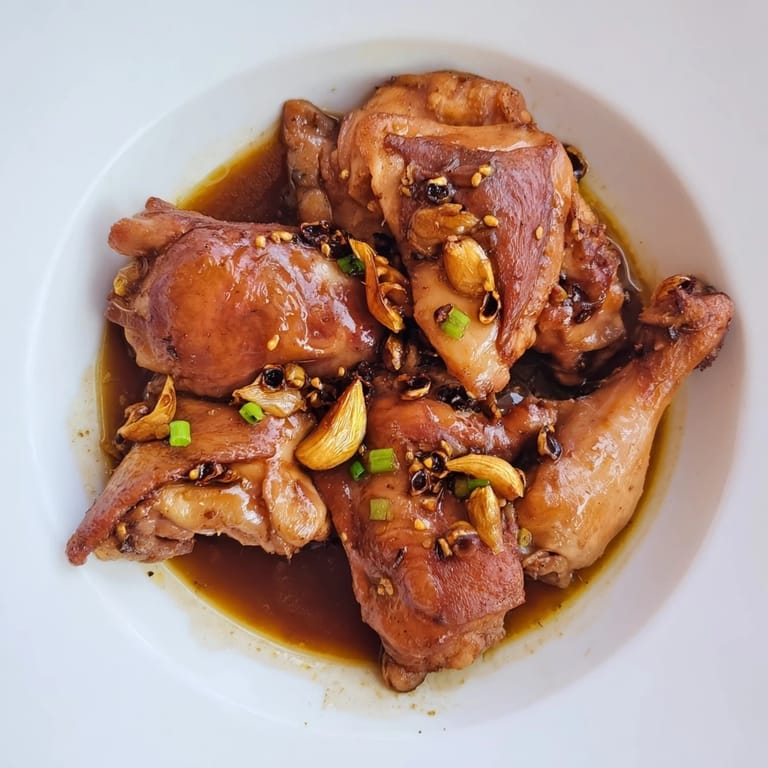
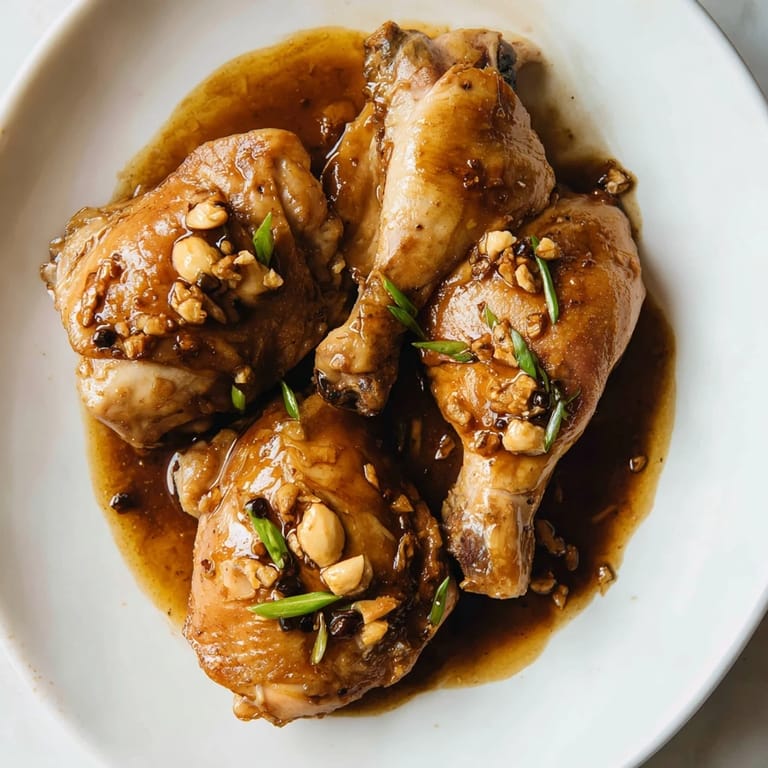
- Chicken thighs and drumsticks: Bone-in and skin-on are essential here, the bones add richness to the sauce and the skin crisps up beautifully if you let it brown first.
- Soy sauce: This is your salt and your umami, don't skimp, and if you need gluten-free, tamari works just as well without changing the soul of the dish.
- Cane vinegar: It's sharper and cleaner than most vinegars, but white vinegar will do if that's what you have, just know the flavor will be a touch more assertive.
- Garlic: Smash the cloves with the flat of your knife so they release their oils into the braise, you want them soft and sweet by the end, almost melting into the sauce.
- Bay leaves: They add a quiet herbal note that you won't notice until they're missing, so don't leave them out even if it feels like a small thing.
- Black peppercorns: Whole peppercorns give a gentler heat that blooms slowly, but ground pepper works fine if you're in a pinch, just use half as much.
- Brown sugar: Optional, but a spoonful balances the vinegar's bite and helps the sauce thicken into something glossy and cling-worthy.
- Water: Just enough to keep the chicken from drying out while it braises, it'll cook off and leave behind concentrated flavor.
- Cooking oil: For browning the chicken, any neutral oil works, you just need enough to get a good sear on the skin.
Tired of Takeout? 🥡
Get 10 meals you can make faster than delivery arrives. Seriously.
One email. No spam. Unsubscribe anytime.
Instructions
- Marinate the chicken:
- Toss everything together in a big bowl, making sure the chicken is coated in the soy and vinegar, then cover it and let it sit for at least half an hour, though overnight in the fridge is even better. The chicken will soak up the flavors and the acid will start to tenderize the meat, so don't rush this step if you can help it.
- Brown the chicken:
- Pull the chicken out of the marinade and pat it dry, then heat oil in your skillet until it shimmers and lay the pieces skin-side down without crowding them. Let them sizzle undisturbed for a few minutes until the skin is golden and releases easily, then flip and brown the other side.
- Braise low and slow:
- Pour in the reserved marinade and water, bring it all to a boil, then drop the heat to low and cover the pot. Let it simmer gently for 25 minutes, flipping the chicken once halfway through so both sides get time in the liquid.
- Reduce the sauce:
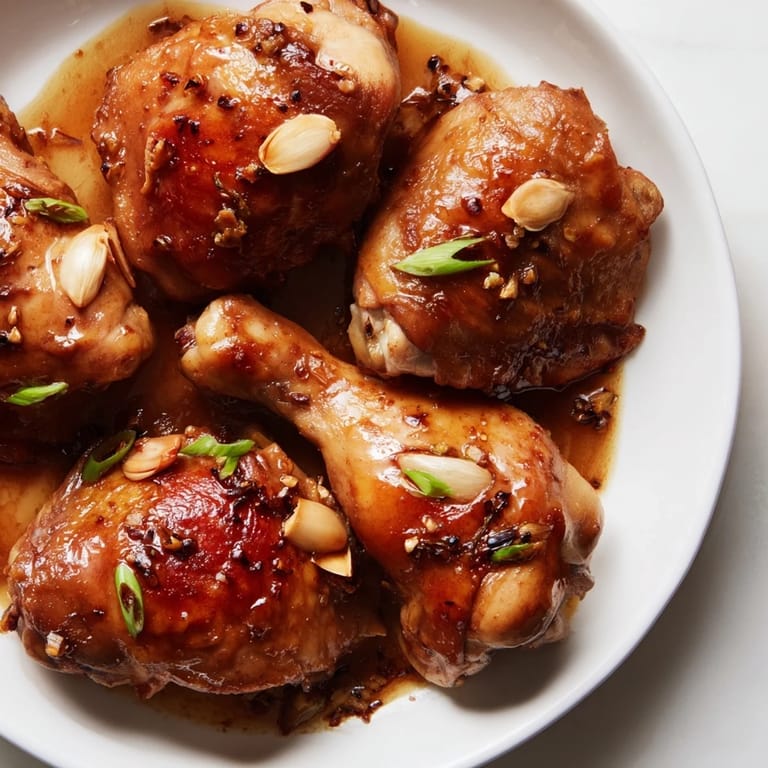
- Take the lid off and let the sauce bubble away for another 10 to 15 minutes, it'll thicken and turn glossy, clinging to the chicken like a glaze. If there's a lot of fat pooling on top, skim it off with a spoon, but a little is fine, it adds richness.
- Taste and serve:
- Fish out the bay leaves, taste the sauce, and adjust with a pinch more sugar or a splash of vinegar if it needs it. Serve the chicken over steamed rice with the sauce spooned generously on top, and scatter scallions over everything if you want a fresh bite.
 Save
Save There was a night I made this for a potluck and forgot to bring serving spoons, so everyone just stood around the pot with their plates, spooning chicken and sauce straight out like we were family. Someone said it tasted like home, even though none of us were Filipino, and I realized that's what good food does, it makes you feel like you belong somewhere, even if it's just around a warm stove with strangers who won't be strangers for long.
How to Store and Reheat
This keeps beautifully in the fridge for up to four days, and honestly it tastes better on day two when the chicken has had time to soak up even more of the sauce. Just store it in an airtight container with all the liquid, and when you're ready to eat, reheat it gently on the stove over low heat, adding a splash of water if the sauce has thickened too much. You can also freeze it for up to three months, though the texture of the skin won't be quite as nice after thawing, so I usually pull the meat off the bone and freeze it shredded with the sauce for easy future meals.
Variations to Try
I've made this with pork shoulder instead of chicken, cutting it into big chunks and braising it the same way, and it's just as good, maybe even richer. A splash of coconut milk stirred in at the end makes the sauce creamy and a little sweet, which is lovely if you want something softer and less sharp. If you like heat, toss in a couple dried chilies with the marinade, they'll infuse the whole pot with a gentle warmth that doesn't overpower the tangy soy and vinegar.
What to Serve Alongside
Steamed white rice is non-negotiable, it's the canvas for all that glossy, savory sauce, and you'll want extra because you'll be soaking up every last drop. A simple cucumber salad with a squeeze of lime and a pinch of salt cuts through the richness and gives you something cool and crisp to balance each bite. If you want to make it a full spread, sautéed greens like bok choy or water spinach with garlic are perfect, they're mild and tender and don't compete with the bold flavors on your plate.
- Always have extra rice ready, you'll run out faster than you think.
- A cold beer or a glass of iced tea is the perfect drink, something clean and refreshing to reset your palate between bites.
- Leftovers make an incredible fried rice the next day, just chop up the chicken and toss it with day-old rice, scallions, and a fried egg on top.
 Save
Save This is the kind of recipe that doesn't need you to be fancy or precise, it just needs you to show up and let it do what it does best. I hope it becomes one of those dishes you make without thinking, the one you turn to when you need something that feels like a hug in a bowl.
Recipe Questions & Answers
- → What type of chicken is best for this dish?
Bone-in, skin-on chicken thighs and drumsticks work best for tender, flavorful results.
- → Can I marinate the chicken overnight?
Yes, marinating for several hours or overnight deepens the flavor and tenderness.
- → What can be used as a substitute for cane vinegar?
White vinegar serves as a suitable alternative without altering flavor significantly.
- → Is it necessary to brown the chicken before simmering?
Browning adds a richer, caramelized flavor and improves texture before simmering.
- → How can I thicken the sauce if it remains thin?
Continue simmering uncovered to reduce the liquid, or add a small amount of brown sugar for depth.
- → Can this be served with sides other than rice?
Yes, it pairs well with steamed vegetables or hearty bread to soak up the sauce.