 Save
Save The first time I made laksa, I was standing in a cramped kitchen in Penang, surrounded by the intoxicating smell of lemongrass and galangal wafting from a neighbor's pot. She'd invited me over on a rainy afternoon, and watching her hands move through the motions—crushing spices, layering flavors, coaxing coconut milk into a glossy, aromatic broth—felt like being let in on a secret. Years later, I recreate that same magic at home, and the kitchen fills with that unmistakable warmth. It's a soup that tastes like friendship, like slow afternoons, like something worth the wait.
I remember serving this to friends who claimed they didn't like coconut curry, and watching their faces change with the first spoonful—that moment when you realize a dish has just won someone over. The balance of creamy, spicy, and bright never fails to surprise people, and suddenly everyone's asking for seconds and wanting the recipe. There's something about passing around a steaming bowl that makes even a weeknight dinner feel like an occasion.
Ingredients
- Vegetable oil: Just enough to create a base for the aromatics without making the broth greasy; use a neutral oil that won't compete with the laksa spices.
- Onion, garlic, ginger, and lemongrass: This fragrant quartet is the soul of the broth—don't rush the sautéing, as it's when all those flavors wake up and dance together.
- Laksa paste: The star ingredient that carries all the complex heat and depth; store-bought works beautifully, or make your own if you're feeling adventurous.
- Coconut milk: Choose a full-fat version for that luxurious, velvety texture that coats your palate with every spoonful.
- Vegetable broth: A good quality broth keeps everything balanced and prevents the soup from becoming one-dimensional.
- Rice noodles: Thick ones give you something to sink your teeth into, though vermicelli works too if that's what you have.
- Tofu: Firm tofu holds its shape beautifully when pan-fried and soaks up all those incredible flavors.
- Fresh vegetables and herbs: Bean sprouts, cilantro, and lime are the bright punctuation marks that lift the entire dish.
Tired of Takeout? 🥡
Get 10 meals you can make faster than delivery arrives. Seriously.
One email. No spam. Unsubscribe anytime.
Instructions
- Awaken the aromatics:
- Heat oil in a large pot and add your onion, garlic, ginger, and lemongrass; let them sizzle and soften for 3–4 minutes until the kitchen smells like something worth cooking. You'll know you're ready when the onion turns translucent and the ginger releases its spicy warmth.
- Introduce the laksa paste:
- Stir it into the aromatics and cook for another 2 minutes, watching as the paste breaks down and infuses the oil with deep, toasty notes. This step is crucial—it deepens the flavor in a way that rushing would skip.
- Build the broth:
- Pour in the coconut milk and vegetable broth, stirring well so everything melds together into one creamy, cohesive base. Bring it to a gentle simmer and let it settle for about 10 minutes while you prepare everything else.
- Season to taste:
- Add soy sauce, sugar, and salt, adjusting until the balance feels right—it should be rich but not cloying, spicy but nuanced. Taste as you go; this broth is forgiving and wants to be coaxed into perfection.
- Prepare the noodles and tofu:
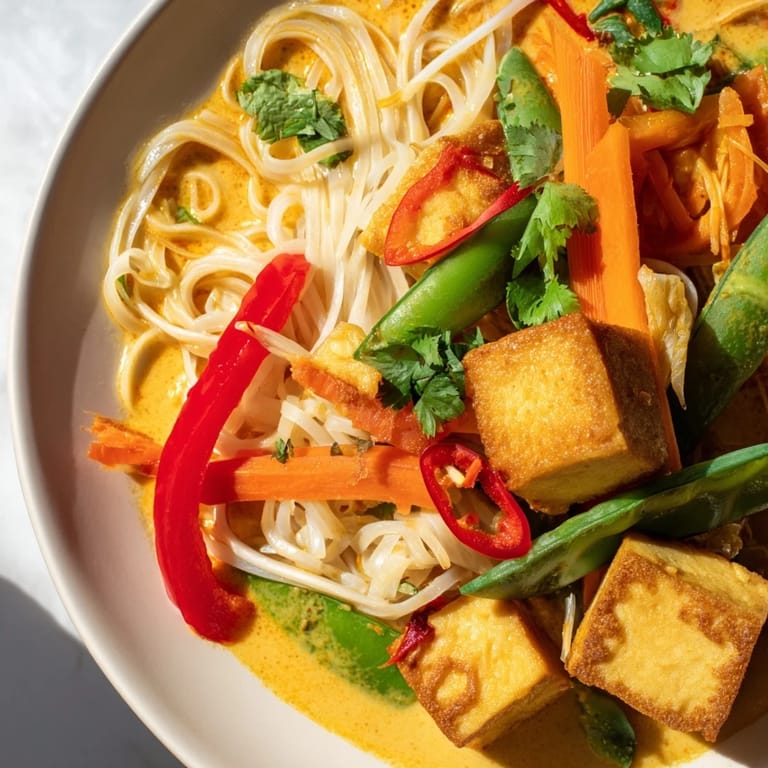
- While the broth simmers, cook or soak your rice noodles and pan-fry the tofu until it's golden and slightly crispy on the outside. The tofu will taste better if you give it a little time in the heat to develop some color.
- Final vegetables:
- Add carrots, bell pepper, and snow peas to the broth in the last few minutes; you want them tender but still with a whisper of bite. They should taste fresh, not tired.
- Assemble and serve:
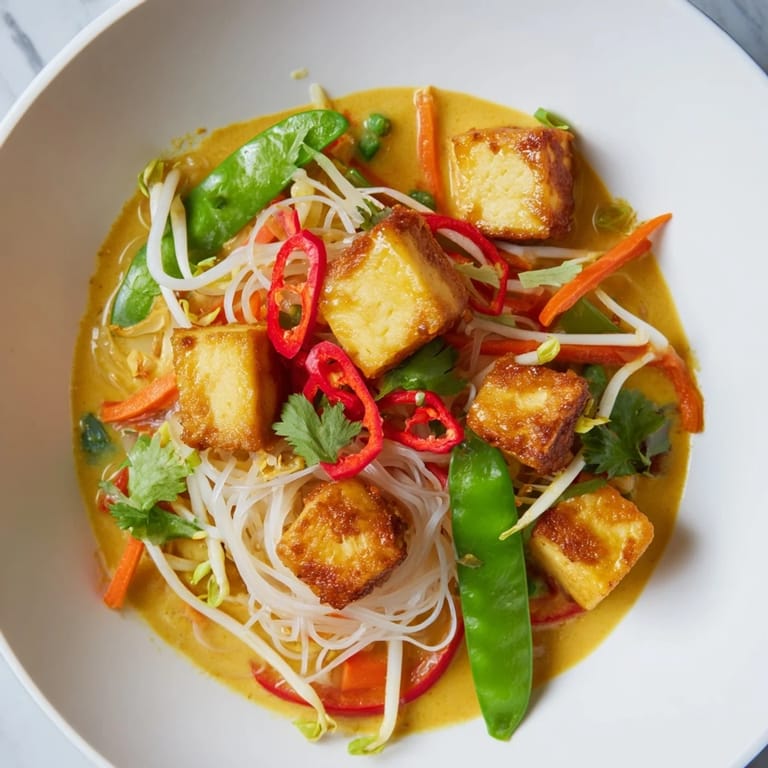
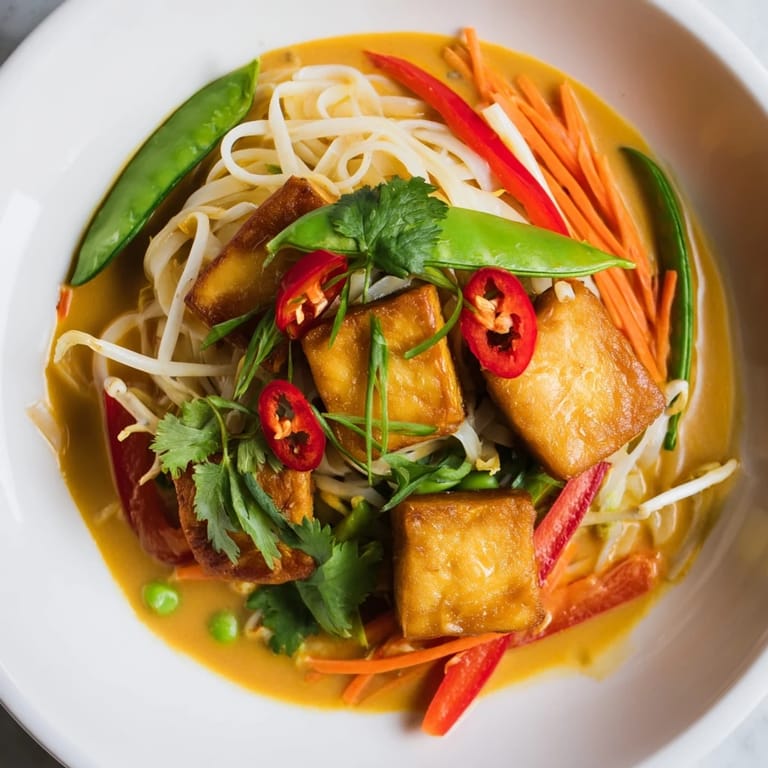
- Divide the noodles among bowls, ladle the hot broth and vegetables over them, then crown each bowl with fried tofu, bean sprouts, spring onions, cilantro, and a sprinkle of chili. Hand around the lime wedges and let everyone finish their own bowl to their taste.
 Save
Save There's a moment when you ladle that first steaming bowl—when the noodles are perfectly soft, the broth is glossy and rich, and all those fresh vegetables are piled on top—that you realize why this soup has lasted centuries across Southeast Asia. It's comfort and elegance in the same spoon, and it never stops feeling a bit special, no matter how many times you make it.
Customizing Your Laksa
The beauty of laksa is that it's genuinely forgiving and wants you to make it your own. I've added everything from mushrooms to baby corn to bok choy, and the broth happily embraces whatever vegetables you're drawn to. If you're cooking for someone who eats eggs, a soft-boiled halved egg nestled into the bowl adds richness and substance. The core—the spiced broth—stays true while everything else can shift based on what's in your fridge and what's calling to you.
Flavor Balance and the Role of Lime
One thing I learned the hard way is not to underestimate the lime; it's not a garnish, it's a necessary ingredient that lifts and brightens the entire dish. That squeeze of citrus cuts through the richness of the coconut milk and awakens your palate, making each spoonful feel fresh rather than heavy. Some people are shy with their lime, but I encourage you to be generous—the dish transforms when you find that perfect balance.
Making It Yours
Laksa is meant to be shared, adapted, and made again and again until it feels like home cooking rather than following someone else's directions. I've made it with store-bought laksa paste on a Tuesday night and homemade paste on a Sunday afternoon, and both versions have their magic. The most important thing is to taste as you cook and trust your instincts about what needs adjusting.
- Don't be afraid to add extra chili if you like more heat, or reduce it if you're cooking for people who prefer milder flavors.
- Fresh herbs like cilantro and basil can be adjusted based on what you have growing or what feels right to you.
- If the broth ever feels too thick, thin it with a splash of vegetable broth; if it's too thin, simmer it uncovered a bit longer to concentrate the flavors.
 Save
Save Every time I make laksa, I'm grateful for that rainy afternoon in Penang and the hands that showed me how it's done. This soup tastes like memory and possibility all at once.
Recipe Questions & Answers
- → What type of noodles work best for this dish?
Thick or vermicelli rice noodles are ideal as they absorb the rich coconut curry broth well and provide the right texture.
- → Can I make the broth spicier?
Yes, adding extra chili slices or more laksa paste can increase the spice level to suit your taste preferences.
- → How should tofu be prepared for best results?
Lightly frying tofu cubes until golden enhances their texture and helps them hold up well in the broth.
- → Are there vegetarian considerations for the laksa paste?
Ensure the laksa paste contains no shrimp or fish ingredients for a fully vegetarian or vegan preparation.
- → What garnishes complement this bowl?
Fresh bean sprouts, cilantro, spring onions, and a squeeze of lime provide bright, fresh notes to balance the rich broth.
- → Can additional vegetables be added?
Mushrooms, baby corn, or bok choy can be included to add variety and extra texture.