 Save
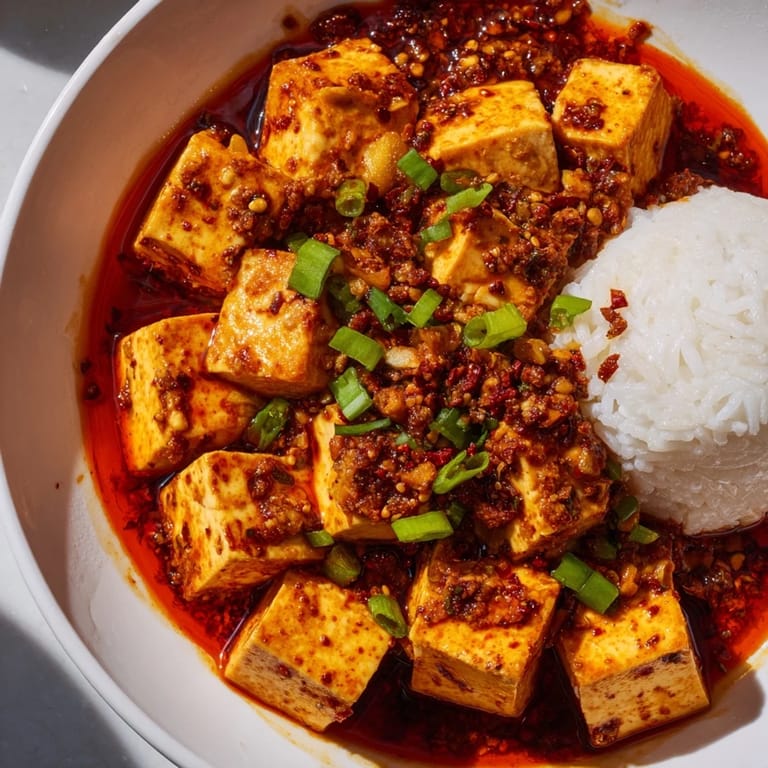
Save My first real encounter with mapo tofu happened on a cold evening when my friend insisted I needed to taste what proper Sichuan food felt like. I watched as she coaxed silky tofu into a bubbling sauce that numbed and burned at once—a sensation I'd never experienced before. That first spoonful changed how I understood flavor completely.
Years later, I made this for my partner during their first week in a new apartment with barely functioning appliances. The wok became our one reliable tool, and somehow turning out something this vibrant from such humble circumstances felt like proof that good food doesn't need much.
Ingredients
- Silken or soft tofu (400g): The delicate kind melts into the sauce and absorbs flavor beautifully, though firm tofu works if you want pieces that hold their shape through cooking.
- Ground pork or beef (150g, optional): Adds richness and texture, but leave it out for an equally satisfying vegetarian version.
- Sichuan doubanjiang (2 tbsp): This fermented chili bean paste is the soul of the dish—it's funky, spicy, and impossibly deep.
- Soy sauce (1 tbsp): Use low-sodium if possible so you control the saltiness.
- Shaoxing wine (1 tbsp): Dry sherry works in a pinch and rounds out the sauce beautifully.
- Sugar (1 tsp): Just enough to balance the heat and depth, not to sweeten.
- Chicken or vegetable broth (1/2 cup): Low-sodium gives you control over the final seasoning.
- Cornstarch slurry (1 tbsp cornstarch mixed with 2 tbsp water): This is what transforms loose sauce into something that clings gorgeously to every piece of tofu.
- Sichuan peppercorns (1 tbsp, toasted and ground): Toast them yourself right before grinding—the difference between this and pre-ground is night and day.
- Vegetable oil (3 tbsp): A neutral oil lets the sauce flavors shine.
- Garlic (3 cloves, minced) and ginger (2 tsp, minced): The aromatic foundation that makes everything sing.
- Scallions (2, sliced): Keep white and green parts separate; whites go into the pan, greens finish the dish.
- Dried red chilies (1–2, chopped): Optional but worth it for heat and smokiness.
- Steamed jasmine rice, chili oil, and extra scallions: For serving and final flourishes.
Tired of Takeout? 🥡
Get 10 meals you can make faster than delivery arrives. Seriously.
One email. No spam. Unsubscribe anytime.
Instructions
- Get everything ready:
- Drain your tofu and cut it into bite-sized cubes, handling it gently so the edges stay clean. Mix your cornstarch with water until smooth, separating scallion whites from greens, and mince your garlic and ginger while you're feeling organized.
- Toast and grind the peppercorns:
- Dry-toast the peppercorns in your wok or skillet over medium heat for about a minute until they smell intensely fragrant and slightly woody. Grind them in a mortar and pestle—don't use pre-ground if you can help it, because this step is where the magic begins.
- Bloom the aromatics:
- Pour in your oil and let it warm, then add the scallion whites, garlic, and ginger and let them sizzle for just a minute until the kitchen smells alive. The goal is fragrant and soft, not browning.
- Brown the meat (if using):
- If you're adding pork or beef, break it apart as it hits the oil and let it cook undisturbed for a minute before stirring so it picks up some color. This takes about 3–4 minutes total until it's no longer pink.
- Add the soul of the sauce:
- Stir in the doubanjiang and any dried chilies you're using, cooking for 1–2 minutes until the oil turns a rich red-orange. You'll smell the fermented funk deepen—that's when you know it's working.
- Build the braising liquid:
- Pour in the Shaoxing wine, soy sauce, sugar, and broth, stirring everything together and letting it come to a simmer. Taste a tiny spoonful of sauce at this point; it should be a balance of salty, funky, and slightly sweet with heat underneath.
- Introduce the tofu gently:
- Slide your tofu cubes into the pan carefully and lower the heat so it simmers quietly for 5 minutes, occasionally spooning sauce over the top. The tofu will soften and open up to absorb the flavors.
- Thicken and finish:
- Stir your cornstarch slurry one more time to make sure it's mixed, then drizzle it into the pan while stirring slowly and gently until the sauce coats everything and turns glossy. This takes just a minute or two.
- Final garnish:
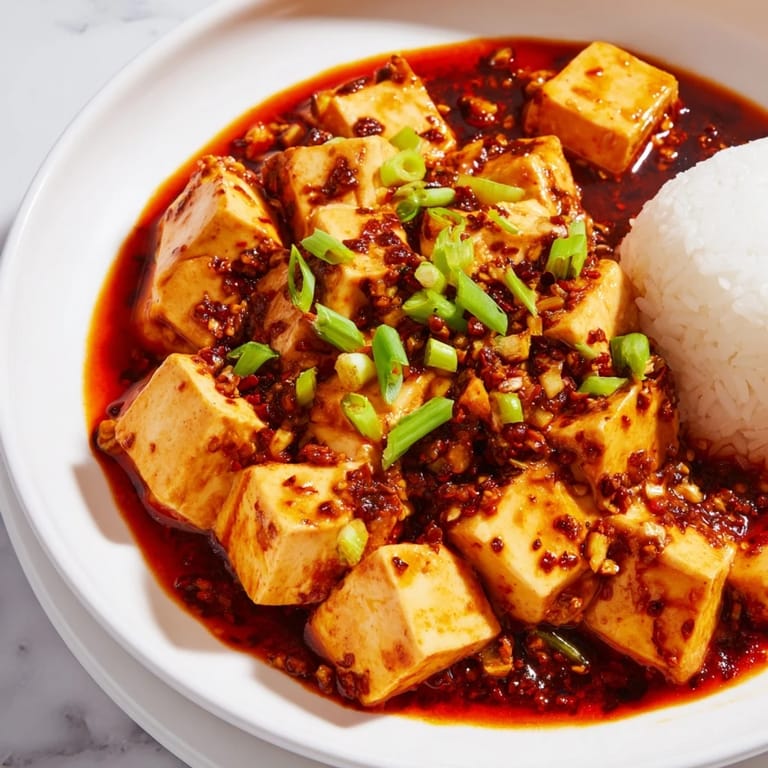
- Remove from heat, sprinkle with your freshly ground Sichuan peppercorns and the scallion greens, and serve immediately over steamed rice. A drizzle of chili oil on top is optional but transforms it into something extra special.
 Save
Save There's a moment, right after you add the tofu and it begins to soften in the sauce, when the whole dish comes together in a way that feels almost meditative. The numbing sensation from the peppercorns starts as a tingle on your lips, building into something that makes you reach for rice and then go back for another bite.
Why This Sauce Works
The magic here is all about balance and layers. The doubanjiang brings fermented depth and heat, the Sichuan peppercorns add that distinctive numbing tingle that makes your mouth feel alive, and the cornstarch slurry turns everything into a glossy coating that clings to every surface. These elements don't fight—they build on each other, each one making the others taste more like themselves.
Tofu, Texture, and Technique
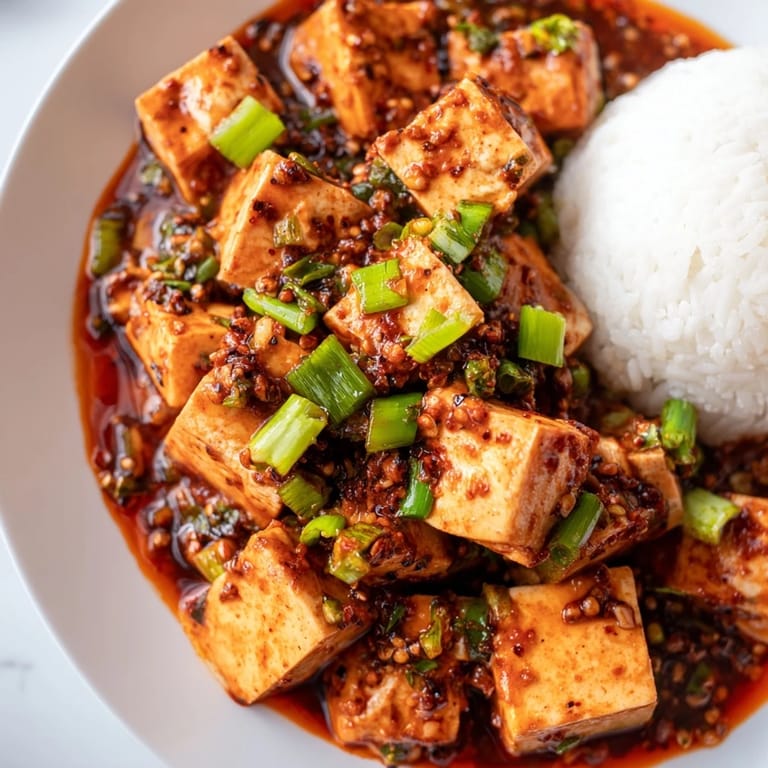
Choosing your tofu is about deciding what feeling you want in your mouth. Silken tofu is almost custard-like, dissolving slightly into the sauce and becoming part of it. Soft tofu is forgiving and still delicate, while firm tofu holds its shape and gives you something to actually bite down on. For this dish, I tend toward silken or soft because the sauce is bold enough to stand on its own, and the contrast between tender tofu and assertive flavors creates something memorable.
Adapting and Expanding
This recipe is more flexible than it might seem at first glance. Vegetarians can leave out the meat entirely and use vegetarian doubanjiang with vegetable broth—the sauce is so flavorful nothing goes missing. You can also play with the heat level by adjusting how much doubanjiang and dried chili you add, building this dish to match exactly how you want to feel. Some people add a splash of sesame oil at the end, others layer in fresh mushrooms or water chestnuts for texture contrast.
- Double-check that your doubanjiang is vegetarian if that matters to you, since some brands include anchovies.
- If Shaoxing wine isn't available, dry sherry or even a splash of white wine works fine in a pinch.
- This keeps well in the fridge for 3–4 days, and reheats beautifully when gently warmed through with a splash of water.
 Save
Save This is the kind of dish that teaches you something about yourself every time you make it—whether that's realizing you like more heat, or discovering that the best moment is when the numbing sensation hits right as you take another spoonful of rice. It's simple enough to make on a weeknight and confident enough to serve when you want to cook something that matters.
Recipe Questions & Answers
- → What tofu type works best?
Silken or soft tofu provides a delicate texture, while firm tofu holds shape better during cooking.
- → Can this dish be meat-free?
Yes, omit the meat and use vegetarian doubanjiang and vegetable broth for a vegetarian-friendly version.
- → How do I adjust the spice level?
Control spice by varying the amount of chili bean paste and dried red chilies added to the sauce.
- → What is the role of Sichuan peppercorns?
They provide a unique numbing and aromatic sensation essential to authentic Sichuan flavor.
- → What wine pairs well with this dish?
A crisp, slightly off-dry white like Riesling complements the spicy and numbing notes perfectly.