 Save
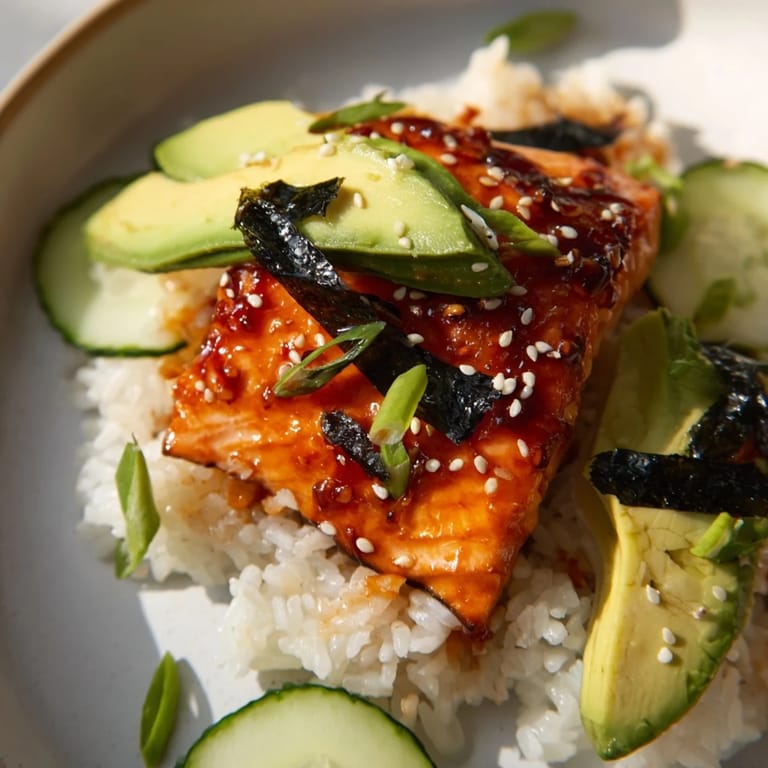
Save I discovered this bowl format while scrolling through a cooking video at midnight, half-awake and genuinely hungry, and something about the way the salmon gleamed under those kitchen lights made me want to recreate that exact moment in my own kitchen. The combination of gochujang's deep umami and bright orange felt like it was made for salmon, as if the flavors were just waiting to find each other. That first time I made it, I was skeptical about mixing Korean and citrus elements so directly, but the moment the broiler kissed that glaze into a sticky caramelized finish, I understood why this bowl had captivated so many people.
My roommate came home to the smell of that orange-gochujang glaze caramelizing and genuinely asked if I'd ordered takeout, then looked genuinely shocked when I handed her a bowl five minutes later. Watching someone taste something you made and see their expression shift from skepticism to genuine delight is a small kitchen magic that never gets old.
Ingredients
- Salmon fillets: Choose fresh, firm fillets with vibrant color; removing the skin before baking helps the glaze cling more evenly and the meat cooks more predictably.
- Gochujang: This Korean chili paste is slightly sweet and deeply savory—it's the backbone of everything, so find a quality brand if you can, though any gochujang will work beautifully.
- Freshly squeezed orange juice: Fresh juice makes a real difference; bottled can taste flat in comparison, and the brightness matters when balancing spice and umami.
- Honey: This isn't just sweetness—it helps the glaze stick and caramelize, creating that irresistible sticky finish.
- Rice vinegar: The acidity cuts through richness and keeps the sauce from feeling heavy; regular vinegar will work but rice vinegar has a gentler touch.
- Toasted sesame oil: A small amount goes far; this adds a roasted, nutty depth that feels essential once you taste it.
- Fresh ginger and garlic: Don't skip the fresh versions here—they brighten everything and feel alive in the final dish.
- Short-grain rice: Sushi rice or similar holds together slightly and works better than long-grain, though any rice you love will do.
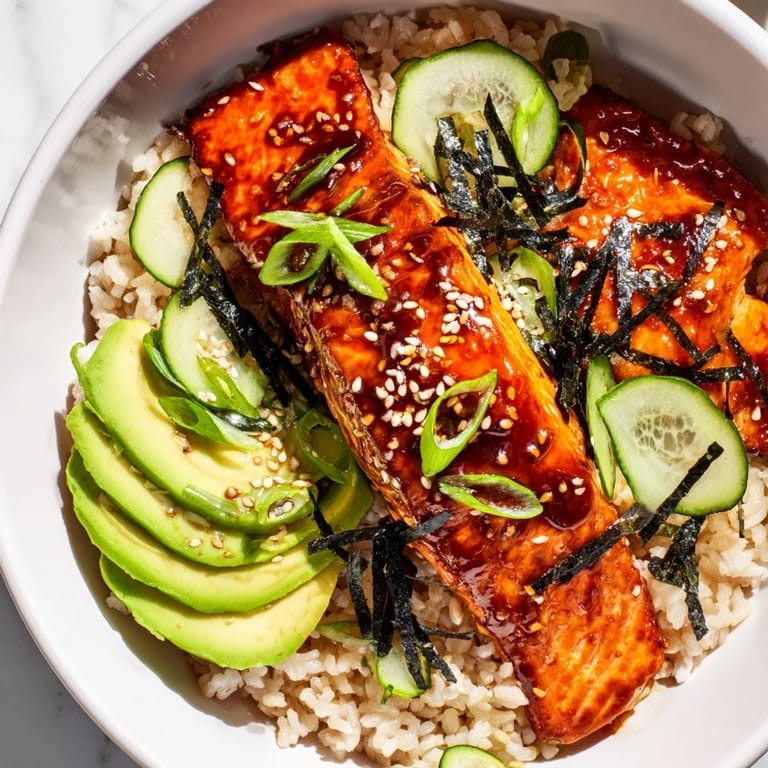
- Cucumber, avocado, nori, sesame seeds, scallions: These toppings aren't just garnish—they add texture, freshness, and visual contrast that makes the bowl feel complete and vibrant.
Tired of Takeout? 🥡
Get 10 meals you can make faster than delivery arrives. Seriously.
One email. No spam. Unsubscribe anytime.
Instructions
- Preheat and Prepare:
- Set your oven to 200°C and line a baking tray with parchment paper so everything releases cleanly without sticking. This small step prevents frustration later.
- Season the Salmon:
- Pat your salmon fillets dry (moisture is the enemy of good texture), then sprinkle salt and pepper evenly on both sides. Let it sit for just a minute so the seasoning can begin its work.
- Make the Glaze:
- In a bowl, whisk together gochujang, orange juice, soy sauce, honey, rice vinegar, sesame oil, ginger, and garlic until the mixture is smooth and glossy. The orange juice will make it looser than straight gochujang, which is exactly what you want.
- First Glaze and Bake:
- Brush half the glaze onto the salmon, then slide it into the oven and bake for 12–14 minutes until the salmon flakes easily with a fork and looks just cooked through. Set a timer—this is the part where timing matters most.
- Prep While It Bakes:
- Slice your cucumber thin, prep your avocado, cut the nori into strips, and have your rice warm and ready. By the time the salmon comes out, everything else is standing by.
- Broil for the Sticky Finish:
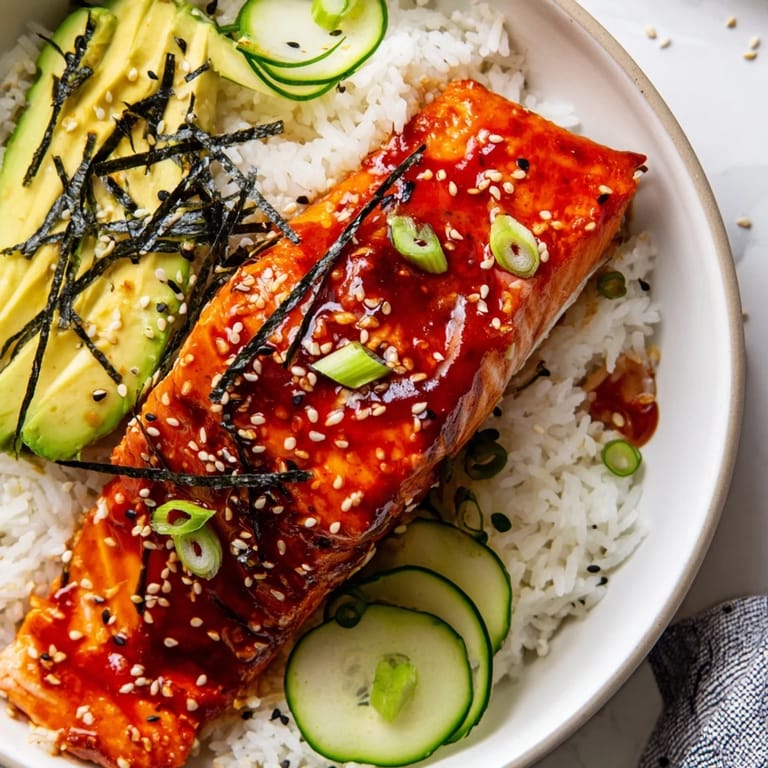
- If your broiler is available, brush the remaining glaze over the hot salmon and broil for 1–2 minutes until the glaze bubbles and caramelizes slightly. This step transforms the glaze into something irresistibly sticky and glossy, though it's optional if you're short on time.
- Assemble Your Bowls:
- Divide warm rice between two bowls, top with a salmon fillet, then arrange the cucumber, avocado, nori, sesame seeds, and scallions around it. The arrangement doesn't need to be perfect—just generous and colorful.
- Serve Immediately:
- Eat while everything is still warm and the textures are at their best; the warmth of the rice, the cool crispness of the cucumber, and the warm salmon create a satisfying balance.
 Save
Save The first time someone asked me to make this for them instead of ordering delivery, I felt genuinely proud in a way that surprised me—it wasn't complicated, but it was clearly something worth making instead of buying. That moment shifted how I think about weeknight cooking.
Why This Bowl Works
There's something about having all these components in one bowl that feels modern and intuitive; you get protein, healthy fats, fresh vegetables, and grain all in balanced bites. The sweet, spicy, umami glaze ties everything together without feeling heavy, and the contrast between warm and cool, soft and crunchy, makes every spoonful interesting. Once you make this, you'll understand why this format has become so popular—it's genuinely satisfying and feels intentional rather than thrown together.
Customizing Your Bowl
This bowl is forgiving and adaptable, which is part of why I love it so much; swap the salmon for tofu if you want to keep it vegetarian, or add pickled ginger, shredded carrots, or edamame for more color and texture. I've also tried this with a different rice base—brown rice works, or even cauliflower rice if you're going that direction. The glaze stays the star no matter what you build around it, which gives you freedom to cook what you have and what you're craving.
Bringing It All Together
This bowl has become my go-to when I want something that feels special but doesn't demand hours of work; it's the kind of meal that looks impressive but asks very little of you in return. The combination of flavors feels sophisticated, the textures feel thoughtful, and the whole experience feels like you're taking care of yourself in a meaningful way.
- Make sure your rice is still warm when you assemble—cold rice changes the whole temperature dynamic of the bowl.
- If you're cooking for someone else, prep all your toppings in small bowls so they can customize their own or you can plate with confidence.
- Leftover salmon can be shredded and used in grain bowls throughout the week, which makes this a smart meal to cook ahead when you have time.
 Save
Save This bowl has quietly become the meal I suggest when I want to impress someone without fuss, or when I want to cook something that feels nurturing for myself. It's the kind of recipe that proves you don't need complexity to create something genuinely delicious.
Recipe Questions & Answers
- → What type of rice works best for this dish?
Short-grain rice is preferred for its stickier texture, which complements the sticky salmon and toppings well.
- → Can I prepare the glaze in advance?
Yes, the orange gochujang glaze can be mixed ahead and stored refrigerated for up to two days to enhance flavors.
- → How do I get the salmon sticky and glazed properly?
Brush the salmon with the glaze before baking, then add another layer after cooking and broil briefly for a sticky finish.
- → Are there suitable topping substitutions?
Cucumber, avocado, nori, and sesame seeds provide texture and freshness, but sliced scallions or pickled ginger can add extra flavor.
- → Is it possible to make this dish vegetarian?
Yes, swapping salmon for baked tofu and using the glaze keeps the vibrant flavors intact while maintaining the bowl’s texture.