 Save
Save There's something magical about the smell of star anise and cinnamon hitting hot broth—it takes maybe thirty minutes but feels like you've been simmering something all day. I discovered pho during a rushed weeknight when I needed something warm and complex fast, and this streamlined version became my go-to ever since. The beauty is that you're not sacrificing depth for speed; the broth is still aromatic and coaxing, the beef still cooks perfectly in that final pour of heat, and somehow it tastes like you've been fussing over it for hours.
I made this for my sister on a cold Tuesday, and she kept saying it tasted like the pho place we used to grab near her office, except better because she knew exactly what went into it. That's when I realized this recipe isn't just about saving time—it's about cooking something that feels personal and intentional, even when you're moving fast through your evening.
Ingredients
- Low-sodium beef or chicken broth: The foundation; I use broth I can taste clearly because the spices are doing the heavy lifting, not salt.
- Fresh ginger and onion: Charring these slightly before they hit the pot deepens everything—it's a small step that changes the game.
- Star anise, cinnamon stick, and cloves: These three are the soul of pho; they need time to unfurl and flavor the broth, so don't skip the simmering.
- Fish sauce and soy sauce: Umami anchors; if you're nervous about fish sauce, start with less—you can always add more, but you can't take it back.
- Rice noodles: Fresh ones are silkier, but dried work beautifully; just watch the package timing so they're tender but not mushy.
- Beef sirloin or eye round: Slice it thin, and it cooks instantly when the broth hits it; thinness matters more than the exact cut.
- Fresh herbs and garnishes: These are your texture and brightness; Thai basil has a slight licorice note that regular basil doesn't, but use what you have.
- Lime wedges, hoisin, and sriracha: Let people build their own balance; some love heat, some want sweetness, and that's the joy of pho.
Tired of Takeout? 🥡
Get 10 meals you can make faster than delivery arrives. Seriously.
One email. No spam. Unsubscribe anytime.
Instructions
- Build the aromatics:
- In a large pot, combine broth, onion, ginger, star anise, cinnamon stick, and cloves; bring to a boil. If you have a moment, lightly char the onion and ginger over a flame first—the slight bitterness and color add a secret depth to the whole thing.
- Simmer the spices:
- Reduce heat and let it bubble gently uncovered for twenty minutes; you're letting those spices slowly infuse and soften the onion. The kitchen will smell incredible, and that's exactly what should be happening.
- Season and strain:
- Stir in fish sauce, soy sauce, sugar, and salt, then simmer five more minutes to marry the flavors. Pour through a fine-mesh strainer to catch all the solids, then return the clear, golden broth to the pot over low heat.
- Cook the noodles:
- While the broth simmers, cook your rice noodles according to the package—they should be tender but still have a little body. Drain them and divide evenly among four large bowls.
- Arrange the beef:
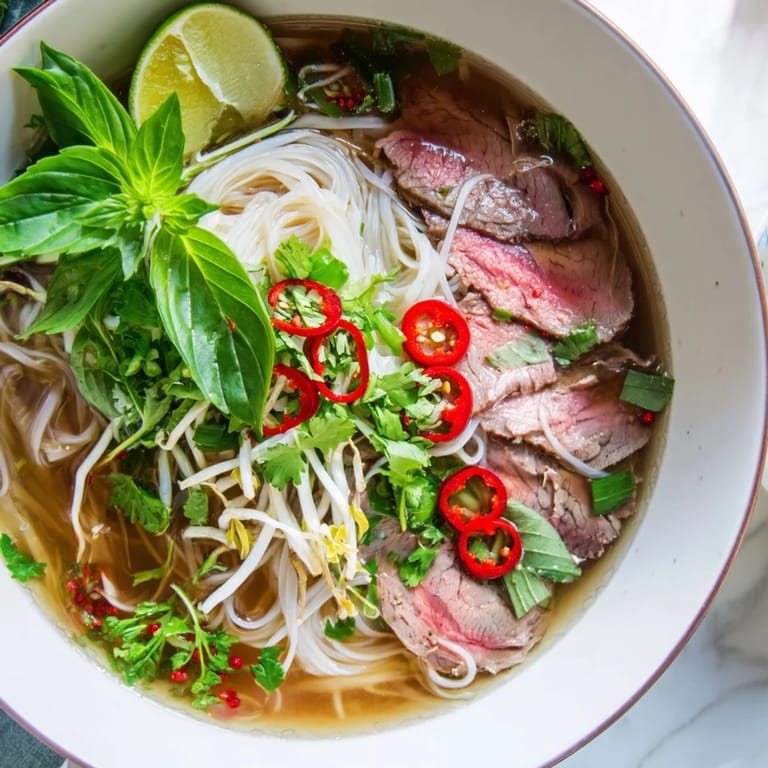
- Lay thin slices of raw beef over the noodles in each bowl; the thinner they are, the faster they'll cook when the hot broth hits.
- The final pour:
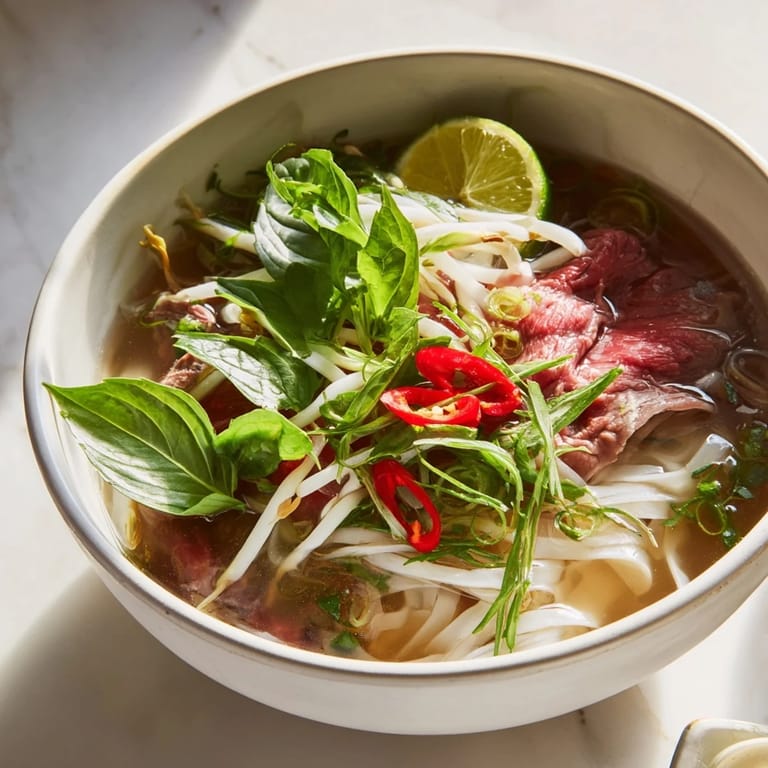
- Ladle the steaming broth directly over the meat and noodles—you'll see the beef turn pale and cook through in seconds. This is the moment it all comes together.
- Top and serve:
- Crown each bowl with bean sprouts, basil, cilantro, scallions, and chili if you like heat. Serve immediately with lime wedges and little bowls of hoisin and sriracha on the side so everyone seasons to taste.
 Save
Save What I love most is that moment when everyone is standing in my kitchen, lime in hand, mixing their broth exactly how they like it—some squeeze the lime until the whole thing is bright and tart, others barely touch the sriracha, and it's genuinely their bowl. That's when pho stops being dinner and becomes something you're all building together.
The Broth Is Everything
I learned the hard way that rushing the broth means losing all the delicate work those spices are trying to do. The first time I tried to speed-cook pho, I simmered for five minutes instead of twenty and served something that tasted good but flat—all the complexity was there but not singing. Now I've learned to actually sit with it, smell it changing, and wait for that moment when the broth becomes golden and fragrant. It's such a small thing but it's the entire reason this recipe works.
Building Flavor With Your Hands
One afternoon, I was so focused on cooking fast that I just threw everything in the pot, and my friend asked if I'd charred the aromatics first. I hadn't, and when she made it the next week and did, the difference was immediate—deeper, toastier, more intentional tasting. Now it's become a little ritual: I hold the onion and ginger over a flame for a few seconds, listen for the sizzle, and suddenly the whole thing feels less like a shortcut and more like actual cooking.
Making It Your Own
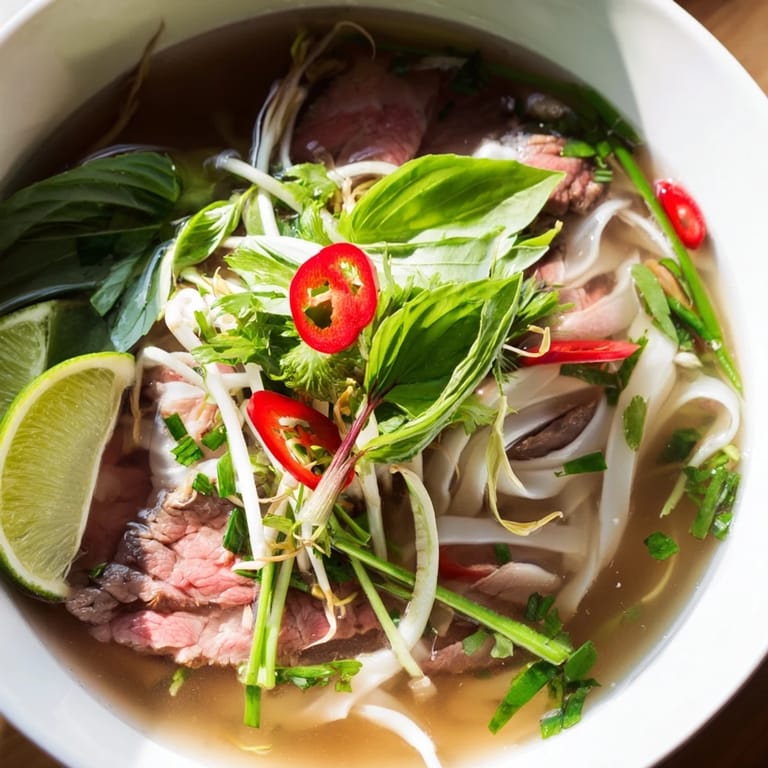
The genius of pho is that the broth is consistent but everything on top is yours to customize. I've had versions where someone adds fried shallots for crunch, or mint instead of basil because that's what they grew up with, or barely any broth at all because they like it more like a noodle salad. The structure is solid, but the soul comes from what you decide to do with it.
- Don't be shy with the fresh herbs—they're what make every spoonful feel bright and alive.
- If you can't find Thai basil, regular basil works; it's different, but it's still delicious.
- Taste the broth before serving and adjust salt and fish sauce; every broth is different, so trust your palate.
 Save
Save Pho taught me that you don't need hours to make something that tastes like you've been cooking all day. Sometimes the best meals are the ones that feel both quick and deeply considered, where every flavor layer is there because you chose it, not because a recipe made you.
Recipe Questions & Answers
- → What broth is used for this dish?
A light, aromatic broth made from beef or chicken stock simmered with onion, ginger, star anise, cinnamon, and cloves forms the base.
- → Can I use chicken instead of beef?
Yes, thinly sliced chicken breast is a suitable alternative and cooks quickly when the hot broth is poured over the noodles.
- → What herbs enhance the flavor?
Fresh Thai basil, cilantro, and scallions add brightness and fresh herbal notes to balance the rich broth.
- → How are the noodles prepared?
Flat rice noodles are cooked separately according to package instructions and then topped with meat and hot broth to finish cooking.
- → Are there any suggested garnishes?
Bean sprouts, thinly sliced red chili, lime wedges, hoisin sauce, and Sriracha provide layers of flavor and texture.
- → Is there a vegetarian option available?
Yes, substituting tofu and using vegetable broth creates a flavorful meat-free alternative.