 Save
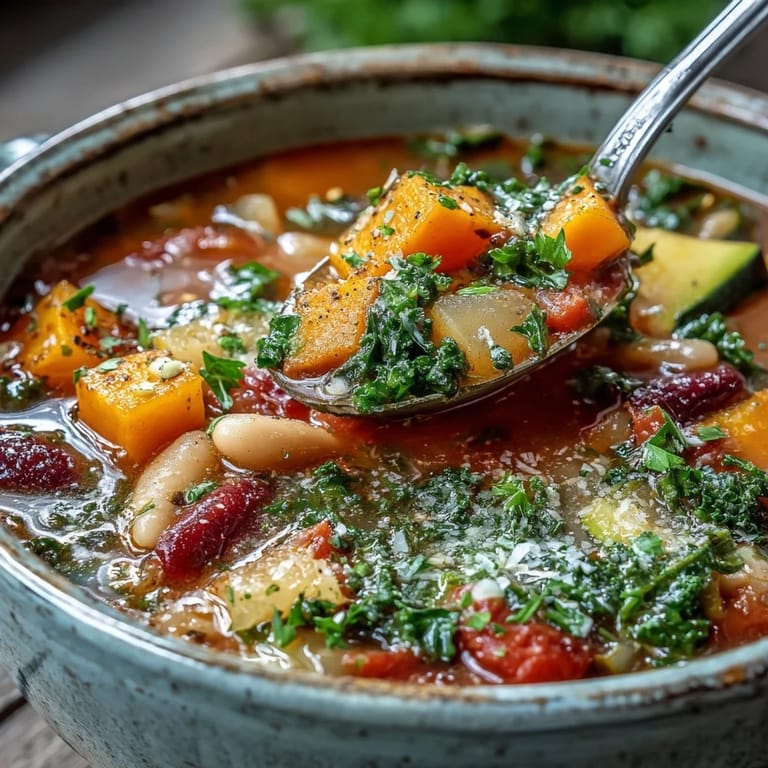
Save My kitchen window fogs up every time I make this soup, and I never wipe it clean until I'm done. There's something about watching the steam rise from the pot while the world outside turns gray and cold that makes the whole process feel like a small act of rebellion against winter. I started making this minestrone on a Sunday when my fridge was half-empty and my pantry was begging to be useful. What came together was a soup so thick with vegetables and warmth that it became my answer to every bitter afternoon that followed.
I made this for a group of friends who showed up unannounced on a Saturday, cold and hungry from a long hike. I had just enough ingredients to double the batch, and I watched them hover around the stove, sneaking tastes before I even ladled it into bowls. One of them said it tasted like the soup her nonna used to make, and I took that as the highest compliment I've ever received in my kitchen. We ate it with torn pieces of bread and didn't talk much, which is how I knew it was good.
Ingredients
- Olive oil: This is your flavor foundation, so use something you'd actually want to taste, not the dusty bottle in the back of the cupboard.
- Yellow onion: The sweetness it releases when it softens is what makes the whole soup feel like home.
- Carrots and celery: These two are the backbone of almost every good soup I've ever made, and they add a subtle sweetness that balances the tomatoes.
- Garlic: Three cloves might seem like a lot, but they mellow into the broth and become almost undetectable, just a whisper of sharpness.
- Butternut squash: This is what makes the soup feel like winter in the best way, it gets tender and slightly sweet and soaks up all the herbs.
- Zucchini: It cooks quickly and adds a soft texture that contrasts nicely with the firmer squash and beans.
- Diced tomatoes: I use canned because they're consistent and already seasoned, and they give the broth a gentle acidity.
- Kale: The stems are too tough, so I always remove them first, but the leaves wilt into the soup and add a slight bitterness that I've come to crave.
- Cannellini beans: Creamy, mild, and filling, they make this soup substantial enough to be a full meal.
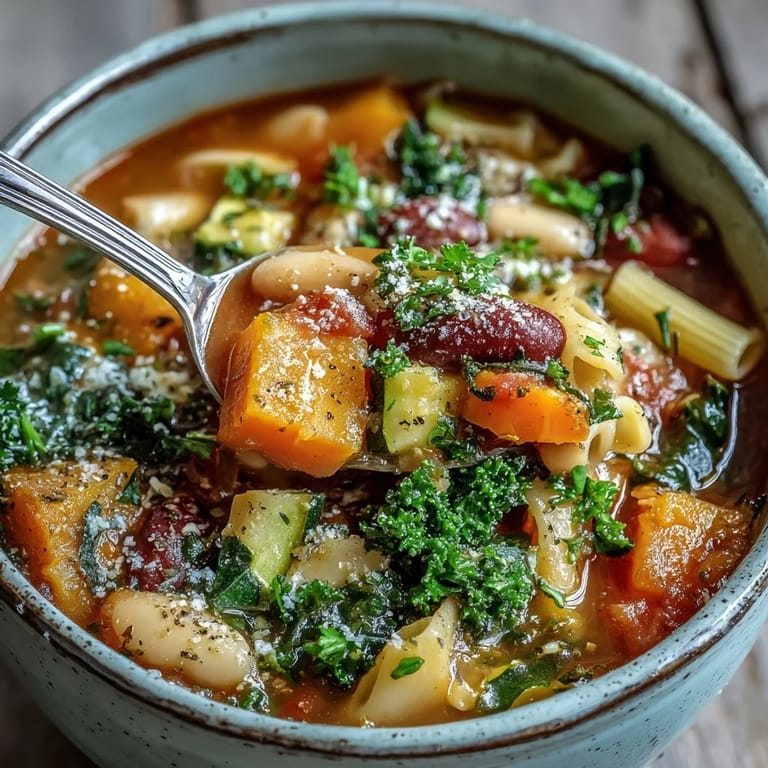
- Small pasta: Ditalini or elbow macaroni are perfect because they fit on a spoon and soak up the broth without turning mushy.
- Vegetable broth: I've tried making this with water, and it's just not the same, the broth is what makes everything taste cohesive.
- Bay leaf, oregano, thyme, rosemary: This herb combination is classic Italian, and I learned not to skip even one because they each add a different layer.
- Salt and pepper: Always taste before you add more, the broth and Parmesan will add saltiness too.
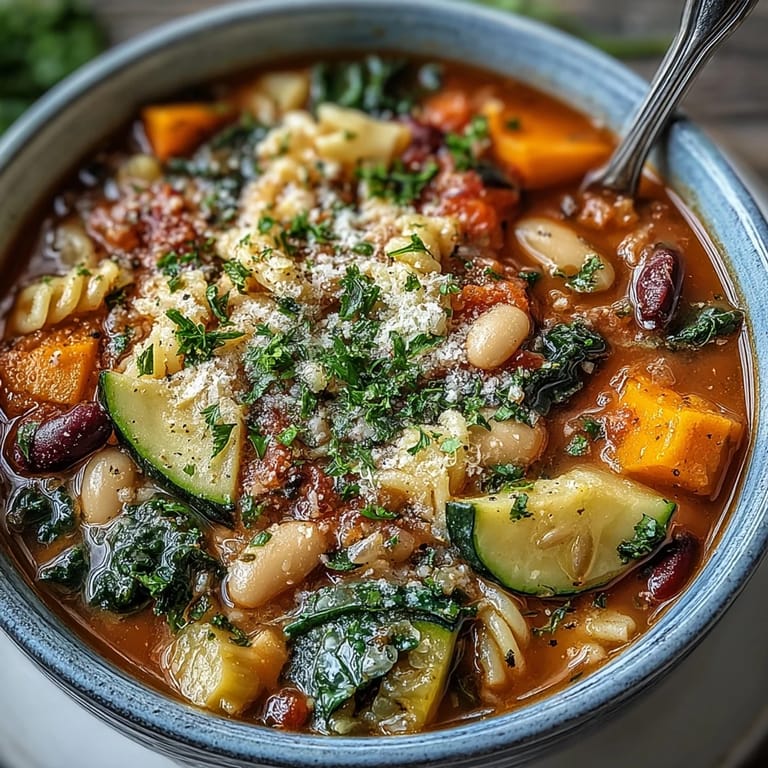
- Parmesan cheese: Freshly grated makes all the difference, the pre-shredded stuff doesn't melt into the soup the same way.
- Fresh parsley: A handful of this on top makes the soup look alive and adds a fresh bite.
- Crusty bread: Not optional in my house, you need something to soak up every last drop.
Tired of Takeout? 🥡
Get 10 meals you can make faster than delivery arrives. Seriously.
One email. No spam. Unsubscribe anytime.
Instructions
- Start with the aromatics:
- Heat the olive oil in a large pot over medium heat and add the onion, carrots, and celery. Let them sauté for about 5 minutes, stirring occasionally, until they soften and the onion turns translucent.
- Add the garlic:
- Stir in the minced garlic and cook for just 1 minute until you can smell it in the air. Don't let it brown or it will taste bitter.
- Build the vegetable base:
- Toss in the butternut squash and zucchini, stirring them around so they get coated in the oil and aromatics. Let them cook for another 5 minutes, stirring now and then.
- Pour in the liquids and seasonings:
- Add the diced tomatoes, vegetable broth, bay leaf, oregano, thyme, and rosemary. Bring everything to a boil, then reduce the heat to a gentle simmer.
- Simmer the squash:
- Cover the pot and let it simmer for 15 minutes until the squash is tender but not falling apart. This is when your kitchen starts to smell incredible.
- Add the beans, pasta, and kale:
- Stir in the cannellini beans, pasta, and chopped kale. Let it simmer uncovered for 10 to 12 minutes, stirring occasionally, until the pasta is cooked and the kale has wilted into the broth.
- Season and serve:
- Remove the bay leaf and taste the soup, then add salt and pepper as needed. Ladle it into bowls and top with freshly grated Parmesan and a sprinkle of parsley.
 Save
Save  Save
Save This soup has become my go-to whenever someone I care about is having a hard week. I've delivered it in mason jars, reheated it on stovetops that aren't mine, and watched people take that first spoonful and relax a little. It's not fancy, but it's the kind of food that reminds you that someone was thinking about you while they stirred the pot.
How to Store and Reheat
I always make extra because this soup tastes even better the next day once the flavors have had time to settle into each other. Store it in an airtight container in the fridge for up to 4 days, and when you reheat it on the stove, add a little extra broth to loosen it up since the pasta will have thickened everything. You can also freeze it for up to 3 months, though I usually leave the pasta out if I know I'm freezing it and cook fresh pasta when I reheat it so it doesn't get too soft.
Substitutions and Variations
I've made this soup a dozen different ways depending on what I have on hand. If you don't have butternut squash, sweet potato works beautifully and cooks in about the same time. Spinach can replace the kale if you want something milder, just add it at the very end so it doesn't overcook. For a gluten-free version, swap in gluten-free pasta or skip it entirely and add an extra can of beans for heartiness. I've also thrown in a Parmesan rind while the soup simmers, and it adds a salty, umami-rich depth that makes the whole pot taste more complex.
Serving Suggestions
This soup is a meal on its own, but I love serving it with a thick slice of crusty bread that's been rubbed with garlic and drizzled with olive oil. Sometimes I'll make a simple side salad with arugula, lemon, and shaved Parmesan to cut through the richness of the soup. If I'm feeling indulgent, I'll toast the bread in the oven until it's golden and use it to scoop up every last bit from the bottom of the bowl.
- Serve it with garlic bread or focaccia for dipping.
- Pair it with a crisp white wine or a light red if you're in the mood.
- Top each bowl with extra Parmesan and a drizzle of good olive oil for a restaurant-style finish.
 Save
Save 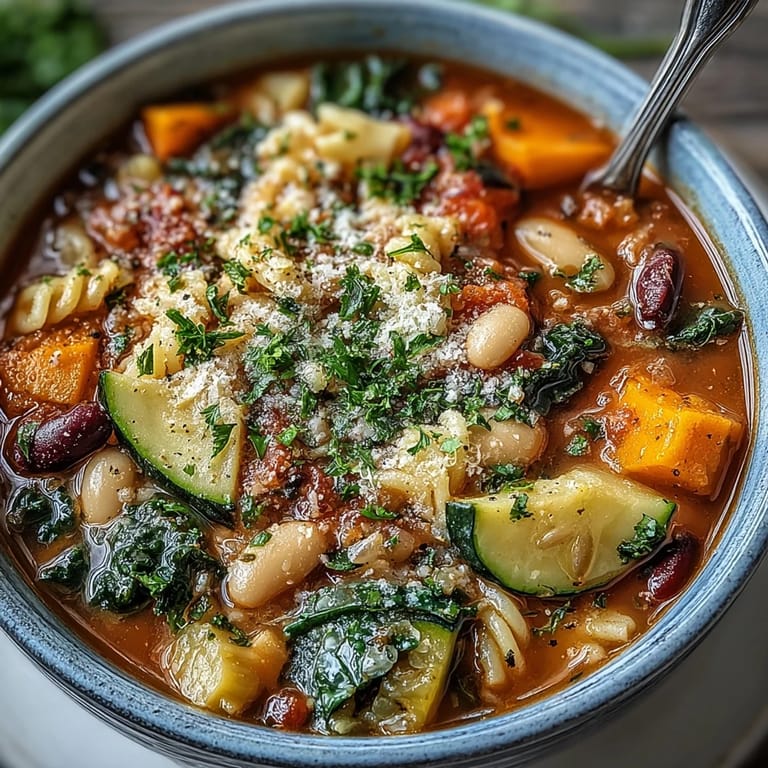 Save
Save This soup has never failed me, not on the coldest night, not when I've been too tired to think, and not when I've needed something to share that feels like care in a bowl. I hope it becomes that for you too.
Recipe Questions & Answers
- → Can I make this minestrone ahead of time?
Yes, this soup stores beautifully. Prepare it up to 3 days in advance and refrigerate in an airtight container. Note that the pasta will absorb liquid over time, so you may need to add extra broth when reheating.
- → What can I substitute for butternut squash?
Sweet potato, pumpkin, or even extra zucchini work well as alternatives. Cut them into similar-sized cubes to ensure even cooking with the other vegetables.
- → How do I make this soup gluten-free?
Simply swap the regular pasta for your favorite gluten-free variety, or omit pasta entirely and add an extra can of beans for heartiness. Ensure your vegetable broth is certified gluten-free.
- → Can I freeze winter minestrone?
Yes, but for best results, freeze it before adding the pasta. Cook the pasta fresh when reheating, as frozen pasta can become mushy. The soup freezes well for up to 3 months.
- → What type of pasta works best?
Small pasta shapes like ditalini, elbow macaroni, small shells, or orzo are ideal. They're easy to eat with a spoon and distribute evenly throughout the soup.
- → How can I add more protein to this dish?
Add an extra can of beans, stir in cooked white beans or chickpeas, or top with shredded rotisserie chicken. For non-vegetarian versions, Italian sausage pairs beautifully with these flavors.